 Save to Pinterest
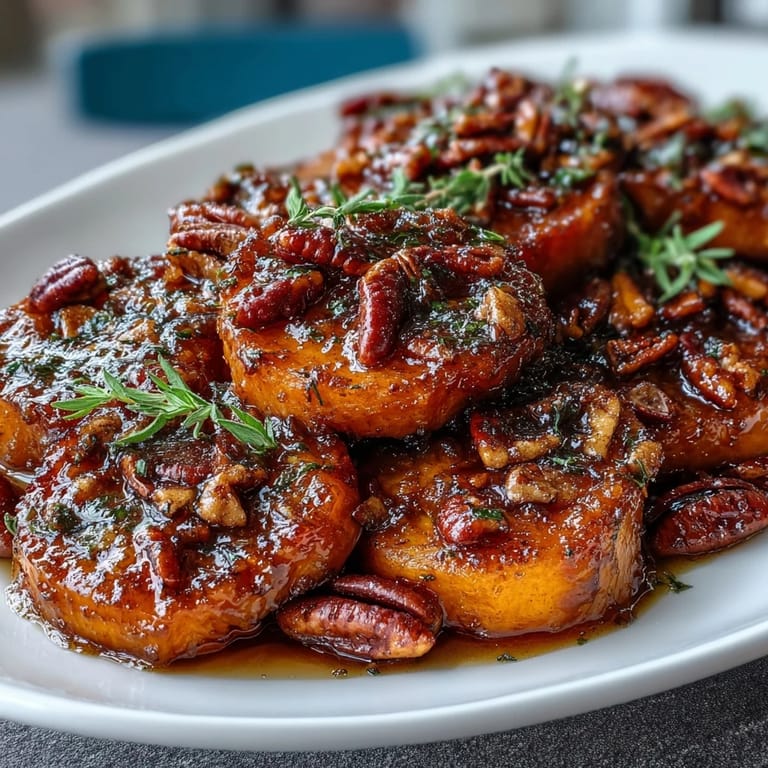
 My kitchen filled with the smell of cinnamon and toasted pecans last November, and suddenly I understood why my grandmother kept yams on the table year-round instead of saving them just for holidays. She'd caught me staring at the candied yams cooling on the counter, glaze catching the afternoon light like amber, and simply smiled without saying anything. That quiet moment taught me that this dish isn't about impressing people—it's about the gentle way butter and brown sugar transform something humble into something people actually want to eat.
I made this for my partner on a completely ordinary Wednesday when the farmers market had the most vibrant yams I'd seen all season, and somehow that simple side dish became the thing we talked about the next morning. There's something about sitting at the table with someone and watching their face when they taste that perfect balance of sweetness and spice—suddenly you're not just feeding someone, you're sharing something that landed exactly right.
Ingredients
- Yams: Two medium ones, peeled and sliced into half-inch rounds—thin enough to cook through but thick enough to hold their shape and not turn to mush, which I learned the hard way with overenthusiastic knife work.
- Unsalted butter: Three tablespoons is the foundation of everything here, melting into a rich, golden base that brown sugar clings to beautifully.
- Light brown sugar: A quarter cup packed down, bringing that molasses sweetness that makes the whole kitchen smell like comfort.
- Pure maple syrup: Just a tablespoon, adding depth without making this taste like breakfast cereal.
- Ground cinnamon: Half a teaspoon that warms everything without overpowering the natural yam flavor.
- Ground nutmeg: An eighth of a teaspoon only—this spice whispers rather than shouts, so less is genuinely more.
- Kosher salt: An eighth of a teaspoon that brings all the other flavors into focus like suddenly adjusting the volume on background music.
- Pecan halves: A third of a cup, toasted until they release their fragrance and develop that deep, buttery richness that raw nuts simply don't have.
- Vegetable oil for toasting: Just half a teaspoon to help pecans toast evenly without scorching them into bitterness.
Tired of Takeout? 🥡
Get 10 meals you can make faster than delivery arrives. Seriously.
One email. No spam. Unsubscribe anytime.
Instructions
- Heat your oven and prepare the stage:
- Preheat to 375°F and lightly grease a small one-quart baking dish—you want just enough oil to prevent sticking without leaving a greasy film that changes the final texture.
- Toast the pecans until they wake up:
- In a small skillet over medium heat, warm those pecan halves with a half teaspoon of oil, stirring constantly for two to three minutes until the kitchen fills with that unmistakable toasted nut aroma. The moment they smell this good, they're done—take them off heat and set aside so they don't go bitter.
- Layer your yams like you mean it:
- Arrange the peeled and sliced yam rounds evenly in the baking dish, creating overlapping layers that cook at the same pace and bake in the glaze together.
- Build the glaze with intention:
- In a small saucepan, melt butter over medium heat, then add brown sugar, maple syrup, cinnamon, nutmeg, and salt, stirring gently until everything becomes smooth and the mixture just barely starts to bubble at the edges. This takes about three to four minutes, and you'll know it's ready when it smells incredible.
- Coat and cover for the first phase:
- Pour the glaze evenly over your yam rounds and give them a gentle toss so the glaze reaches as many surfaces as possible, then cover the whole dish tightly with foil and slide it into the oven for twenty-five minutes.
- Uncover and finish strong:
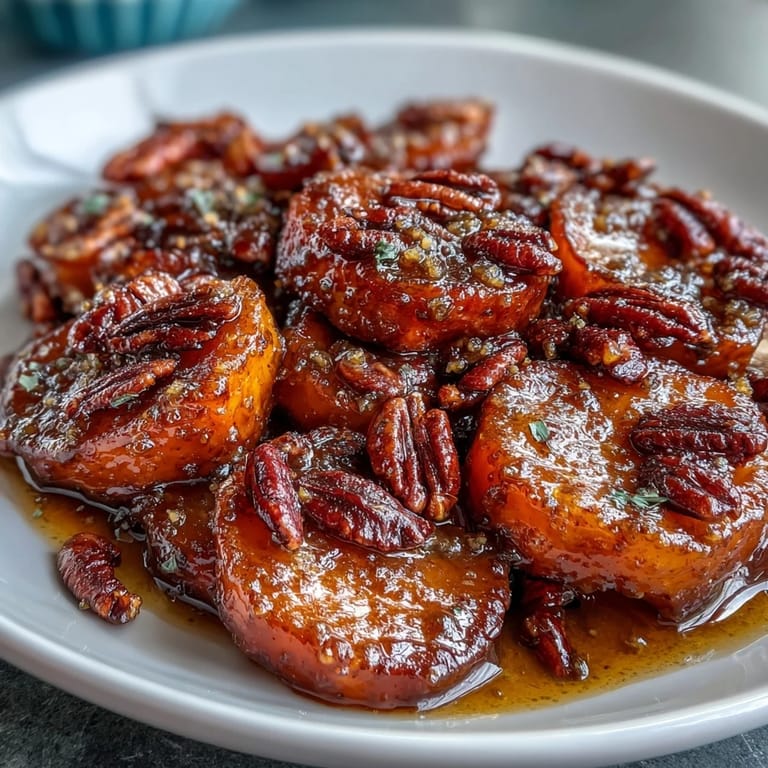
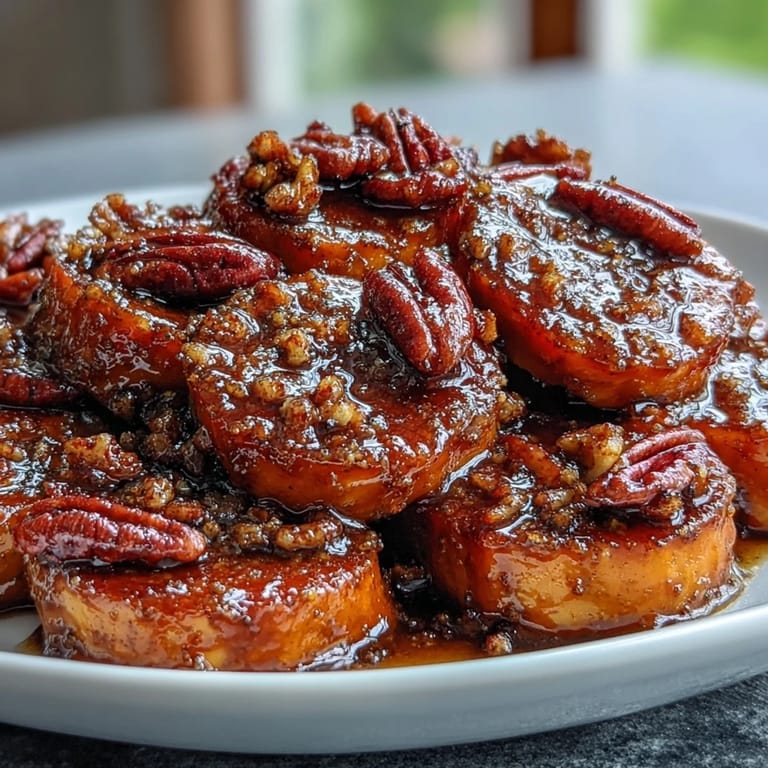
- Remove the foil, give the yams another gentle toss so they cook evenly, then bake uncovered for ten to fifteen minutes more until the yams are fork-tender and the glaze has thickened into something that clings rather than runs. You'll see the glaze darken slightly at the edges and thicken on the surface—that's your sign it's ready.
- Crown with toasted pecans:
- Scatter those toasted pecans across the top just before serving so they stay crunchy instead of softening in the residual heat.
 Save to Pinterest
 There was this moment when a friend tried this for the first time and went completely quiet mid-bite, then looked up and said, 'I didn't know I wanted this,' which somehow felt like the highest compliment. That's when I realized this isn't just a side dish—it's a small permission slip to make something indulgent and good without any apology.
Why Yams Deserve a Closer Look
Yams have this subtle sweetness that doesn't announce itself like a trumpet; instead, it sits quietly underneath the spices and butter, creating layers instead of flatness. The texture matters too—when they bake in that glaze, they become tender in a way that feels almost luxurious, breaking apart gently instead of turning to pulp like some vegetables do under heat. I used to think yams and sweet potatoes were interchangeable, but they cook differently, and once you understand that, you start seeing each one as its own ingredient with its own personality.
The Secret Language of Glazes
A glaze isn't just decoration—it's the bridge between the vegetable and everything else on the plate, carrying flavor into places that wouldn't otherwise reach it. This particular glaze works because butter carries fat-soluble flavors while sugar brings sweetness, and maple syrup adds complexity that plain granulated sugar never could, creating something that tastes more sophisticated than its ingredient list suggests. The spices matter too, but they're supporting players, not the stars—they enhance rather than dominate, which is the whole point of good seasoning.
Making This Dish Your Own
The framework here is solid, but this recipe is actually begging for experimentation once you've made it once and understand how it works. The cinnamon and nutmeg are classic, but they're not laws—they're suggestions that you can adjust based on what your mouth is craving on any given day. This is a dish that welcomes small variations instead of punishing them, which is rare and worth celebrating.
- Add a pinch of orange zest to the glaze for brightness that cuts through the richness without changing the fundamental character of the dish.
- If you can't find pecans or simply prefer a different nut, toasted walnuts or even sliced almonds will work beautifully, though each brings its own flavor signature to the party.
- Sweet potatoes are absolutely fine here if that's what you have, though they cook slightly faster and have a different texture, so check them around minute thirty instead of waiting the full thirty-five.
 Save to Pinterest
 This small-batch recipe has become my proof that you don't need a crowd to justify making something delicious—sometimes the best meals feed just two or three people and stick in the memory much longer than the bigger occasions ever could. Make this when you want to remind yourself or someone else what real food tastes like.
Recipe FAQs
- → Can sweet potatoes be used instead of yams?
Yes, sweet potatoes make a suitable alternative, offering similar sweetness and texture when baked with the glaze.
- → How do I toast pecans properly?
Toast pecans in a skillet over medium heat with a small amount of oil for 2–3 minutes, stirring frequently until fragrant and lightly browned.
- → Is it possible to make this dish dairy-free?
Absolutely. Substitute unsalted butter with plant-based butter to accommodate dairy-free diets without sacrificing flavor.
- → How do the spices affect the overall flavor?
Cinnamon and nutmeg add warm, aromatic notes that enhance the sweetness of the glaze and deepen the dish’s comforting profile.
- → What is the best way to achieve tender yams?
Baking the glazed yams covered for 25 minutes then uncovered for 10–15 minutes ensures they become soft while the glaze thickens.