 Save to Pinterest
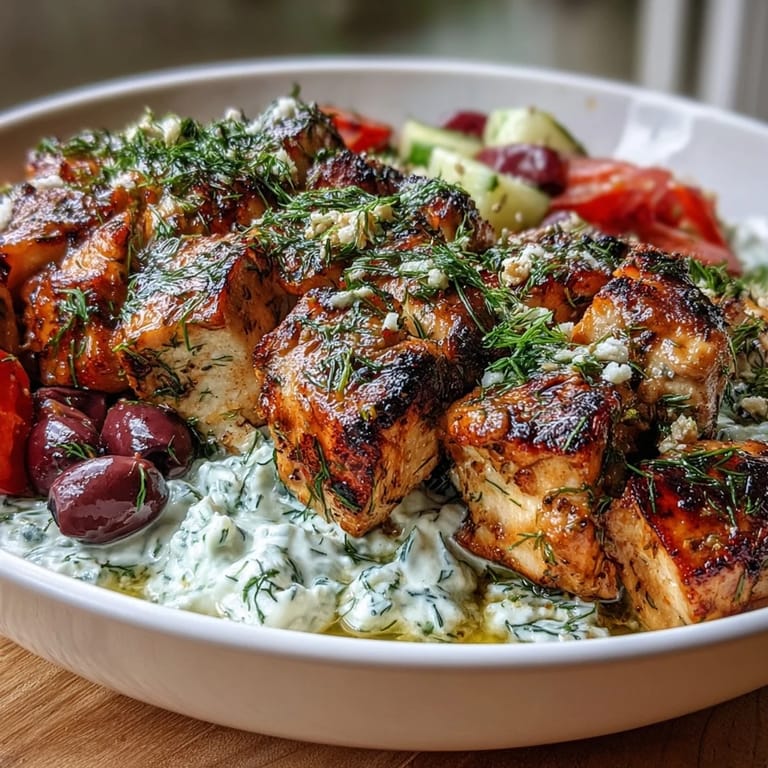
 There's something about the smell of chicken hitting a hot grill that instantly transports me to a sunny afternoon in my kitchen, when a friend stopped by and I threw together whatever Mediterranean ingredients I had on hand. What started as an improvised lunch became the bowl I now make almost weekly—it's become my go-to when I want something that feels indulgent but leaves me energized, not weighed down. The magic isn't in any single ingredient; it's in how the warm, charred chicken meets cool, crisp vegetables and that silky tzatziki that somehow makes everything taste like a proper celebration.
I made this for my partner after they'd had a rough week, and watching them close their eyes after that first bite—really tasting it—reminded me that food doesn't need to be complicated to be nourishing. We sat on the back patio, barely talking, just eating and listening to the evening sounds, and I realized this bowl had become our quiet ritual. That's when it stopped being just a recipe and started being a moment I kept coming back to.
Ingredients
- Boneless, skinless chicken breast (500 g): Cutting it into uniform cubes ensures even cooking and maximum surface area for that beautiful char; it also means you'll get those crispy edges everyone reaches for first.
- Extra virgin olive oil (2 tbsp for marinade, 1 tbsp for tzatziki): This is where your flavor foundation lives, so don't skimp on quality—it transforms from a cooking ingredient to a tasting note.
- Fresh lemon juice (3 tbsp total): Lemon brightens everything it touches, but the real trick is using fresh juice, not the bottled kind, which tastes tinny and flat by comparison.
- Garlic (3 cloves total, 2 minced for marinade, 1 for tzatziki): Mincing garlic fine releases its oils and lets it distribute evenly through the marinade instead of leaving bitter chunks.
- Dried oregano (1 tsp): This is the quiet flavor that says 'Greek' without shouting—oregano has this earthy warmth that makes you feel transported, even in your own kitchen.
- Ground cumin (1/2 tsp) and smoked paprika (1/2 tsp): These two aren't traditional, but they deepen the flavor profile and add complexity that makes people ask what your secret ingredient is.
- Greek yogurt (200 g): Use the 2% or 0% fat version because it has enough tang without being heavy; the thickness matters more than the fat content here.
- Cucumber (1.5 medium total): One goes into the tzatziki (grated and squeezed dry to prevent watery sauce), one goes into the bowl (diced); this vegetable is your cooling agent.
- Fresh dill (1 tbsp): Dill is the MVP of tzatziki—it's herbaceous and slightly anise-like, and it's what makes homemade versions taste nothing like the generic versions.
- Brown or white rice (200 g cooked): Cook it with a pinch of salt in the water so it seasons itself; if you're in a hurry, pre-cooked rice packets work just fine.
- Kalamata olives (80 g): Pit them yourself if possible so you know they're whole; pitted ones sometimes get mushy from sitting in brine too long.
- Feta cheese (60 g, optional): The saltiness and slight creaminess round out all the fresh vegetables, but if you're dairy-free, skip it without guilt.
Tired of Takeout? 🥡
Get 10 meals you can make faster than delivery arrives. Seriously.
One email. No spam. Unsubscribe anytime.
Instructions
- Build your marinade and coat the chicken:
- Whisk together olive oil, lemon juice, minced garlic, oregano, cumin, paprika, salt, and pepper in a bowl until the spices dissolve and everything smells like a Mediterranean breeze. Add your chicken cubes, toss until every piece is coated, and let it sit covered in the fridge for at least 20 minutes—or up to 2 hours if you're planning ahead (the longer it sits, the deeper the flavor goes).
- Make the tzatziki while the chicken marinates:
- Grate your cucumber, squeeze out as much liquid as you possibly can with your hands (this is the step people skip and then wonder why their tzatziki gets watery), then fold it into Greek yogurt along with minced garlic, fresh dill, lemon juice, olive oil, salt, and pepper. Taste it and adjust the lemon or salt to your preference—it should taste bright and feel cooling on your tongue.
- Get your grill ready:
- If using skewers, thread the marinated chicken onto them now, making sure pieces aren't crowded (they need space to char). Heat your grill or grill pan over medium-high heat until you can feel the heat radiating about a hand-width above the surface.
- Char the chicken to golden perfection:
- Lay the chicken on the hot grill and resist the urge to move it around immediately—let it sit for 3–4 minutes until you see golden-brown crust forming on the bottom. Flip once, cook another 3–4 minutes until the internal temperature reaches 74°C (165°F), and listen for that satisfying sizzle when the meat hits the heat.
- Assemble your bowls:
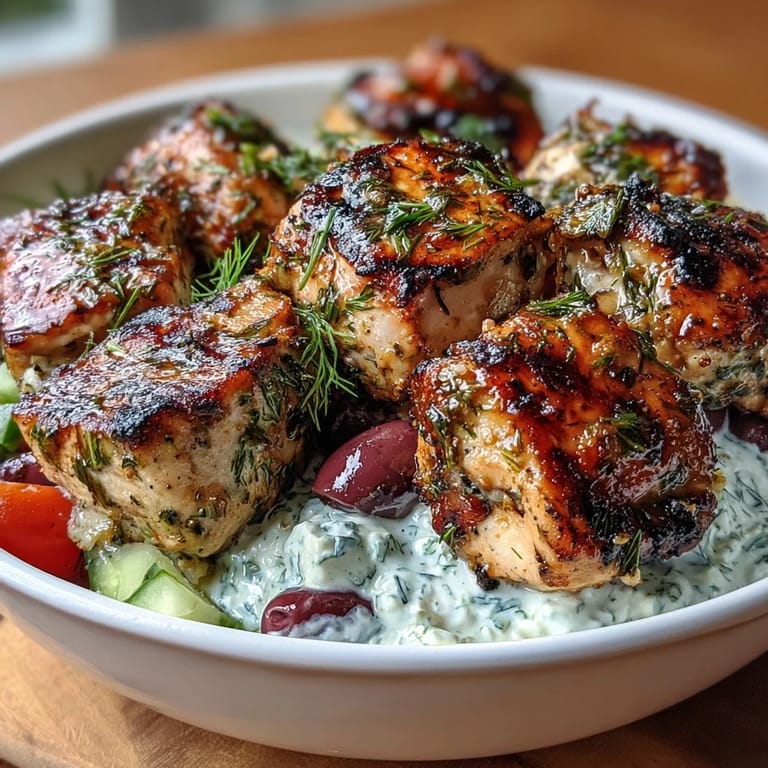
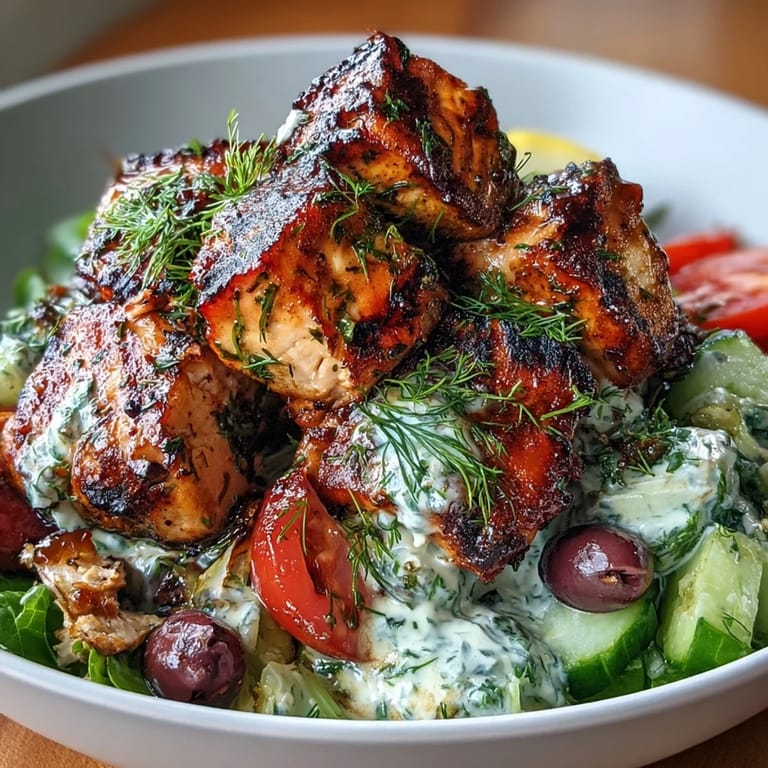
- Divide cooked rice among 4 bowls, then arrange your grilled chicken on top like you're creating edible art. Add the diced cucumber, tomato, red onion, bell pepper, and halved olives in clusters around the bowl so you get a bit of everything in each bite.
- Finish with tzatziki and a flourish:
- Spoon generous dollops of tzatziki over the top or serve it on the side (some people like to mix it in, others prefer to drizzle and dip). Scatter crumbled feta if you're using it, add a final pinch of fresh dill, and you're done.
 Save to Pinterest
 One night, my neighbor smelled the grilled chicken from their yard and came over asking what I was cooking, and suddenly I was assembling an extra bowl and we were eating on my kitchen counter, talking until the food got cold. That's when I understood that this recipe works because it feels generous and personal—you're not plating something precious, you're inviting someone into a moment.
The Marinading Magic
The reason marinating matters here is that you're doing two things at once: the acid from the lemon juice breaks down the chicken's proteins slightly, making it more tender, while the oil, garlic, and spices infuse flavor throughout. I learned this the hard way by comparing a 10-minute marinated batch to a 2-hour batch side by side, and the difference was genuinely noticeable—the longer version had this depth that the rushed version couldn't match. It's not about having more time; it's about understanding what time actually does to your ingredients.
Why Fresh Herbs Matter More Than You Think
There's dried oregano in the marinade, yes, but the fresh dill in the tzatziki and the optional final garnish are where the personality of this dish lives. Dried herbs have their place, but fresh dill has this bright, almost citrusy quality that dried dill just can't replicate—it's the difference between a recipe that tastes like a recipe and one that tastes like someone actually cooked it for you. When you walk past fresh dill at the market, buy it; it keeps in the fridge for ages if you wrap it loosely in a damp paper towel.
Customizing Your Bowl
This bowl is a template, not a rulebook, and that's what makes it so practical for real life. Some weeks I add chickpeas for extra protein and texture, other times I swap the rice for quinoa or use cauliflower rice if I'm keeping carbs low, and once I added roasted beets because they were in my fridge and I was curious—it worked beautifully. The core flavors are strong enough to carry variations without falling apart.
- Low-carb swap: Use cauliflower rice instead of grain rice and suddenly this becomes a weeknight keto-friendly dinner without any other adjustments.
- Vegetarian option: Marinate and grill firm tofu cubes the same way you would chicken, or add extra chickpeas and double the feta for protein.
- Make-ahead strategy: Assemble everything except the tzatziki the night before, cover it, and add the sauce just before eating so textures stay crisp.
 Save to Pinterest
 This bowl has become one of those recipes I return to not because it's fancy, but because it works—it nourishes, it tastes like care, and it reminds me that the best meals are often the simplest ones, built with attention instead of complexity. Make it once, and I promise you'll be adding it to your regular rotation.
Recipe FAQs
- → How should the chicken be marinated?
Combine olive oil, lemon juice, garlic, oregano, cumin, paprika, salt, and pepper, then toss the chicken cubes and marinate for at least 20 minutes for tender, flavorful meat.
- → Can I grill the chicken on a stovetop?
Yes, a grill pan or skillet over medium-high heat works well. Cook the chicken for 3–4 minutes per side until golden and cooked through.
- → What is the best type of rice for this bowl?
Both brown and white rice work nicely, offering a soft base that complements the toppings. Cauliflower rice is a great low-carb alternative.
- → How is the tzatziki sauce prepared?
Mix Greek yogurt with grated cucumber, minced garlic, fresh dill, lemon juice, olive oil, salt, and pepper, then chill until serving.
- → Can this dish be made vegetarian?
Yes, substitute the chicken with tofu and maintain the same marinade and cooking method for a satisfying vegetarian variant.