 Save to Pinterest
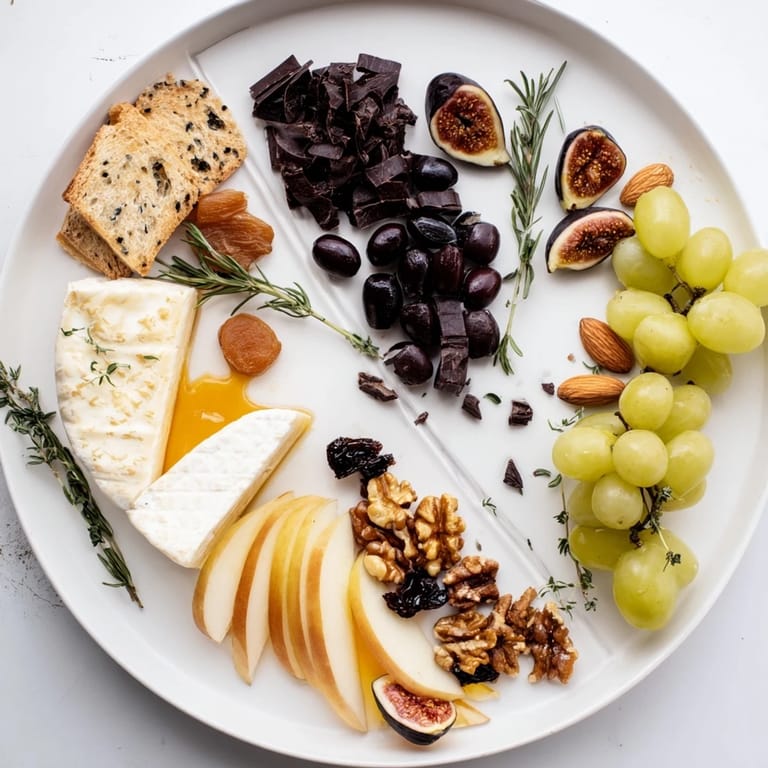
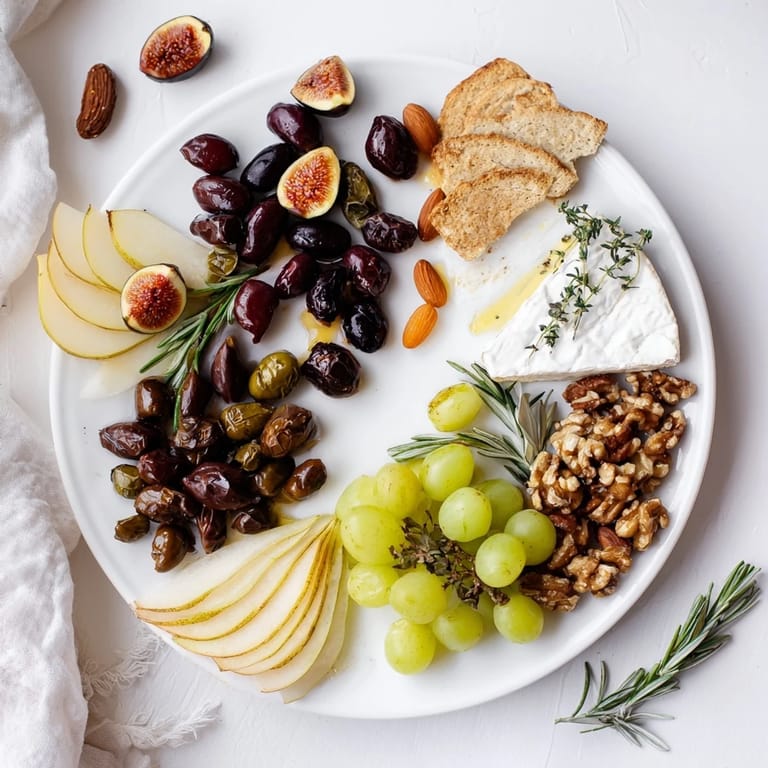
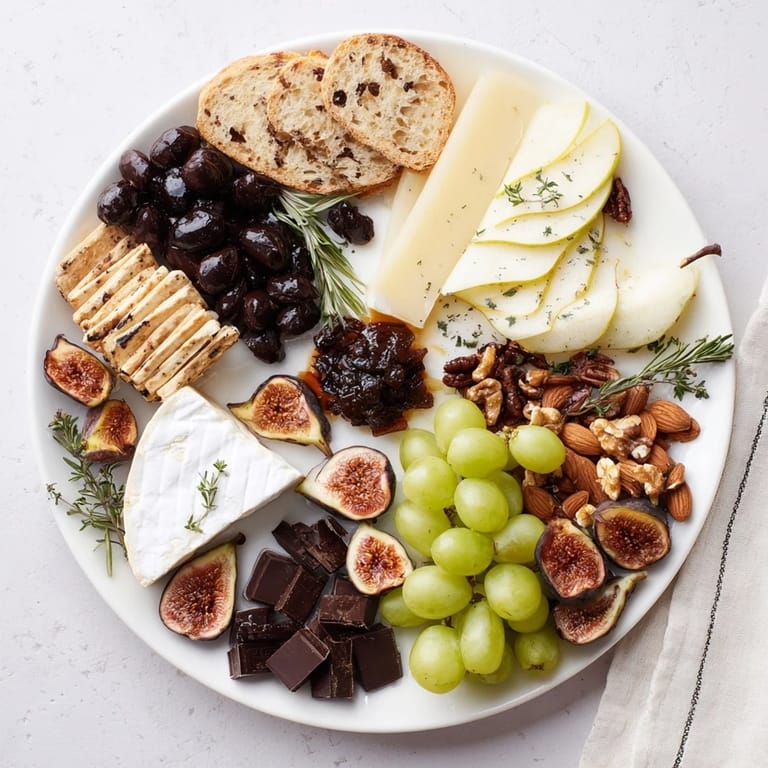
 I discovered the magic of a divided board one December when my sister arrived with a challenge: create something that felt like the season itself. She described wanting darkness and light on the same platter, and suddenly I saw it—not as a complicated concept, but as an excuse to play with contrast. That afternoon, I built this board without overthinking it, layering rich olives and figs against creamy Brie and honeyed pears, and watched guests pause mid-reach, caught between two worlds on a single piece of wood.
My family has claimed this board as their winter tradition now. Every solstice gathering, someone asks if I'm making "that board"—the one that somehow tastes different than a regular cheese board, even though it's the same ingredients. I think it's the intention baked into the arrangement, the deliberate choice to honor both shadow and shine, that makes people linger longer and talk more freely around it.
Ingredients
- Kalamata olives: These bring a briny sophistication that anchors the dark side; pit them yourself if you can, as they taste fresher and cost less.
- Oil-cured black olives: Softer and more forgiving than Kalamatas, they add textural contrast and a deeper, earthy note.
- Dried mission figs: Halving them reveals their jewel-like interior and makes them less intimidating to eat; they're sweet enough to feel indulgent without overpowering.
- Fig jam: A small dollop acts as a bridge between the olives and chocolate, adding umami and a touch of brightness.
- Dark chocolate: Broken, not chopped, so pieces feel artful and allow people to take exactly what appeals to them.
- Roasted almonds: The crunch matters here—it's what makes you keep reaching back.
- Fresh rosemary: More than garnish, it's a flavor anchor that ties the dark side together and fills the air with its green, piney scent.
- Ripe Brie cheese: Room temperature is essential; a cold Brie is a missed opportunity for creamy, almost melting decadence.
- Ripe pears: Slice them just before serving so they don't oxidize, and choose pears that yield slightly to pressure—they should feel almost ready to fall apart in your mouth.
- Honeycomb or honey: If you can find honeycomb, the crunchy texture against soft Brie is unforgettable; honey works but loses some of that magic.
- Toasted walnuts: Toast them yourself if possible; store-bought can taste stale, and fresh toasted walnuts taste almost buttery.
- Seedless green grapes: They provide a burst of fresh acidity that cuts through the richness, and their color completes the light side's visual story.
- Fresh thyme: Smaller and more delicate than rosemary, thyme whispers rather than shouts on the light side.
- Baguette and crackers: Choose a baguette that's crispy outside and soft inside; the board works best when people have options for texture.
Tired of Takeout? 🥡
Get 10 meals you can make faster than delivery arrives. Seriously.
One email. No spam. Unsubscribe anytime.
Instructions
- Mark your divide:
- Use a line of fresh rosemary sprigs or a carefully arranged row of crackers down the center of your board to create a clear boundary. This visual line is what makes the board feel intentional rather than random.
- Build the dark side:
- Start with the two types of olives in small clustered groups, then nestle the halved figs between them. Add a small bowl or spoon of fig jam, scatter the dark chocolate pieces, then layer the roasted almonds so they peek through. Finish with rosemary sprigs arranged decoratively.
- Build the light side:
- Place the Brie as your anchor, either whole or in wedges, then fan the pear slices in a gentle arc nearby. Spoon the honeycomb or honey beside the Brie (they're meant to meet), scatter the toasted walnuts, add clusters of grapes, and crown it with thyme sprigs.
- Frame it:
- Arrange baguette slices along the center divide or on a separate small plate, then scatter crackers in gaps or also serve them separately. This gives people control over their ratios.
- Serve at room temperature:
- Let the board sit for a few minutes after building so the Brie softens slightly and all the flavors find equilibrium. Room temperature is when everything tastes most like itself.
 Save to Pinterest
 What surprised me most about this board is how it sparked conversation in a way a traditional cheese board never did. Guests found themselves telling stories about darkness and light in their own lives, about seasons and balance, about why they were drawn to one side or the other. A board became a moment, and I realized that sometimes the most powerful food is the kind that does something beyond nourishing—it opens something.
The Story Behind the Sides
Every element on this board exists in dialogue with its opposite. The olives' brininess speaks to the pear's delicate sweetness; the dark chocolate's bitterness echoes against the honey's warmth. I learned this by accident the first time I made it, and it transformed how I think about balanced serving boards. The contrast isn't just visual—it's about creating a complete experience where your palate travels a journey with each bite.
Making It Your Own
There's a version of this board in your kitchen already, waiting to be made with what you have and what calls to you. Swap roquefort for Brie if you want something more assertive, trade pears for thinly sliced apples in autumn, substitute dried apricots for figs when they feel too heavy. The structure is flexible; the intention is not. What matters is that you're playing with contrast, honoring both richness and brightness, and giving people something that tastes as beautiful as it looks.
Pairing and Timing
This board comes alive at the table with a dry sparkling wine that refreshes between bites, or a light-bodied red that won't overpower the subtle flavors. I've also served it with an herbal tea in the morning, which creates an entirely different mood. The beauty of a cheese board is that it works whenever you need it—as an appetizer, a light dinner, or a midnight snack—because it asks nothing of you except the willingness to slow down.
- A small piece of dark chocolate with an olive is a flavor combination worth experiencing.
- If using prosciutto for non-vegetarians, drape it loosely so it doesn't dominate the visual balance.
- Assemble no more than an hour before serving to keep everything at peak texture and temperature.
 Save to Pinterest
 This board reminds me that the best meals aren't always about complexity—they're about intention and balance. Serve it as an offering of both comfort and brightness, and watch what unfolds.
Recipe FAQs
- → How should the board be arranged for best effect?
Divide the board in half with rosemary or crackers to distinctly separate the rich, savory elements from the bright, fresh ones, enhancing visual and flavor contrast.
- → What can be used to substitute Brie cheese?
Roquefort or Camembert provide wonderful alternatives, offering similar creamy textures with unique flavor profiles.
- → Are there options to add protein to this board?
For added protein, prosciutto slices can be incorporated on either side, complementing both flavor profiles well.
- → Which beverages pair well with this board?
A dry sparkling wine or a light-bodied red wine enhances the contrasting flavors and cleanses the palate between bites.
- → How can this board be adjusted for dietary restrictions?
Use gluten-free crackers and baguette alternatives as needed, and omit prosciutto for vegetarian preferences.
- → What garnishes elevate the presentation?
Fresh rosemary sprigs on the dark side and thyme on the light side add aroma and a visual touch that ties the components together.