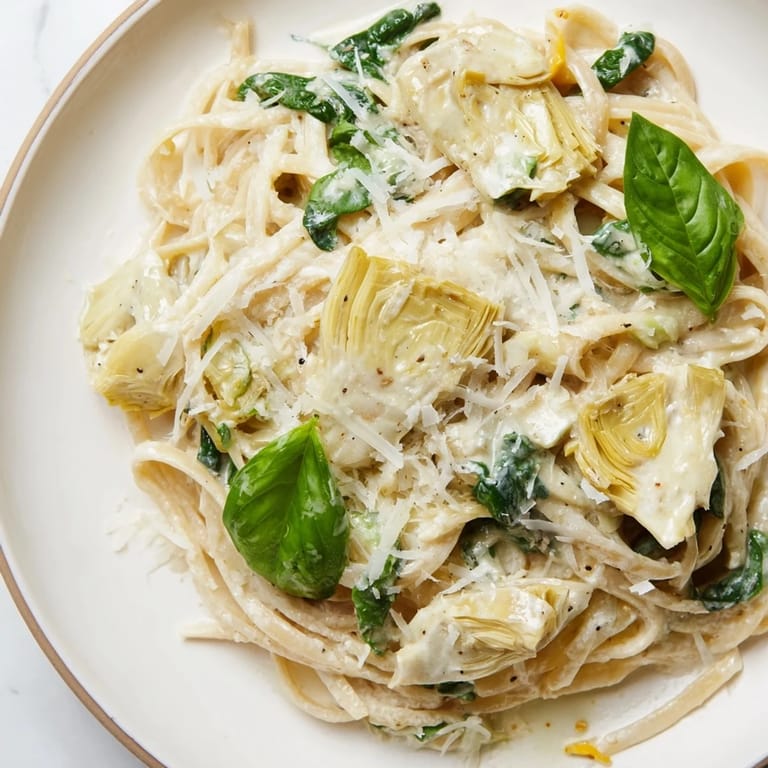
 Save to Pinterest
 There's a particular kind of magic that happens when you're standing in your kitchen on a weeknight, craving something that feels both comforting and bright. That's exactly what drew me to this creamy lemon artichoke pasta, a dish that somehow manages to taste like you've been cooking all afternoon when really you're done in under forty minutes. I discovered it quite by accident, actually, grabbing a can of artichokes from the pantry and wondering what would happen if I treated them like they deserved to be the star. The combination of that silky cream with sharp lemon juice and tender artichokes became something I found myself making again and again, each time feeling a little more confident about the proportions.
I remember making this for my partner on a random Tuesday evening when we were both tired and hungry, and they looked genuinely surprised that something this elegant had come from our tiny kitchen. There's something about the aroma while it's cooking—the garlic and shallots releasing their sweetness, then that hit of fresh lemon zest—that made the whole apartment smell like a small trattoria. That dinner became our go-to when we wanted to feel a little fancy without the stress, and it's since become the dish I pull out when friends come over and I want to impress without showing my hand too much.
Ingredients
- Fettuccine or linguine (350 g / 12 oz): The wider ribbons catch the cream sauce beautifully and have just enough surface area to feel luxurious without being heavy.
- Artichoke hearts, canned (400 g / 14 oz), drained and quartered: These are honestly a revelation—they're already tender and come with such clean flavor, I'd argue they're superior to fresh for this particular dish.
- Baby spinach (2 cups, optional): It wilts right into the sauce and adds a whisper of earthiness that rounds out the brightness.
- Garlic (2 cloves, minced) and shallot (1 small, finely chopped): Mince them fine so they practically dissolve into the base of your sauce and flavor everything evenly.
- Lemon zest and juice (from 1 lemon): Use a microplane for the zest if you have one—it makes such a difference in how it distributes through the dish.
- Heavy cream (200 ml / 3/4 cup + 2 tbsp): This is what makes the sauce luxurious, but the pasta water will stretch it beautifully if you need it to.
- Parmesan cheese, grated (60 g / 1/2 cup): Freshly grated always tastes richer and melts more smoothly than pre-shredded.
- Unsalted butter (2 tbsp): This adds a richness that olive oil alone simply can't, and it helps emulsify the cream.
- Extra-virgin olive oil (2 tbsp): Don't use your fancy finishing oil here—save that for drizzling at the end if you're feeling generous.
- Salt, black pepper, and red pepper flakes: The red pepper flakes are optional, but they add a subtle kick that makes the lemon shine even brighter.
- Fresh basil or parsley, for garnish: This is the final touch that makes it look like you knew what you were doing all along.
Tired of Takeout? 🥡
Get 10 meals you can make faster than delivery arrives. Seriously.
One email. No spam. Unsubscribe anytime.
Instructions
- Boil your pasta water with purpose:
- Fill a large pot with salted water and bring it to a rolling boil. The salt matters here—it should taste like the sea, not like you're being subtle about it. This is your only chance to season the pasta itself.
- Cook pasta until it's just tender:
- Follow the package instructions for al dente, but taste it a minute before the timer suggests—it should have just a whisper of resistance when you bite it. As soon as it's there, drain it into a colander, but first scoop out about half a cup of that starchy water and set it aside in a mug or small bowl.
- Begin your sauce base:
- In a large skillet, warm the olive oil and butter together over medium heat until the butter is melted and foaming slightly. Add your minced shallot and garlic, stirring frequently until they're soft and fragrant, which should take about two minutes—you're not looking for color here, just softness.
- Add the artichokes and build flavor:
- Scatter in your quartered artichoke hearts and let them cook for about three minutes, stirring occasionally until their edges just barely begin to golden. This is where their natural sweetness really starts to come through, and it's worth the patience.
- Brighten with citrus and greens:
- Stir in the lemon zest first—you'll smell it immediately, and it's one of the best moments in cooking this dish. If you're using spinach, pile it in now and stir gently until it's completely wilted.
- Create the silky sauce:
- Pour in your heavy cream and turn the heat up just slightly to bring it to a gentle simmer. You'll see the surface shimmer and small bubbles form around the edges. Reduce the heat to low, then sprinkle in the Parmesan while stirring constantly so it melts evenly without clumping.
- Season to balance:
- Add the lemon juice (this is crucial—it transforms the sauce), salt, black pepper, and red pepper flakes if you're using them. Taste it. Does it need more brightness? Add a squeeze more lemon. Does it taste flat? A pinch more salt. This is your moment to adjust.
- Bring everything together:
- Add your drained pasta directly to the skillet and toss gently to coat everything in the cream sauce. If it looks too thick, add a splash of that reserved pasta water and stir—the starch in the water helps bind the sauce beautifully, and you can always add more.
- Plate with intention:
- Serve immediately while the sauce is still silky and warm, twirl some pasta onto each plate, and finish with a scatter of fresh basil or parsley and a light dusting of extra Parmesan if you're feeling it.
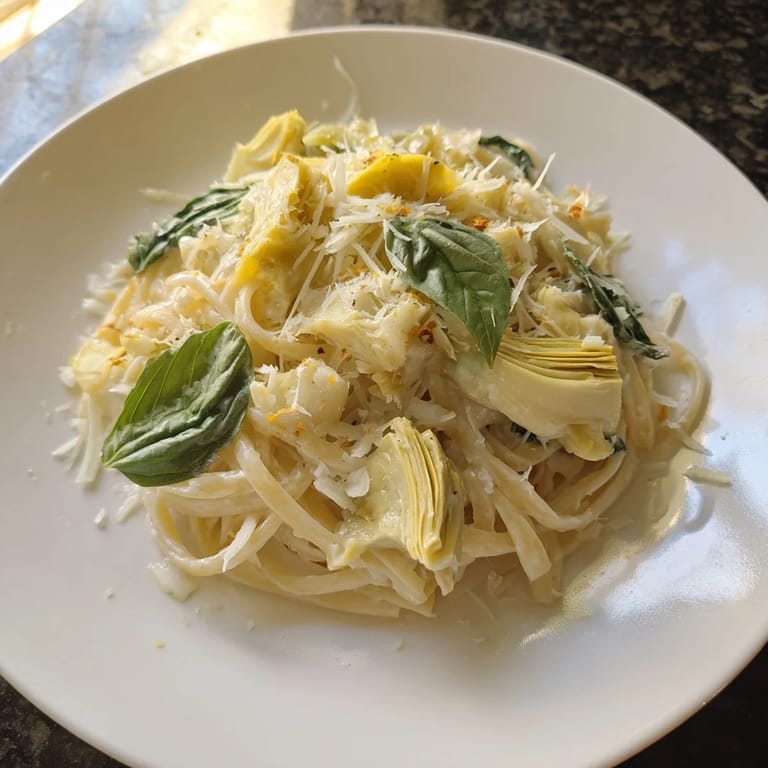 Save to Pinterest
 What really got me about this dish was how it made people slow down and actually taste their dinner instead of rushing through it. There's something about the combination of textures and flavors that makes you want to savor each bite rather than wolf it down, and that small shift changed how we thought about weeknight cooking entirely.
Why Canned Artichokes Are a Secret Weapon
I used to be one of those people who felt like using canned vegetables was somehow cheating, until I realized that canned artichokes are picked at peak ripeness, processed immediately, and actually maintain their delicate flavor better than fresh ones that have been sitting in the market for days. They're also already tender, which means you're not fussing with trimming or peeling, and they cost a fraction of what fresh artichokes run you. The first time I compared a dish made with canned artichokes to one with fresh, I couldn't honestly say the fresh version tasted better—it just tasted different, and sometimes different doesn't mean better, it just means more work.
Variations and Customizations
This pasta is wonderfully forgiving and loves additions, so feel free to treat it as a canvas for whatever you have on hand or whatever you're craving. I've made it with roasted red peppers stirred in at the end, with a handful of cherry tomatoes that have been halved and warmed through, and once even with some crispy bacon crumbled over the top. The core sauce is strong enough to accommodate these changes without losing its identity, and experimenting is half the fun.
Pairing and Serving Suggestions
This pasta pairs beautifully with a crisp white wine like Pinot Grigio or Sauvignon Blanc—the acidity in the wine plays off the lemon in the dish and keeps everything feeling fresh and bright. A simple arugula salad with just lemon vinaigrette alongside it is all the accompaniment you really need, though crusty bread for soaking up any remaining sauce won't go amiss.
- Serve it immediately after tossing with the sauce, while everything is still warm and the cream is at its silkiest.
- Make it just before your guests sit down, because it's genuinely better eaten fresh than it is reheated or sitting for too long.
- Keep extra Parmesan and fresh lemon wedges at the table so people can adjust it to their taste.
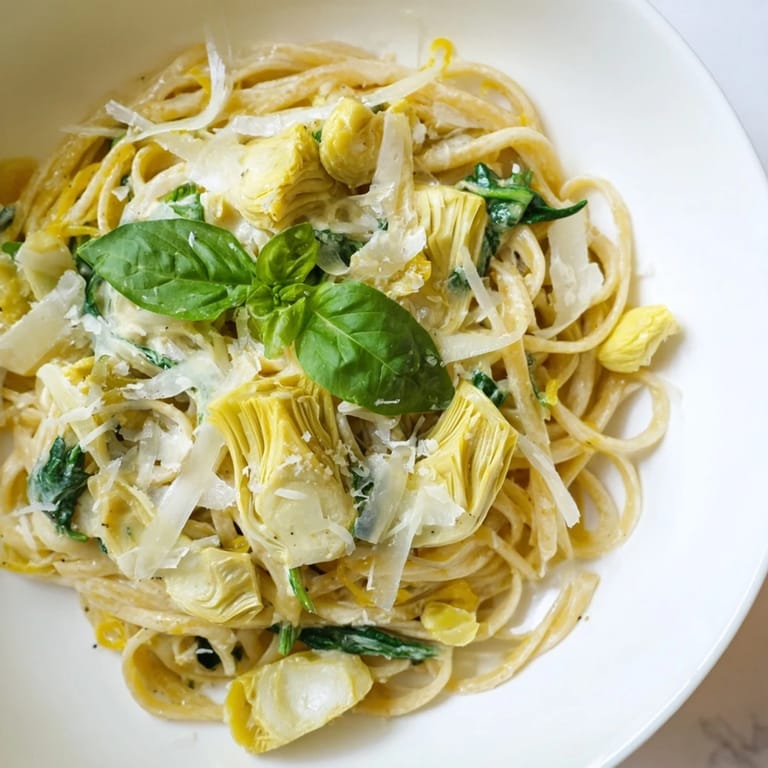 Save to Pinterest
 This pasta has become one of those dishes I make without thinking anymore, the muscle memory of it deeply settled into my hands and my kitchen habits. It's proof that the best recipes aren't the complicated ones—they're the ones that taste like care without demanding it.
Recipe FAQs
- → Can I use different pasta types for this dish?
Yes, fettuccine or linguine work best, but any long pasta like spaghetti or tagliatelle can also be used to hold the creamy sauce well.
- → What can I substitute for heavy cream?
You can replace heavy cream with a plant-based cream substitute for a lighter or vegan variation without compromising the sauce's creaminess.
- → Is frozen artichoke acceptable instead of canned?
Frozen artichoke hearts can be used if thawed and drained properly, though canned are preferred for convenience and consistent texture.
- → How do I adjust the seasoning for more heat?
Increase or omit the crushed red pepper flakes to vary the spice level according to your taste preference.
- → Can I add protein to this pasta?
Yes, cooked chicken or shrimp can be added to boost protein and make the dish more substantial.