 Save to Pinterest
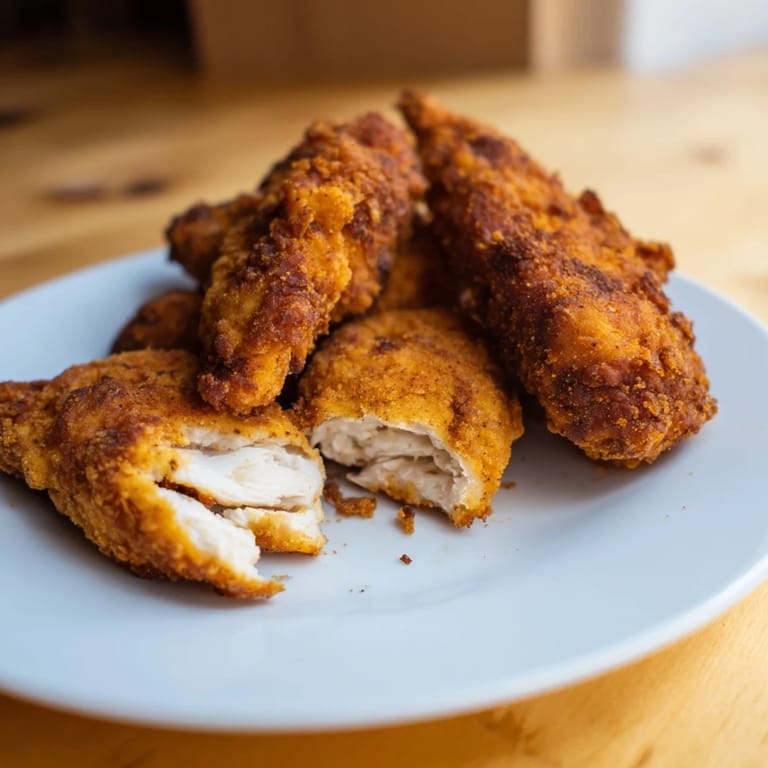
 My dad used to make these crispy fried chicken tenders on lazy Sunday afternoons, and the kitchen would fill with this golden, savory smell that had everyone gathering around the stove before anything was even plated. Years later, I realized his secret wasn't some fancy technique—it was patience with the marinade and not being afraid of the oil's sizzle. Now when I make them, I think about those afternoons and how something this simple can become the meal everyone requests.
I'll never forget the first time my roommate tasted these—he literally stopped mid-sentence, looked at the tender, then back at me with this expression like I'd just revealed I was secretly a chef. Turns out crispy homemade fried chicken hits different when you've been eating takeout versions your whole life, and that moment made me realize this wasn't just dinner, it was proof that good food is worth the fifteen minutes of actual cooking time.
Ingredients
- Chicken tenders (500g): Buy them pre-trimmed if your market has them—saves time and they cook evenly since they're already the same thickness.
- Buttermilk (240ml): This is the magic; the acidity tenderizes the chicken while the dairy keeps it impossibly juicy, so don't skip it or substitute with regular milk.
- Salt, black pepper, garlic powder, onion powder: These four seasonings in the marinade create an umami base that seasons the chicken from the inside out.
- All-purpose flour (180g): Measure it properly—too much flour makes the coating gummy, too little means it won't stick.
- Paprika (1.5 tsp): This gives you that restaurant-quality color and a subtle smokiness that plain flour can never achieve.
- Baking powder (1 tsp): The secret ingredient that makes the crust extra crispy and lighter than traditional fried chicken coatings.
- Vegetable oil (500ml): You need enough oil to come halfway up the chicken so it fries rather than steams—shallow frying is the enemy of crispness.
Tired of Takeout? 🥡
Get 10 meals you can make faster than delivery arrives. Seriously.
One email. No spam. Unsubscribe anytime.
Instructions
- Create the buttermilk bath:
- Whisk buttermilk with salt, pepper, garlic powder, and onion powder in a large bowl, then submerge your chicken tenders completely. Cover and refrigerate for at least an hour—this is where the real tenderizing happens, so patience here pays off in every bite.
- Mix your coating blend:
- Combine flour, paprika, salt, pepper, cayenne if you want heat, and baking powder in a shallow dish. This mixture is your canvas for that golden, crispy exterior.
- Heat your oil properly:
- Warm oil in a deep skillet or Dutch oven to 175°C (350°F)—use a thermometer because guessing ruins everything. The oil should shimmer and feel alive, not smoking.
- Dredge with confidence:
- Pull each tender from the buttermilk, let excess drip back into the bowl, then press both sides firmly into the flour mixture so the coating actually sticks. You want a thick, even layer that'll crisp up beautifully.
- Fry in batches carefully:
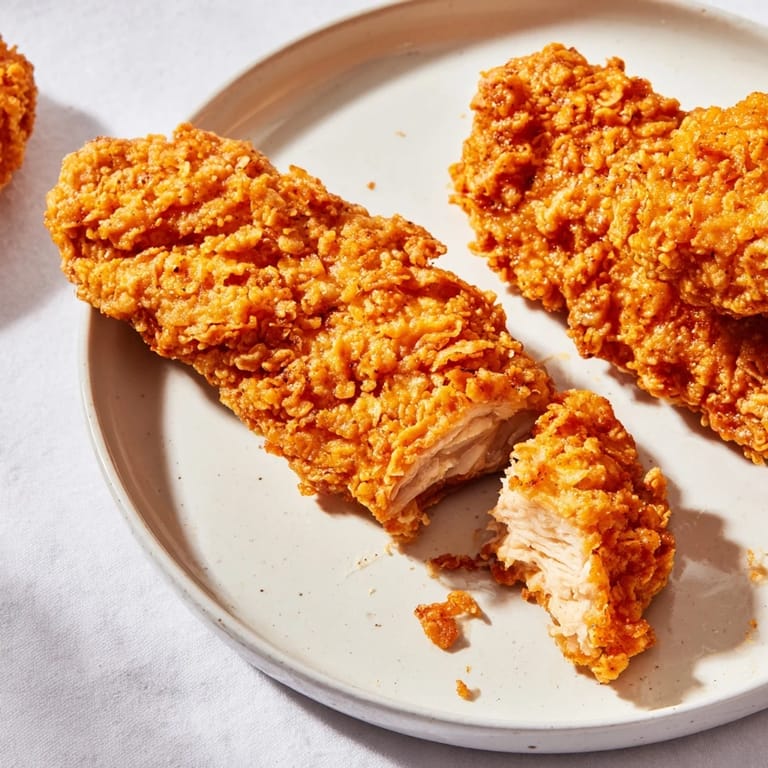
- Lower tenders into the hot oil without crowding—they need space to fry, not steam in each other's moisture. Cook 4 to 5 minutes per side until the coating turns deep golden and the internal temperature reaches 75°C (165°F).
- Rest before serving:
- Transfer to paper towels and let them sit for 2 minutes—this stops the cooking and lets them drain while staying warm and crisp.
 Save to Pinterest
 Last summer I made these for a backyard picnic, and watching people close their eyes and smile while eating something I'd made with my own hands—that's when cooking stopped being a chore and became something I actually wanted to do more of. That one batch converted three people into my kitchen's regular visitors.
The Double-Dip Secret
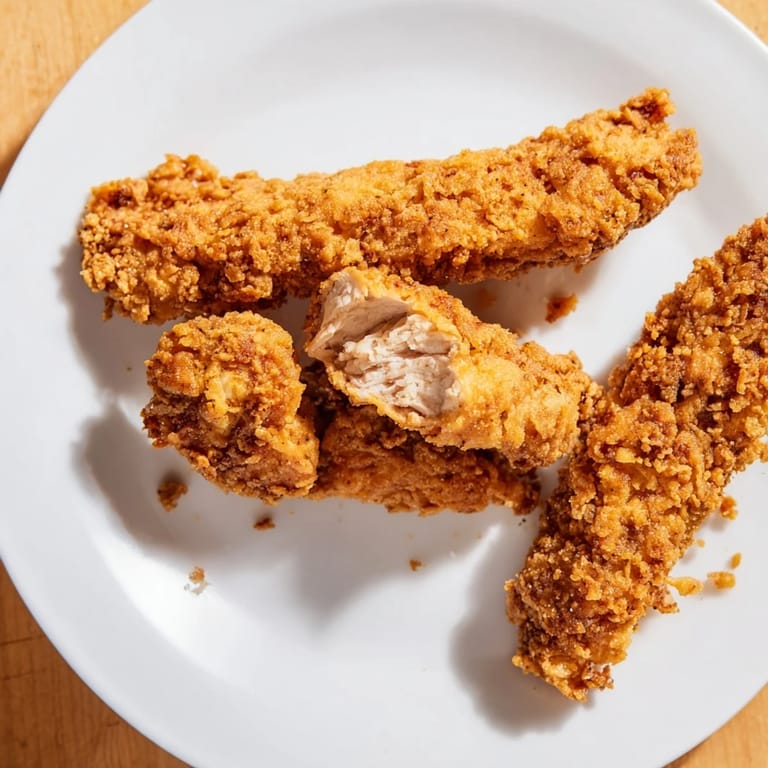
If you want tenders that sound like they're cracking when you bite into them, try the double-dip trick: coat in flour, dip back into buttermilk, then flour again. It sounds fussy, but those extra layers create an almost impossible crunch that makes store-bought versions seem like cardboard in comparison. The first time I did this, I honestly couldn't believe it was the same recipe.
Dipping Sauce Pairings That Matter
Fried chicken tenders are only as good as what you dip them into, and I've learned this lesson through trial and error. A quick honey mustard (equal parts honey and Dijon mustard with a squeeze of lemon) cuts through the richness beautifully, while ranch brings everything down to earth if you're feeding kids. Even sriracha mayo transforms these into something different every time.
Storage and Reheating Tips
These keep beautifully in the fridge for up to three days, which is why I always make extra even when I'm only feeding two people. The trick to reheating them without losing the crunch is using your oven at 190°C (375°F) for about 5 minutes rather than the microwave, which turns them soggy and sad.
- Store in an airtight container with paper towels between layers to absorb excess moisture.
- Bring them to room temperature before reheating so they warm through evenly without the outside drying out.
- If you're meal prepping, you can also freeze these for up to three months and reheat straight from frozen.
 Save to Pinterest
 There's something deeply satisfying about pulling golden, crispy chicken from hot oil and knowing you made it yourself. Once you've done this a few times, you'll stop craving takeout versions altogether.
Recipe FAQs
- → How long should I marinate the chicken tenders?
Marinate for at least 1 hour in the refrigerator, though overnight marinating will deepen the flavors and make the chicken more tender and juicy.
- → What's the best oil temperature for frying?
Heat the oil to 175°C (350°F). Use a cooking thermometer to maintain consistent temperature—this ensures the coating crisps up while the chicken cooks through without burning.
- → Can I make this gluten-free?
Yes, simply substitute all-purpose flour with a gluten-free flour blend in the coating mixture. The rest of the process remains the same.
- → How do I get extra crispy chicken?
Try double-dipping: after the initial flour coating, dip the tenders back into the buttermilk, then coat again in the flour mixture for an extra-crunchy, thicker crust.
- → What internal temperature indicates the chicken is fully cooked?
The chicken is safely cooked when it reaches an internal temperature of 75°C (165°F). Use a meat thermometer inserted into the thickest part of a tender to verify doneness.
- → Can I prepare the chicken ahead of time?
Yes, marinate the chicken up to overnight for best flavor. You can also bread the marinated tenders and refrigerate them for a few hours before frying.