 Save to Pinterest
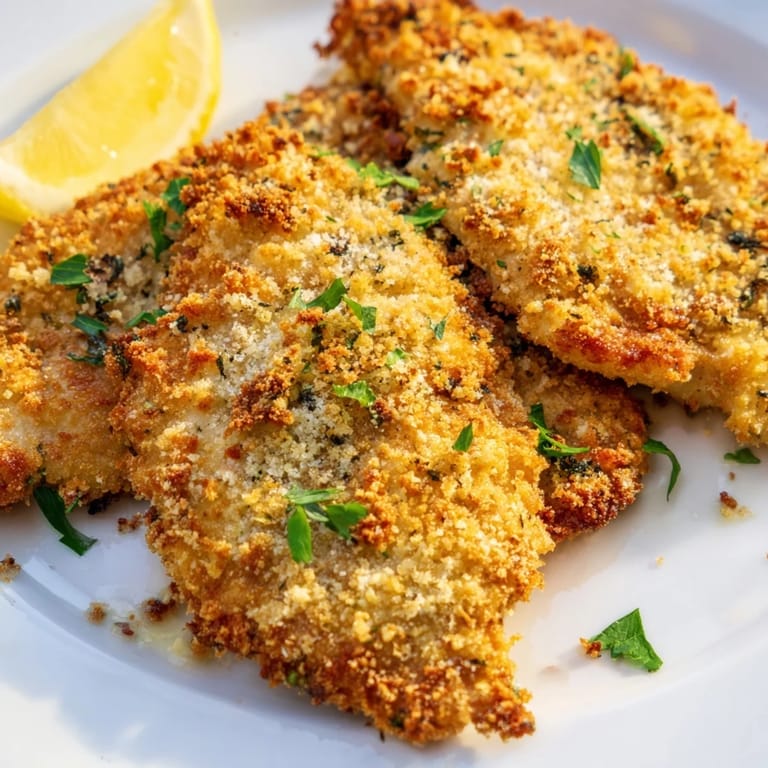
 My neighbor brought over a container of these golden chicken cutlets one Tuesday evening, still warm from her oven, and I understood immediately why her kids devoured them so quickly. The coating was impossibly crispy yet the chicken stayed tender inside, nothing like the heavy fried versions I'd tried before. She mentioned she'd ditched the skillet entirely, choosing the oven instead, and suddenly everything made sense. I asked for her method right there on the porch, notepad in hand. Now I make them constantly, and people always ask if I'm secretly running a restaurant.
I served this to my sister's book club last month, and the quiet that fell over the table when everyone took their first bite said everything. Someone asked if it was homemade, genuinely surprised, and I realized this recipe had quietly become one of my most trusted dishes for impressing people without fussing.
Ingredients
- Chicken breasts: Four boneless, skinless breasts pounded thin are key because they cook evenly and stay juicy; if you can find thicker ones, butterfly and pound to about half an inch.
- All-purpose flour: This creates the first barrier between the egg and the panko, helping everything stick properly and preventing any bare spots.
- Eggs and milk: Two eggs whisked with a tablespoon of milk makes a perfect adhesive without being too thick or runny.
- Panko breadcrumbs: Use panko exclusively if you want maximum crispness; regular breadcrumbs won't give you that satisfying crunch.
- Parmesan cheese: Freshly grated makes an enormous difference in flavor and texture compared to the pre-grated stuff in the green can.
- Garlic powder and Italian herbs: These seasonings go directly into the breading, so you get flavor in every bite rather than just on the surface.
- Salt and pepper: Taste your egg mixture after adding these and adjust if needed since the Parmesan adds saltiness too.
- Olive oil: A light spray or drizzle is all you need to trigger that golden crust in the oven.
Tired of Takeout? 🥡
Get 10 meals you can make faster than delivery arrives. Seriously.
One email. No spam. Unsubscribe anytime.
Instructions
- Prepare your workspace:
- Preheat the oven to 425°F and line a baking sheet with parchment paper, then give it a light misting of oil or a thin brush of olive oil so nothing sticks. This step takes thirty seconds but saves you from frustration later.
- Butterfly and pound the chicken:
- Lay each breast flat, place your hand on top, and slice horizontally to create two thinner pieces, then lay them between two pieces of plastic wrap and pound gently with a meat mallet until they're roughly half an inch thick. Pat them completely dry with paper towels because any moisture fights against crispness.
- Set up your breading station:
- Arrange three shallow bowls in a line: flour in the first, eggs beaten with milk in the second, and your panko mixture in the third. This assembly-line method prevents your fingers from getting coated in raw egg.
- Bread each cutlet:
- Coat each piece in flour first, shake off the excess, dip it in the egg mixture, and then press it firmly into the panko coating, making sure both sides are completely covered. A few bare spots will crisp up fine, but a well-breaded piece is what separates good from great.
- Arrange and oil:
- Place the breaded cutlets on your prepared baking sheet in a single layer without crowding, then give them all a light drizzle or spray of olive oil. You're aiming for a thin coating that encourages browning without making them greasy.
- Bake:
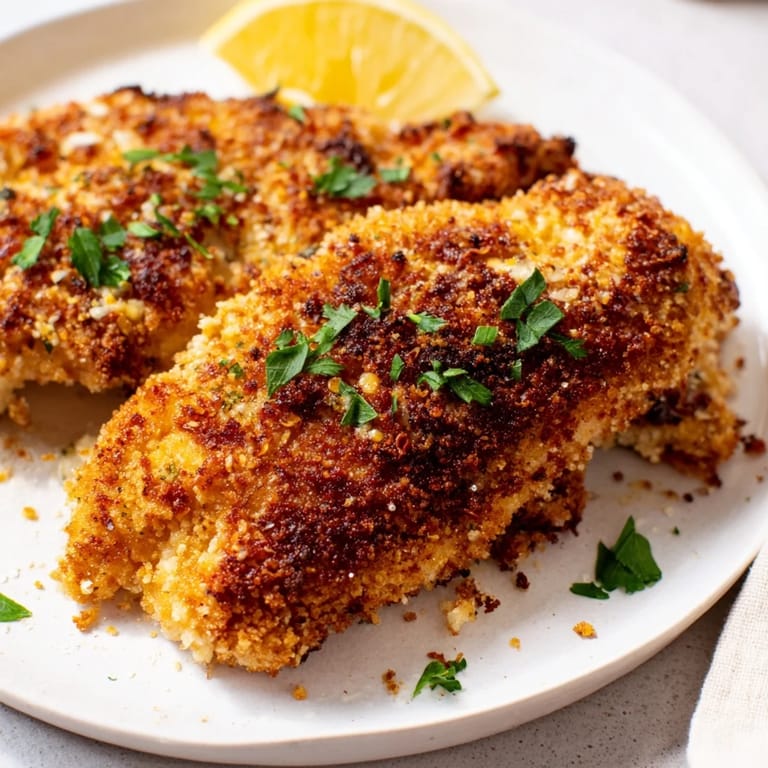
- Slide the pan into the oven and bake for about twenty-two to twenty-five minutes, flipping halfway through so both sides turn golden brown. You'll know they're done when they're a warm golden color and a meat thermometer reads 165°F in the thickest part.
- Finish and serve:
- Let them cool for a minute so the coating sets, then garnish with fresh parsley and serve with lemon wedges if you like. The squeeze of lemon just before eating brightens everything up.
 Save to Pinterest
 My daughter once declared these "better than restaurant chicken," which became the moment I stopped apologizing for making simple food at home. That compliment stuck with me more than any fancy technique ever could.
Timing and Temperature Matter
The difference between perfectly cooked and slightly overdone happens in about two minutes, so set a timer and trust it rather than guessing. I've learned that chicken breast dries out incredibly fast once it hits 170°F, so hitting that 165°F target and pulling it out immediately is non-negotiable. An instant-read thermometer became one of my kitchen's best investments because it removes all the anxiety from cooking chicken.
Playing with Flavors
The beauty of this recipe is how flexible the seasoning layer can be without losing what makes it work. I've added lemon zest, fresh thyme, or even a pinch of cayenne pepper to the panko mixture depending on my mood, and every version has been delicious. The Parmesan stays constant as your base note, but everything else is open to interpretation.
Serving Suggestions and Sides
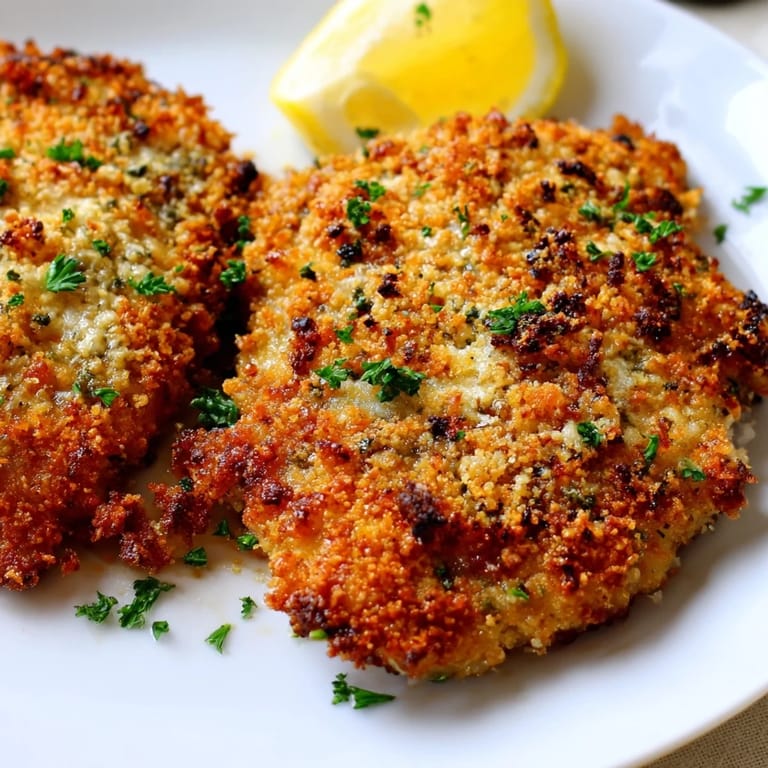
These cutlets are equally at home on top of a simple arugula salad with lemon vinaigrette as they are next to a pile of roasted vegetables or a bowl of pasta. I've even sliced them cold and put them on sandwiches the next day, which my family loves as much as eating them hot.
- A crisp white wine like Pinot Grigio or a cold beer cuts through the richness beautifully.
- Serve with roasted lemon wedges for people who want extra brightness without thinking to ask for it.
- Any leftover sauce, salsa, or pesto from another meal works as a dipping sauce if someone wants one.
 Save to Pinterest
 This recipe has earned its place in my regular rotation because it delivers restaurant-quality results without drama or complicated techniques. Every time I make it, I remember why simple food cooked well is worth far more than anything complicated.
Recipe FAQs
- → What type of chicken works best for this dish?
Boneless, skinless chicken breasts are ideal for even cooking and easy coating. Thighs can be used as a flavorful alternative.
- → How can I achieve a crispy crust without frying?
Baking the breaded cutlets with a light drizzle or spray of olive oil helps create a golden, crispy texture without excess oil.
- → Can I substitute the herbs used in the coating?
Dried basil and oregano work well, but you can experiment with other Italian herbs or herb blends to enhance flavor.
- → What is the best way to prepare the chicken breasts before coating?
Butterflying and pounding the chicken to uniform thinness ensures even cooking and a tender bite.
- → Are there any recommended side dishes to pair with this dish?
Light salads, roasted vegetables, or pasta complement the flavors and maintain a balanced meal.
- → How can I store leftovers to maintain crispiness?
Refrigerate the cooked cutlets in an airtight container and reheat briefly in an oven or toaster oven to preserve the crust.