 Save to Pinterest
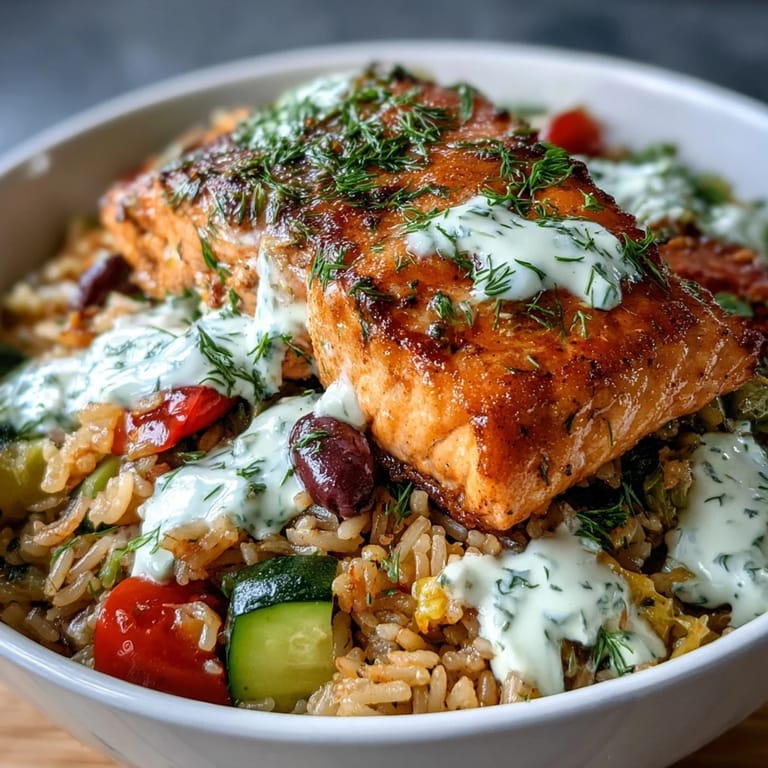
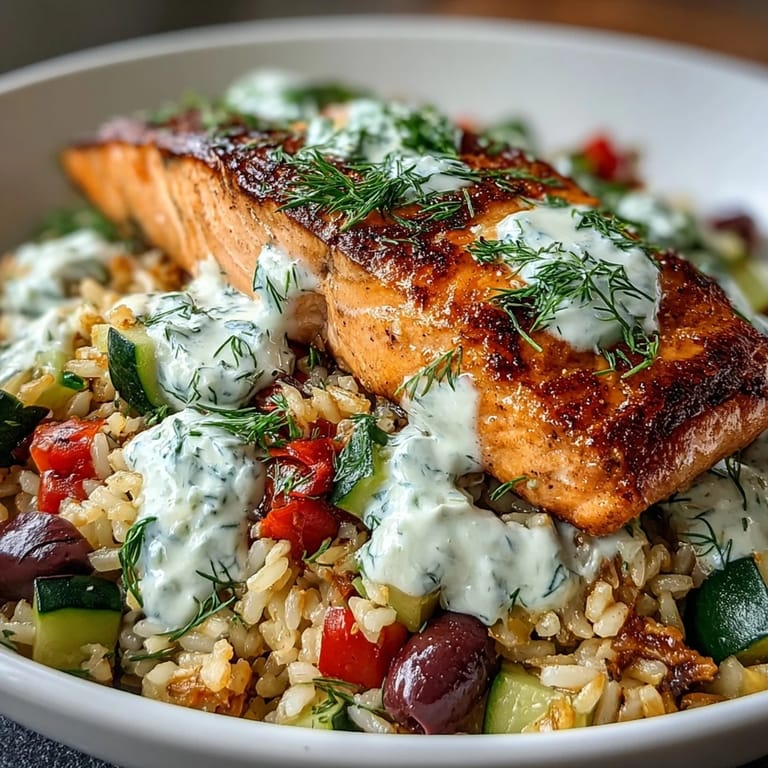
 My neighbor brought over a bowl she'd grabbed from a new place downtown, and I was immediately struck by how the salmon's copper skin caught the light against that impossibly golden rice. She described it as casual Mediterranean elegance, the kind of thing you'd eat by a window on a good day. I went home determined to recreate it, and after a few attempts, I realized the magic wasn't complexity—it was the interplay between crispy, tender, fresh, and creamy all happening at once. The first time my family tasted it, nobody reached for seconds so much as they reached for the lemon wedges, eager to squeeze more brightness into every bite.
I made this for my sister during one of those rare afternoons when she actually had time to sit down, and watching her close her eyes after the first bite told me everything. She said it tasted like the vacations we couldn't take that year—bright, balanced, with enough substance to feel nourishing rather than light. That's when I understood this bowl isn't just dinner; it's a small gesture toward feeling a little more alive at the table.
Ingredients
- Salmon fillets (4, about 150 g each): The star of the show—look for fillets with vibrant pink color and no gray undertones, which signal fresher fish that'll cook more evenly and taste sweeter.
- Olive oil (5 tablespoons total): Use a good quality oil you actually like the taste of, since it's not being cooked down into obscurity but rather highlighting flavors.
- Jasmine or basmati rice (2 cups cooked, preferably leftover): Cold rice is absolutely crucial here; it's dryer and will crisp up beautifully, while warm rice tends to steam instead.
- Red bell pepper, zucchini, and red onion: Cut them consistently so they soften at the same rate, and don't skip the red onion—its sweetness balances the brininess of the olives.
- Cherry tomatoes, Kalamata olives, and capers: These add umami and a punchy Mediterranean character that makes the whole bowl feel intentional rather than assembled.
- Plain Greek yogurt (1/2 cup): The tanginess is essential; don't use regular yogurt, which lacks the body and will make your drizzle too thin.
- Fresh lemon juice and zest: Juice from fresh lemons, not bottled—the difference in brightness is genuinely noticeable and worth the extra thirty seconds of effort.
Tired of Takeout? 🥡
Get 10 meals you can make faster than delivery arrives. Seriously.
One email. No spam. Unsubscribe anytime.
Instructions
- Whisk the lemon-yogurt drizzle first:
- Combine your Greek yogurt with fresh lemon juice, zest, and dill in a small bowl, seasoning gently as you go. Refrigerate this while you prep everything else, which gives the flavors time to marry and makes assembly smooth and stress-free.
- Sauté the vegetables with intention:
- Heat olive oil in a large skillet and let it shimmer before adding bell pepper, zucchini, and onion—they'll soften faster and pick up a subtle caramelization. After about five minutes, add the tomatoes, olives, and capers, stirring just to combine and let everything warm through for another couple of minutes.
- Create the crispy rice layer:
- Return your skillet to medium-high heat with fresh olive oil and add the cold rice in an even, compact layer—don't stir yet. Let it sit undisturbed for six to eight minutes, listening for a gentle sizzle that tells you the bottom is turning golden, then press down with your spatula to encourage more crispiness before dividing into bowls.
- Cook salmon with patience:
- Pat your fillets completely dry with paper towels, season simply with salt and pepper, and place them skin-side up in a nonstick skillet with hot olive oil. Resist the urge to move them; let them sit for three to four minutes per side until the edges turn opaque and a fork flakes the flesh easily.
- Assemble with confidence:
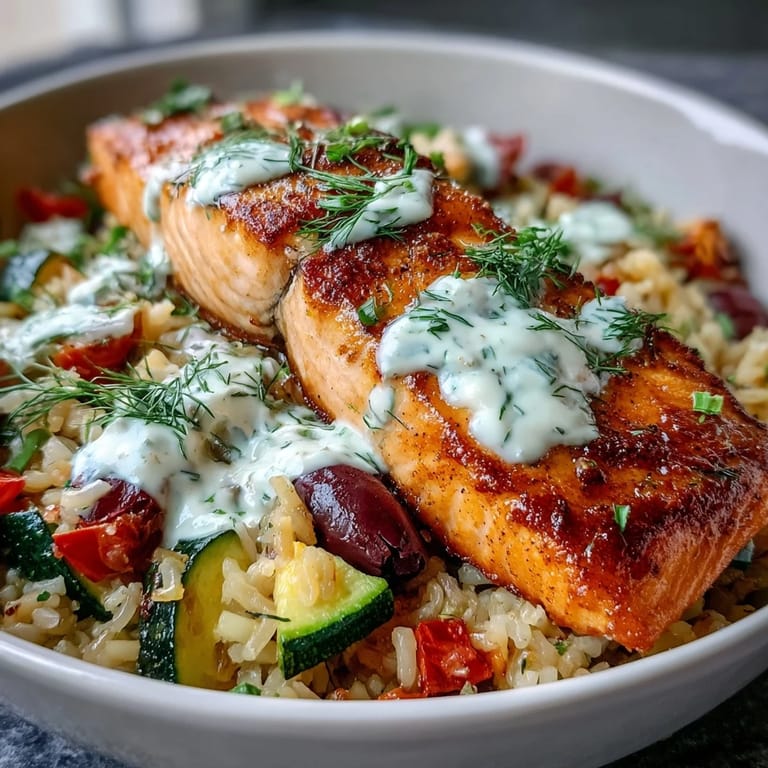
- Layer crispy rice, then vegetables, then place a salmon fillet on top of each bowl. Drizzle generously with lemon-yogurt sauce, scatter fresh herbs across the surface, and set lemon wedges alongside so everyone can adjust the brightness to their preference.
 Save to Pinterest
 The bowl became something my partner started requesting on the nights when he needed to feel like things were going well, which is when I really understood how food works beyond nutrition. It's permission to slow down, to taste each component separately before they blend together, to sit at a table and feel a little bit like you're on holiday.
Why Cold Rice Changes Everything
I made the mistake once of using rice that had cooled only slightly, and the difference was immediate and humbling. The rice absorbed moisture and turned into a soft, almost creamy texture rather than achieving that shatteringly crisp bottom layer that makes the whole bowl special. Now I always cook my rice ahead, store it in the refrigerator uncovered so it dries out further, and think of it as an investment in tomorrow's dinner rather than meal prep drudgery.
Building Flavor Through Texture
What makes this bowl memorable isn't any single ingredient but the constant conversation between textures—the crunch of rice against the yielding salmon, the juiciness of tomatoes alongside the brine of olives, the cool smoothness of yogurt balancing all of it. I've learned that this interplay is what keeps eating interesting and satisfying in a way that a uniform, homogeneous dish simply can't achieve. Each spoonful becomes an exploration rather than just fuel.
Timing and Flexibility
The beauty of this bowl is that while the total time is under an hour, you can prep vegetables hours in advance and crisp the rice while salmon cooks, so nothing needs to happen simultaneously. I've even made the yogurt drizzle the night before, which takes pressure off when you're actually cooking. The flexibility means you can adapt based on your mood, your schedule, or what's looking particularly good at the market that day.
- If you don't have capers, add a splash of white wine vinegar to the vegetables for that same briny punch.
- Swap salmon for halibut or sea bass if salmon isn't available—any firm white fish works beautifully with these Mediterranean flavors.
- Double the yogurt sauce if you love it; there's no such thing as too much lemon-herb brightness on this bowl.
 Save to Pinterest
 This bowl has become one of those recipes I reach for when I want to cook something that feels both nourishing and celebratory, when I want to feel like I'm treating myself well without any fussiness or pretense. Every time I make it, I'm reminded that good food doesn't require hours or dozens of ingredients—just intention, fresh components, and the willingness to crisp something until it sings.
Recipe FAQs
- → What rice works best for crispy rice?
Cold, leftover jasmine or basmati rice works best. The grains dry out overnight, creating better texture and crispiness when pan-fried.
- → Can I use frozen salmon fillets?
Yes, thaw them completely and pat thoroughly dry before cooking. Excess moisture prevents proper searing and crispy skin formation.
- → How do I know when salmon is done?
The salmon should flake easily with a fork and reach an internal temperature of 145°F. The flesh will turn opaque and slightly pink throughout.
- → What vegetables can I substitute?
Eggplant, artichoke hearts, or cucumber work well. For roasted flavor, try roasted red peppers or grilled asparagus.
- → Can I make this dairy-free?
Replace the Greek yogurt with coconut yogurt or tahini-lemon dressing. The result remains creamy and tangy without dairy.
- → How long will leftovers keep?
Store components separately in airtight containers. Rice keeps 3-4 days, salmon 2-3 days, and vegetables 3-5 days. Reheat rice to restore crispiness.