 Save to Pinterest
 My roommate in grad school had a tiny apartment kitchen, barely room to turn around, and one night she made falafel for the first time. The oil popped and sizzled so loudly I thought something had caught fire, but when I walked in, she was grinning at her golden, crispy falafel balls cooling on paper towels. That moment—the smell of cumin and cilantro filling that cramped space—made me understand why this dish matters so much in Middle Eastern cooking. It's humble, it's celebratory, and it tastes like someone cared enough to get their hands dirty in the kitchen.
Years later, I made these for a dinner party where nobody knew each other, and by the time we finished eating, three people were asking for the recipe. There's something about passing around warm pita pockets loaded with falafel that breaks down social walls faster than small talk ever could. Food that requires you to dive in with both hands just does that.
Ingredients
- Dried chickpeas (1 ½ cups, soaked overnight): Don't skip the soaking—it matters more than you'd think because dried chickpeas have a different texture than canned ones, giving you that perfect crumb structure that holds together when you fry.
- Fresh parsley and cilantro (½ cup each): These aren't optional flavor notes; they're what make falafel taste like itself, green and herbaceous and alive.
- Ground cumin and coriander (1 tsp each): Toast these spices in your palm and smell them first—if they smell warm and inviting, you know they're fresh enough to do the work they need to do.
- Baking powder (½ tsp): This tiny amount is your secret weapon for achieving that crispy, almost airy texture inside.
- Vegetable oil (for frying): You need enough to reach 2 inches deep in your pan so the falafel fries evenly, not just browns on the outside.
- Tahini (½ cup): This sesame paste becomes the creamy foundation of your sauce, so buy the kind that's just ground sesame seeds with nothing else in it.
- Lemon juice (2 tbsp): It cuts through the richness of the tahini and keeps the sauce from tasting heavy.
- Pita breads (4): Warm them just before serving—a cold pita pocket feels sad compared to one that's still steaming.
- Fresh vegetables (lettuce, tomatoes, cucumber, red onion): Keep everything crisp and raw as contrast to the warm falafel, and cut them right before you assemble so they don't weep.
Tired of Takeout? 🥡
Get 10 meals you can make faster than delivery arrives. Seriously.
One email. No spam. Unsubscribe anytime.
Instructions
- Pulse the base:
- Drain those soaked chickpeas and pat them dry—moisture is your enemy here. In a food processor, combine chickpeas, onion, garlic, parsley, cilantro, cumin, coriander, cayenne if you like heat, and salt, then pulse until the mixture looks coarse like breadcrumbs but still holds together when you squeeze it.
- Bring it together:
- Transfer to a bowl and fold in the baking powder and flour, then cover and refrigerate for at least 30 minutes. This rest time lets the starches hydrate just enough so your falafel balls won't fall apart in the oil.
- Heat your oil:
- Pour 2 inches of vegetable oil into a deep skillet and bring it to 350°F (175°C)—get a thermometer for this, don't guess. If the oil is too cool, your falafel absorbs grease and turns soggy; too hot and the outside burns before the inside cooks through.
- Shape and fry:
- With wet hands or a falafel scoop, form the mixture into balls about 1 ½ inches across, then slide them gently into the hot oil in batches of 4 or 5. Fry for 2 to 3 minutes per side until they're golden brown and crisp, then lift them out with a slotted spoon onto paper towels.
- Make the sauce:
- Whisk tahini with lemon juice, minced garlic, and salt, then gradually add cold water a tablespoon at a time until you get something pourable but still creamy—it should drape, not run.
- Assemble and serve:
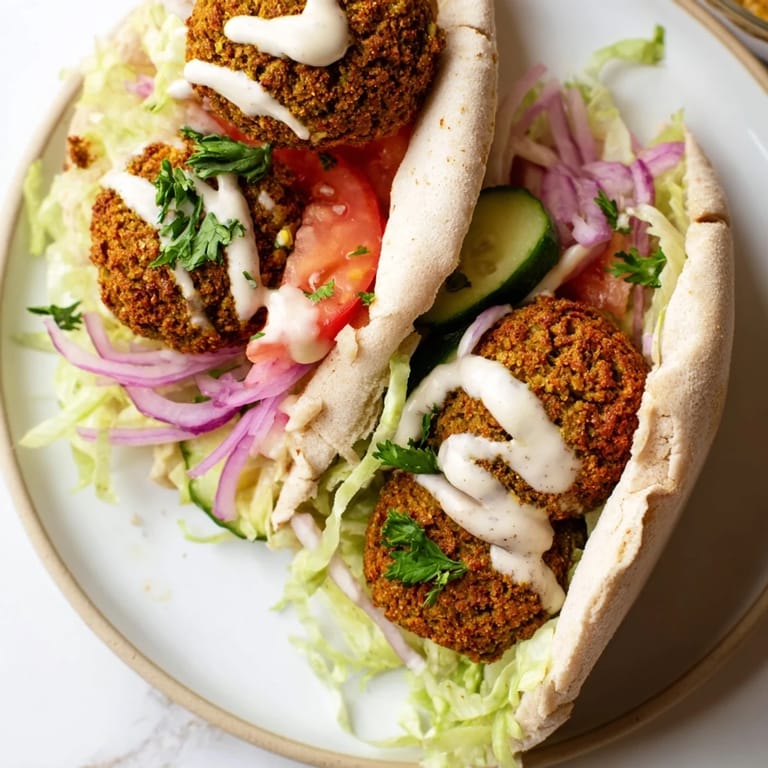
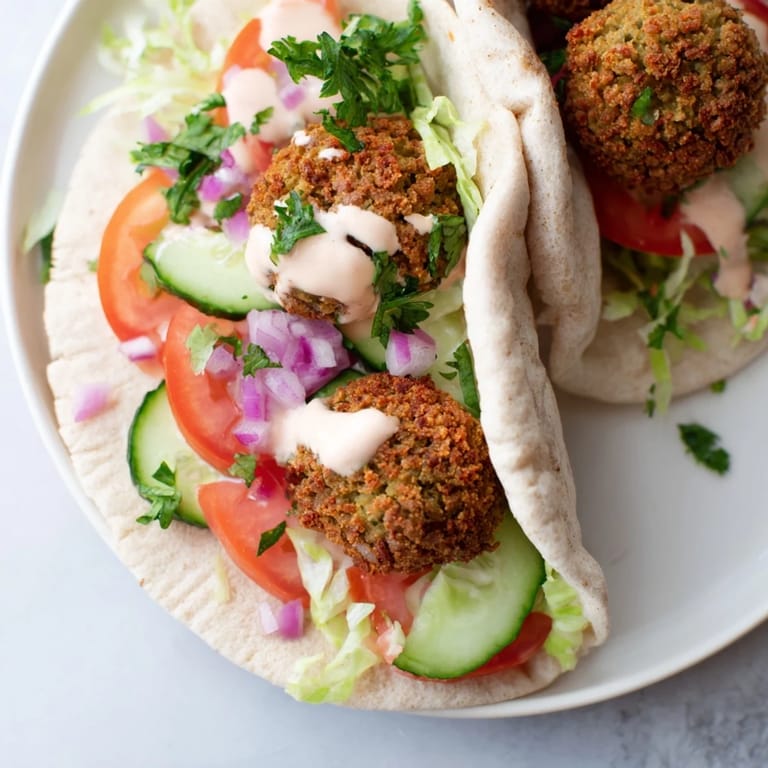
- Warm your pitas, cut them in half to form pockets, then fill each one with lettuce, tomatoes, cucumber, red onion, and 3 or 4 falafel pieces. Drizzle generously with tahini sauce, top with fresh parsley, and eat while everything is still warm.
 Save to Pinterest
 I once brought falafel to a potluck where someone asked if I'd bought it from a restaurant, and I said yes before admitting the truth a minute later. There's a real satisfaction in surprising people with food that tastes restaurant-quality because you actually paid attention and did it right.
The Oil Temperature Matters More Than You Think
I learned this the hard way when I tried to save time by not checking my oil temperature. The falafel turned out greasy and pale, almost sad-looking compared to the deep golden ones that happened when I was actually paying attention to the thermometer. Now I won't start frying until I know for certain the oil is at 350°F, because that's the difference between a good falafel and one that tastes like hot oil with chickpeas in it. The moment you hear a proper sizzle and see a gentle, steady bubble, you're in the zone.
Why Homemade Tahini Sauce Changes Everything
Store-bought tahini sauce often comes with stabilizers and extra salt, which means it never tastes as clean or bright as when you make it yourself from just tahini, lemon juice, garlic, and water. The first time I whisked my own, I noticed how the acid from the lemon juice transformed the heavy sesame paste into something silky and almost fluffy, like the two ingredients had a conversation and agreed to be better together. You only need 10 minutes and a whisk, but the flavor difference is enormous.
Building Your Pita Pocket Like You Mean It
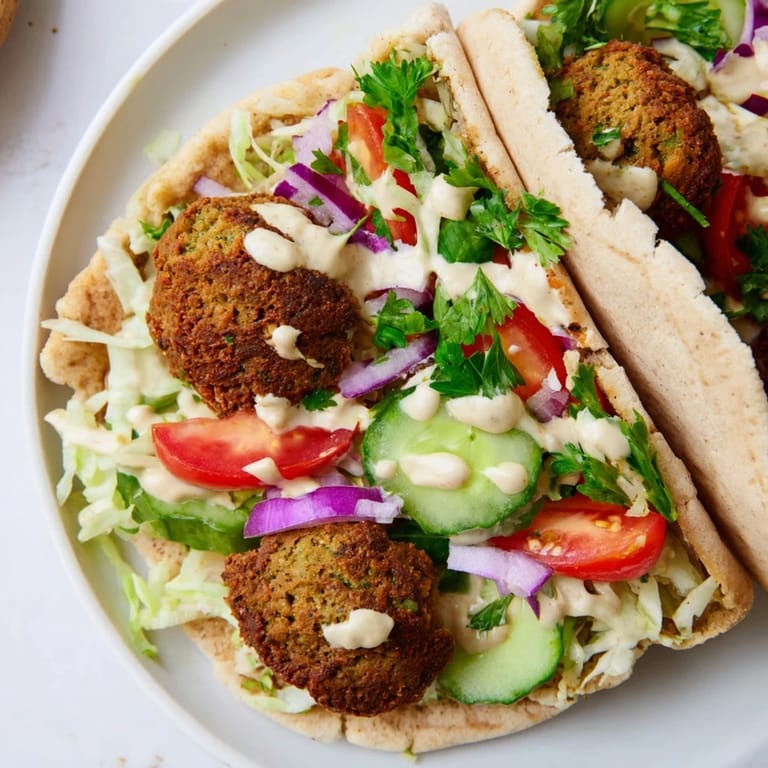
There's an order to layering that makes the difference—lettuce first so it insulates the warm pita and stays crisp, then tomatoes and cucumber, then red onion for sharpness, then nestled falafel on top, then the tahini sauce drizzled over everything and fresh parsley scattered across like you meant it. Don't let anyone convince you that stacking is boring; it's actually architecture.
- Warm your pitas right before assembling so they're still steaming when you fill them.
- Cut the falafel in half if they feel too large for your bite, because there's nothing elegant about a falafel that doesn't fit in your mouth.
- Serve immediately so the warmth of the falafel doesn't make the vegetables wilt.
 Save to Pinterest
 Falafel is the kind of dish that feels simple until you actually make it, and then you realize how many small decisions add up to something great. Make these for people you want to feed, not impress, and everyone wins.
Recipe FAQs
- → How do I get falafel crispy without oil splattering?
Make sure the oil is heated to around 350°F (175°C) before frying; this helps the falafel cook quickly and crisp up without absorbing excess oil. Gently lower patties into hot oil to avoid splashes.
- → Can I bake the falafel instead of frying?
Yes, baking at 400°F (200°C) for 20–25 minutes, flipping halfway through, yields a lighter falafel with a slightly different texture but still delicious.
- → What is the purpose of soaking chickpeas overnight?
Soaking softens the dried chickpeas, making them easier to blend into a coarse mixture that holds together when formed, resulting in tender falafel.
- → How thick should I make the falafel patties?
Form falafel about 1½ inches wide to ensure they cook evenly inside while achieving a crispy crust outside.
- → How do I adjust tahini sauce consistency?
Gradually whisk in cold water until the sauce reaches a smooth, pourable consistency suitable for drizzling over pita pockets.
- → Can I add extra crunch to the pita pocket?
Yes, incorporating pickled turnips or radishes adds a punchy crunch and brightens the flavors.