 Save to Pinterest
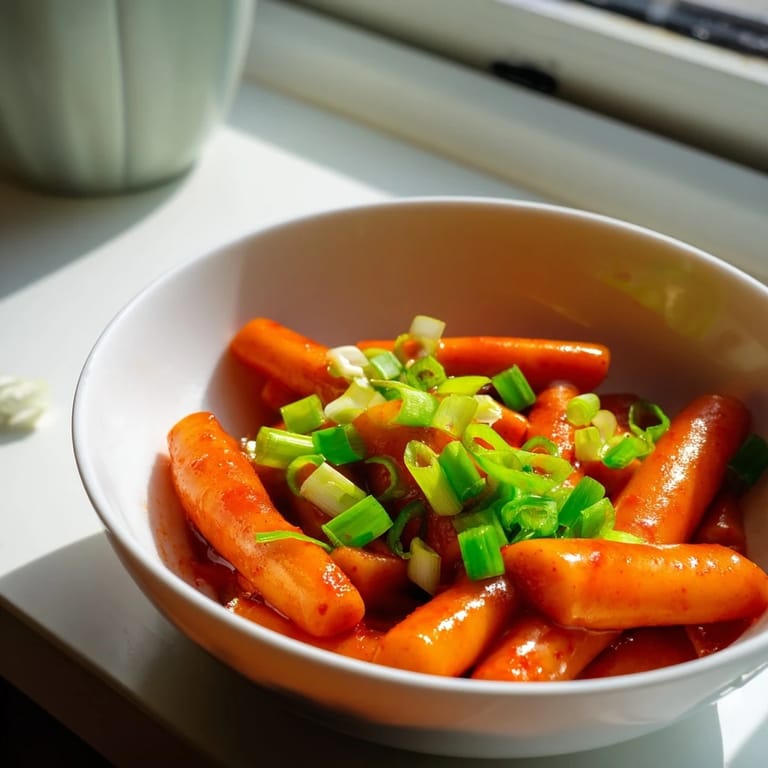
 The first time I watched someone make tteokbokki at a Seoul street stall, I was mesmerized by how quickly those pale rice cakes transformed into something glistening and alive in the bubbling red sauce. The vendor worked with such ease, her wooden spoon moving in steady circles while steam rose up and caught the afternoon light. I stood there longer than I probably should have, clutching my small paper cup, realizing this wasn't complicated at all—just honest ingredients and a few minutes of attention. Now whenever I make it at home, I chase that same feeling of watching something humble become irresistible.
I made this for my roommate on a freezing winter evening when she came home looking defeated, and something shifted when she took that first bite. She went quiet for a moment, then asked for seconds before finishing the first bowl. We sat on the kitchen counter eating straight from the pot with wooden spoons, passing green onions back and forth like we were sharing a secret. That's when I understood—tteokbokki isn't just food, it's the kind of dish that quietly makes people feel better.
Ingredients
- Korean rice cakes (tteok, cylindrical): 500 g of these chewy cylinders are the heart of the dish, and soaking them first makes a real difference in texture—trust me on this one.
- Gochujang (Korean chili paste): 3 tbsp of this deep, fermented paste is what builds the flavor foundation, and it's worth seeking out the real thing rather than substitutes.
- Gochugaru (Korean chili flakes): 1 tbsp adds complexity and heat beyond what the paste alone can do, layering the spice in a way that feels balanced.
- Soy sauce: 2 tbsp provides umami and salinity, cutting through the sweetness so the sauce doesn't tip too far in one direction.
- Sugar and honey: 1 tbsp each create that signature sweet edge that makes tteokbokki craveable, though you can adjust based on your mood.
- Garlic: 2 minced cloves brighten everything up and prevent the sauce from feeling one-dimensional.
- Water and dried kelp (kombu): 3 cups water plus an 8 x 8 cm piece of kelp makes the broth—it's subtle and essential, especially if you're going vegetarian.
- Dried anchovies: 4 of these (heads and guts removed) add depth if you're not vegetarian, but the kelp alone carries the dish beautifully.
- Green onions: 2 sliced diagonally bring freshness that cuts through the richness at the very end.
- Onion: 1 small sliced onion softens into the sauce and adds natural sweetness.
- Cabbage: 1/2 cup chopped is optional but adds a lovely textural contrast.
- Boiled eggs: 2 peeled eggs (optional) are a protein boost and look beautiful in the bowl.
- Sesame seeds: 1 tbsp scattered on top adds nutty flavor and makes the whole thing look intentional.
Tired of Takeout? 🥡
Get 10 meals you can make faster than delivery arrives. Seriously.
One email. No spam. Unsubscribe anytime.
Instructions
- Start with the rice cakes:
- Soak 500 g of Korean rice cakes in warm water for 10 minutes if they're hard or cold from the fridge. This softens them just enough so they'll cook evenly in the sauce without turning to mush.
- Build the broth base:
- In a medium pot, combine 3 cups water with your dried kelp and anchovies (if using), then bring everything to a simmer for 10 minutes. You'll notice the water becoming clearer and taking on a subtle depth—that's exactly what you want, so don't skip this step.
- Make the sauce:
- Remove the kelp and anchovies from the broth, then stir in 3 tbsp gochujang, 1 tbsp gochugaru, 2 tbsp soy sauce, 1 tbsp sugar, 1 tbsp honey, and your minced garlic. Keep stirring until the paste dissolves completely and everything smells unmistakably spicy and complex.
- Bring everything together:
- Add your drained rice cakes, sliced onion, and cabbage (if using) to the pot, then bring it to a gentle boil while stirring occasionally. This prevents sticking and ensures the rice cakes cook evenly without falling apart.
- Simmer until perfect:
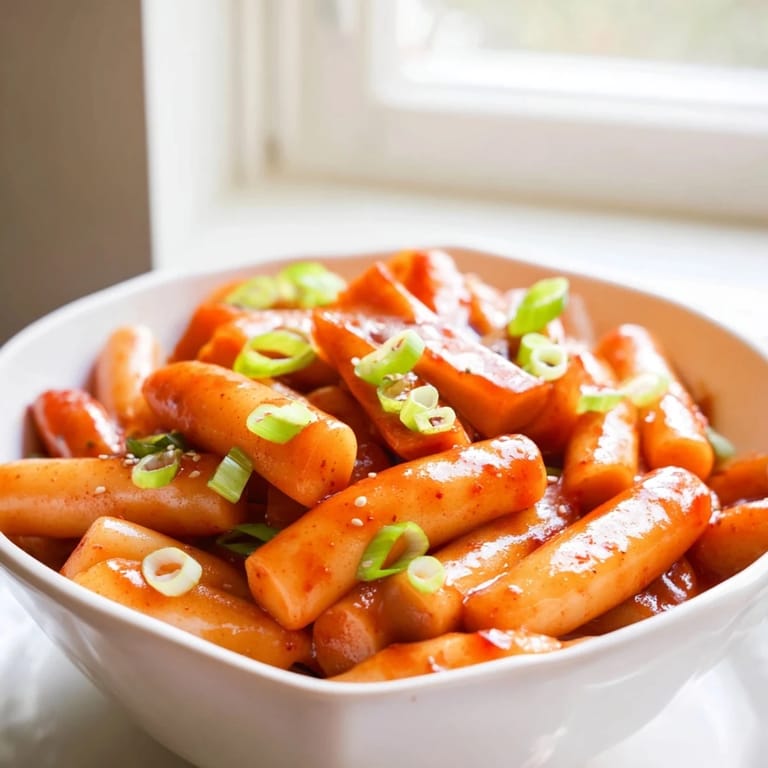
- Let everything bubble away for 10 to 15 minutes, watching as the sauce thickens and the rice cakes become gloriously soft and chewy. You'll know it's done when the sauce clings to the rice cakes and coats the back of your spoon.
- Finish strong:
- In the last 2 minutes, add your sliced green onions and boiled eggs (if using), then transfer everything to a serving platter and sprinkle with sesame seeds. Serve immediately while it's still steaming.
 Save to Pinterest
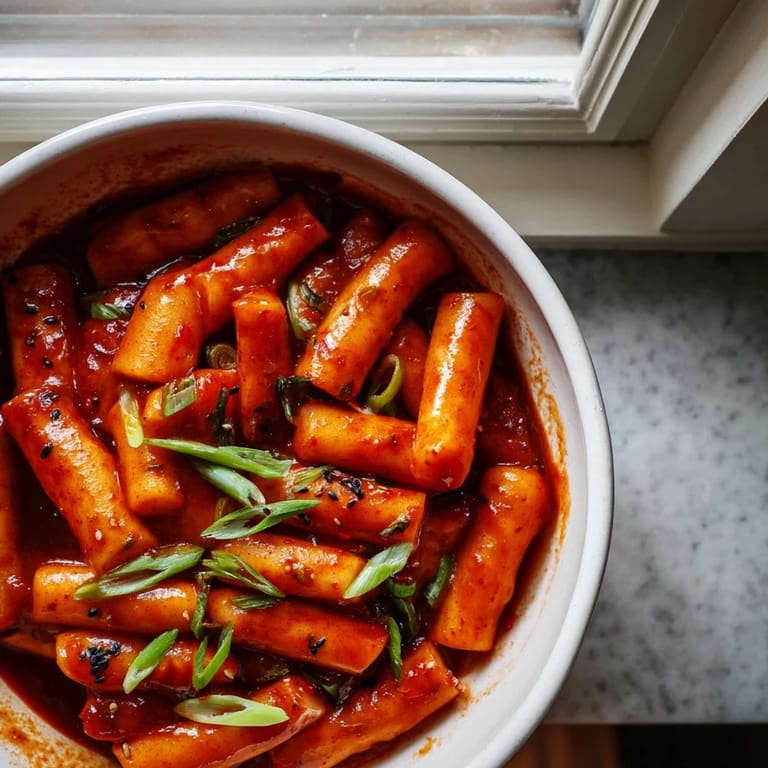
 There's a moment near the end of cooking when the sauce shifts from thin to glossy and clings to every rice cake, and that's when you know the alchemy has happened. It's the same feeling I get watching a perfect sunset—you can't rush it, but when it arrives, it's unmistakable.
Playing with Heat and Sweetness
I've learned that the ratio of gochujang to gochugaru to sugar is less about following rules and more about understanding your own palate. Some days I crank the gochugaru up because I want that deep, lingering burn; other times I add an extra drizzle of honey because I'm in a mood for something more indulgent. The beauty is that this dish forgiving—it bends to your preferences without losing its soul, and there's real freedom in that flexibility.
The Secret of Fish-Free Tteokbokki
When I first tried making this vegetarian by swapping the anchovies for extra kelp and a pinch of salt, I was nervous I'd lose something essential. But the kelp is actually stronger than I'd given it credit for, carrying the broth with a mineral sweetness that stands on its own. Now I make it both ways depending on who's eating, and the vegetarian version has genuinely converted people who thought they needed fish.
Turning This Into a Meal
Tteokbokki shines brightest when it's not alone on the plate. I've found that small additions transform it from a snack into something that feels more complete and satisfying, making it perfect for casual dinners or when unexpected guests show up hungry. The beauty is in how simple these pairings are—nothing complicated, just smart choices that round out the spice and richness.
- Serve it with pickled radish (radish kimchi) on the side to cut through the richness with bright, tangy bites.
- Add sliced fish cakes (eomuk) or even boiled squid during the last few minutes of cooking for extra texture and protein.
- Pair it with steamed dumplings or a simple cucumber salad to make a fuller, more balanced meal.
 Save to Pinterest
 Make this when you want something that tastes intentional but doesn't demand much of your evening. It's the kind of dish that reminds you why simple, honest cooking is the best kind.
Recipe FAQs
- → What are Korean rice cakes (tteok)?
Korean rice cakes are cylindrical, chewy cakes made from glutinous rice flour and water. They absorb sauce beautifully while maintaining their distinctive texture. Fresh or frozen varieties work well; soaking hard cakes in warm water softens them before cooking.
- → Can I make this dish vegetarian?
Yes, easily. Substitute the anchovy broth with vegetable broth or use only kelp for the dashi base. Skip fish cakes and boiled eggs if desired. The gochujang and gochugaru provide plenty of savory umami flavor on their own.
- → How do I adjust the spice level?
Control heat by reducing or increasing gochugaru (Korean chili flakes). Start with 1/2 tablespoon for milder results. Add more gradually while tasting. Gochujang paste also contributes spice, so balance both ingredients based on your preference.
- → Why does the sauce thicken during cooking?
The sauce thickens as water evaporates and the starch from the rice cakes releases into the liquid. Simmering for 10-15 minutes allows the flavors to concentrate and the sauce to coat the cakes properly. Stir occasionally to prevent sticking.
- → What side dishes pair well with tteokbokki?
Serve alongside pickled radish (danmuji) for tanginess, steamed dumplings (mandu), or Korean kimbap. A cold beverage like yuzu citron tea or a light soup balances the richness. These accompaniments create a complete street food experience.
- → Can I prepare rice cakes in advance?
Soak rice cakes up to 2 hours before cooking; drain and store in a sealed container. Prepare broth and sauce components ahead separately. Combine everything just before simmering to maintain rice cake texture and prevent them from becoming overly soft.