 Save to Pinterest
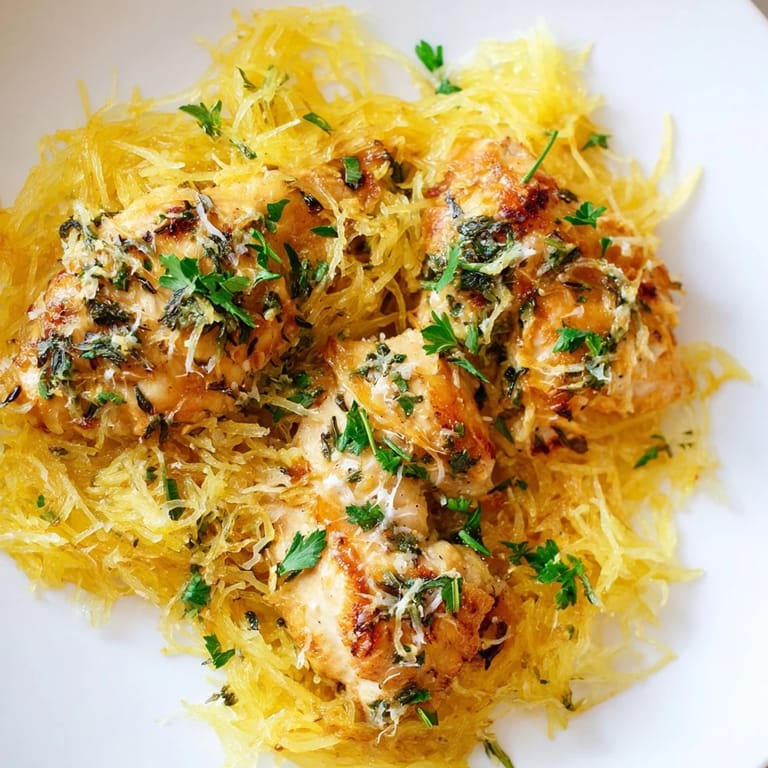
 The oven timer buzzed just as I was wrestling with my first spaghetti squash, unsure if I'd cut it right or if it would turn into mush. My neighbor had sworn this vegetable would change my weeknight dinners, but I was skeptical until I dragged a fork through those golden strands and tasted them with the garlicky lemon chicken I'd just pulled from the skillet. The brightness of the lemon against the mild sweetness of the squash felt like a small revelation. Now it's the dish I make when I want something that feels indulgent but leaves me energized instead of sluggish.
I made this for my sister when she was trying to eat lighter but still craved real food with flavor. She'd been surviving on sad salads and was about ready to give up, so I invited her over and served this without mentioning it was gluten free or calling it healthy. She went quiet after the first bite, then asked for the recipe before she even finished her plate. Watching her scrape up every bit of that lemony pan sauce with her fork made me realize how much food can feel like care when it's made with attention.
Ingredients
- Spaghetti squash: Choose one that feels heavy for its size and has a firm, matte skin without soft spots, because a good squash will give you long, tender strands that hold up under the chicken and sauce.
- Olive oil: Use a fruity, good quality oil since it flavors both the squash and the chicken, and don't be shy with it or the squash will taste dry.
- Boneless skinless chicken breasts: Cut them into even bite sized pieces so they cook at the same rate and stay juicy, or swap in thighs if you prefer darker, richer meat.
- Garlic: Mince it finely and add it after the chicken is cooked so it blooms in the hot oil without burning and turning bitter.
- Lemon: Zest it first before you juice it, and use both the zest and juice to layer in that bright, sunny flavor from the start and at the finish.
- Dried oregano: A small amount adds an herby backbone that makes the dish feel Mediterranean and grounded.
- Fresh parsley: Chop it right before you use it for the freshest flavor and a pop of green that makes the whole plate look alive.
- Parmesan cheese: Grate it fresh from a block because the pre shredded stuff doesn't melt or cling the same way, and it adds a salty, nutty finish that ties everything together.
Tired of Takeout? 🥡
Get 10 meals you can make faster than delivery arrives. Seriously.
One email. No spam. Unsubscribe anytime.
Instructions
- Prep and roast the squash:
- Preheat your oven to 400°F and carefully halve the squash lengthwise, then scoop out the seeds with a spoon. Drizzle the cut sides with olive oil, season with salt and pepper, and place them cut side down on a parchment lined baking sheet before sliding them into the oven for 40 to 45 minutes until the flesh is tender and the strands pull away easily.
- Season the chicken:
- While the squash roasts, toss your bite sized chicken pieces with salt, pepper, oregano, and half of the lemon zest in a bowl. Let them sit for a few minutes so the seasoning sticks and the chicken comes to room temperature, which helps it cook evenly.
- Sear the chicken:
- Heat 2 tablespoons of olive oil in a large skillet over medium high heat until it shimmers, then add the chicken in a single layer. Cook without moving it too much for 6 to 8 minutes, stirring occasionally, until each piece is golden brown and cooked through with no pink in the center.
- Add garlic and lemon:
- Toss in the minced garlic and stir for about a minute until it smells incredible and just starts to turn golden. Stir in the remaining lemon zest, lemon juice, and chopped parsley, then cook for another minute or two and remove the skillet from the heat so the sauce stays bright.
- Scrape the squash:
- Once the squash is cool enough to handle, use a fork to scrape the flesh lengthwise into long spaghetti like strands. Be gentle and let the squash do the work, it should pull apart easily if it's cooked through.
- Plate and serve:
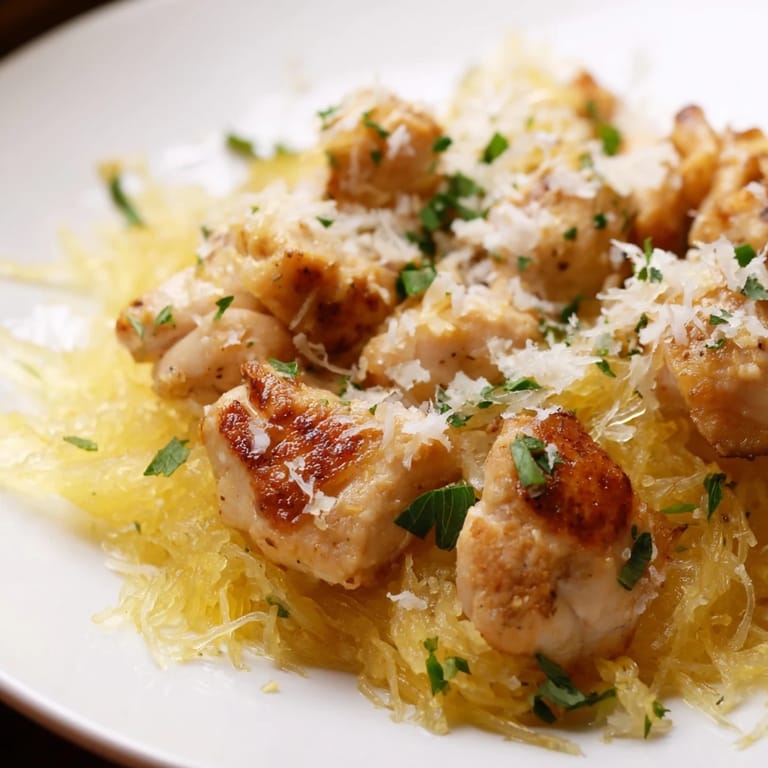
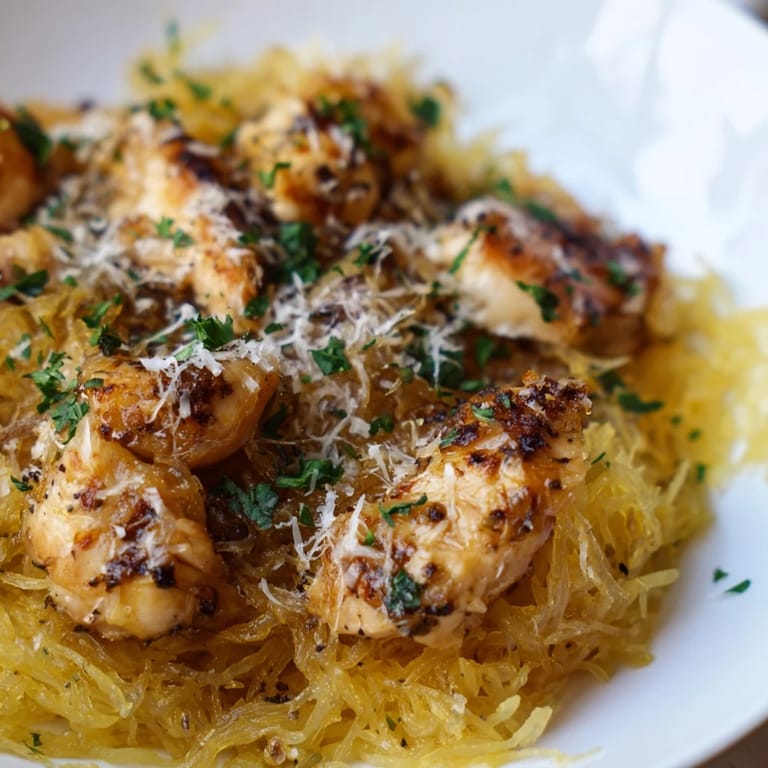
- Divide the squash strands among four plates, then top each serving with the lemon garlic chicken and spoon over any pan sauce left in the skillet. Finish with a generous sprinkle of freshly grated Parmesan, a handful of parsley, and a lemon wedge on the side if you want extra brightness.
 Save to Pinterest
 There was an evening last spring when I served this to a group of friends who didn't know each other well yet, and the conversation started to flow right around the time everyone reached for seconds. Something about the lightness of the meal and the lemony brightness made the whole table feel easy and warm. By the end of the night, we were laughing and scraping our plates clean, and I realized that sometimes the best dishes are the ones that get out of the way and let people connect.
Choosing and Storing Your Squash
When I'm at the market, I look for spaghetti squash that feels heavy and has a hard, smooth rind without any green streaks, which means it's fully ripe and will roast up sweet and tender. You can store a whole squash on your counter for up to a month, but once you cut into it, wrap the unused half tightly in plastic and keep it in the fridge for up to four days. I've learned that smaller squash tend to have more delicate strands, while the big ones are great if you're feeding a crowd or want leftovers for the week.
Making It Your Own
This recipe is flexible enough to handle whatever you have on hand or need to use up. I've added a pinch of crushed red pepper flakes with the garlic when I wanted a little heat, and I've swapped the chicken for shrimp or even rotisserie chicken on nights when I didn't want to cook meat from scratch. If you're dairy free, just leave off the Parmesan or use a cashew based alternative, and if you love herbs, try fresh basil or thyme in place of the parsley for a different but equally delicious finish.
Serving and Pairing Ideas
I like to serve this with a simple arugula salad dressed in olive oil and lemon, which echoes the brightness on the plate and adds a peppery crunch. A crisp Sauvignon Blanc or a light Pinot Grigio picks up the citrus notes beautifully, but sparkling water with a squeeze of lemon works just as well if you're keeping it alcohol free. If you want to stretch the meal further, warm some crusty bread to soak up the garlicky pan sauce, though honestly the squash does that job pretty well on its own.
- Add a side of roasted cherry tomatoes for extra color and a burst of sweetness.
- Finish each plate with a drizzle of good balsamic glaze if you want a touch of tangy richness.
- Leftovers can be tossed together and reheated gently in a skillet with a splash of chicken broth to keep everything moist.
 Save to Pinterest
 This dish has become one of those weeknight anchors I return to when I want something nourishing that doesn't require a lot of fuss or cleanup. I hope it finds a place in your rotation too, and that the smell of lemon and garlic becomes a signal that dinner is going to be good.
Recipe FAQs
- → How do I know when the spaghetti squash is properly roasted?
The spaghetti squash is ready when the flesh is tender and easily separates into strands when scraped with a fork. This typically takes 40-45 minutes at 400°F. The skin should yield slightly to pressure when pierced.
- → Can I prepare this dish ahead of time?
Yes. Roast the spaghetti squash up to 2 days ahead and store in the refrigerator. Cook the chicken just before serving to maintain its tenderness. You can also prep all ingredients in advance and assemble when ready to eat.
- → What can I substitute for spaghetti squash?
Regular spaghetti, zucchini noodles, or cauliflower rice work well as alternatives. Adjust cooking times accordingly—traditional pasta cooks in 8-10 minutes, while zucchini noodles need only 2-3 minutes in the pan.
- → How do I keep the chicken moist and tender?
Avoid overcooking by cutting chicken into uniform bite-sized pieces and monitoring the skillet closely. Cook until just golden and cooked through, about 6-8 minutes. Don't stir constantly—allow pieces to develop a golden exterior for better texture and flavor retention.
- → Is this dish suitable for meal prep?
Absolutely. Store components separately in airtight containers for up to 3 days. Keep the squash and chicken refrigerated separately, then combine when reheating gently in a skillet. Add fresh Parmesan and parsley just before serving for best results.
- → What wine pairs best with this dish?
A crisp Sauvignon Blanc complements the lemon and garlic beautifully. Alternatively, try Pinot Grigio or a light Vermentino for their acidity and minerality, which cuts through the richness of the Parmesan.