 Save to Pinterest
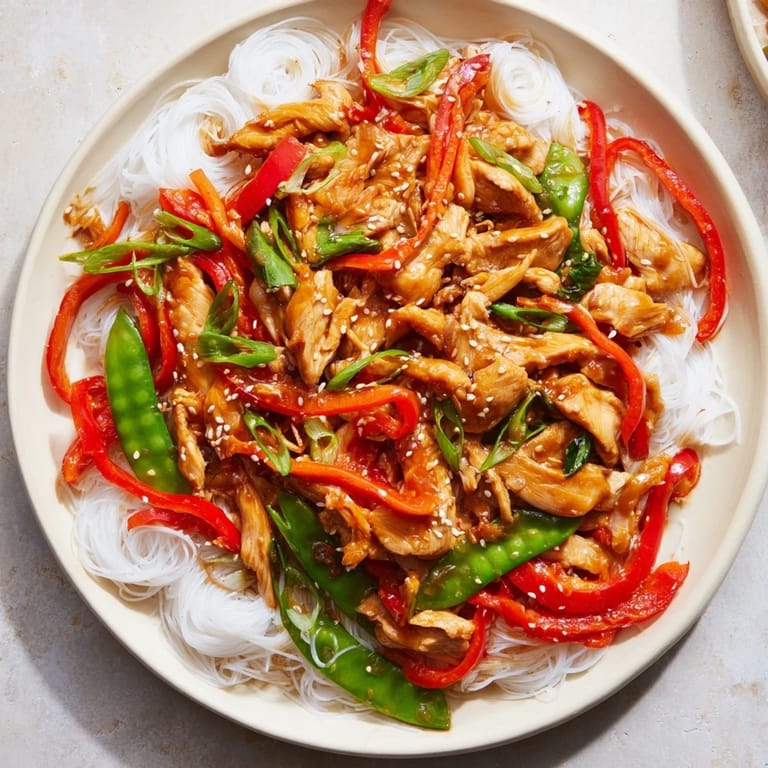
 I threw this together on a Tuesday night when the fridge was nearly empty and I had a tangle of leftover rice noodles staring at me. The chicken was the last pack in the freezer, and I figured sweet and savory would hide any improvisation. What came out of that wok surprised me so much I stood there eating straight from the pan, sauce dripping down my wrist. My partner walked in, grabbed a fork, and we finished half of it before it even hit a plate.
The first time I made this for friends, I panicked halfway through because I thought the sauce was too thin. I kept stirring, convinced Id ruined it, until someone leaned over my shoulder and said it smelled like the best mistake Id ever made. It thickened up in the last minute, glossy and perfect, and I learned to trust the simmer. We ate it straight from bowls on the couch, laughing too hard to bother with plates.
Ingredients
- Boneless, skinless chicken thighs or breasts (500 g): Thighs stay juicier and more forgiving if you overcook them slightly, but breasts work fine if you watch the clock.
- Cornstarch (1 tbsp): This is what gives the chicken that velvety coating and helps the sauce cling instead of sliding off into the pan.
- Soy sauce (4 tbsp): The backbone of the sauce, salty and deep, and you can swap for tamari if gluten is an issue.
- Hoisin sauce (2 tbsp): Adds a molasses-like sweetness and complexity that makes the whole dish taste layered and intentional.
- Brown sugar (2 tbsp): Balances the salty punch and caramelizes slightly when it hits the hot pan.
- Rice vinegar (1 tbsp): Cuts through the richness with a bright, clean acidity that keeps everything from feeling heavy.
- Garlic and ginger (2 cloves, 1 tbsp): Fresh is non-negotiable here, the jarred stuff just doesnt bloom the same way in hot oil.
- Red bell pepper and snap peas (1 pepper, 1 cup peas): They add crunch and color, and they cook fast enough that they stay crisp and sweet.
- Rice noodles (200 g dried or 3 cups cooked pasta): Silky and mild, they soak up the sauce without competing for attention, and leftovers work just as well.
- Spring onions (4, plus extra for garnish): They soften into the sauce but keep a little bite, and the fresh ones on top add a sharp, grassy finish.
- Sesame oil (1 tsp): Just a teaspoon transforms the whole dish with that toasty, nutty aroma that hits you the second you open the bottle.
- Toasted sesame seeds (2 tbsp): A small thing that makes it look and taste like you put in way more effort than you did.
Tired of Takeout? 🥡
Get 10 meals you can make faster than delivery arrives. Seriously.
One email. No spam. Unsubscribe anytime.
Instructions
- Prep the noodles:
- If youre using dried rice noodles, cook them according to the package, then drain and rinse them under cold water so they dont stick together. If youve got leftover pasta, just pull it out of the fridge and let it come to room temperature while you prep everything else.
- Coat the chicken:
- Toss the sliced chicken with cornstarch, salt, and pepper in a bowl until every piece has a light, even dusting. This step is what keeps the chicken tender and gives it that restaurant-style texture.
- Mix the sauce:
- Whisk together the soy sauce, hoisin, brown sugar, water, rice vinegar, oyster sauce, sesame oil, garlic, ginger, and red pepper flakes in a small bowl. It should smell sharp and sweet and make you want to dip your finger in it.
- Sear the chicken:
- Heat a tablespoon of oil in a wok or large skillet over medium-high until it shimmers, then add the chicken in a single layer and let it sear without moving it for a minute. Stir-fry until golden and just cooked through, about 4 to 5 minutes, then transfer it to a plate.
- Cook the vegetables:
- Add the remaining oil to the pan and toss in the bell pepper and snap peas, stirring constantly for 2 to 3 minutes until theyre tender but still have snap. The pan should be loud and crackling.
- Bring it all together:
- Return the chicken to the pan, add the spring onions, and pour in the sauce, stirring everything together. Let it simmer for a minute or two until the sauce thickens and coats the back of a spoon.
- Toss with noodles:
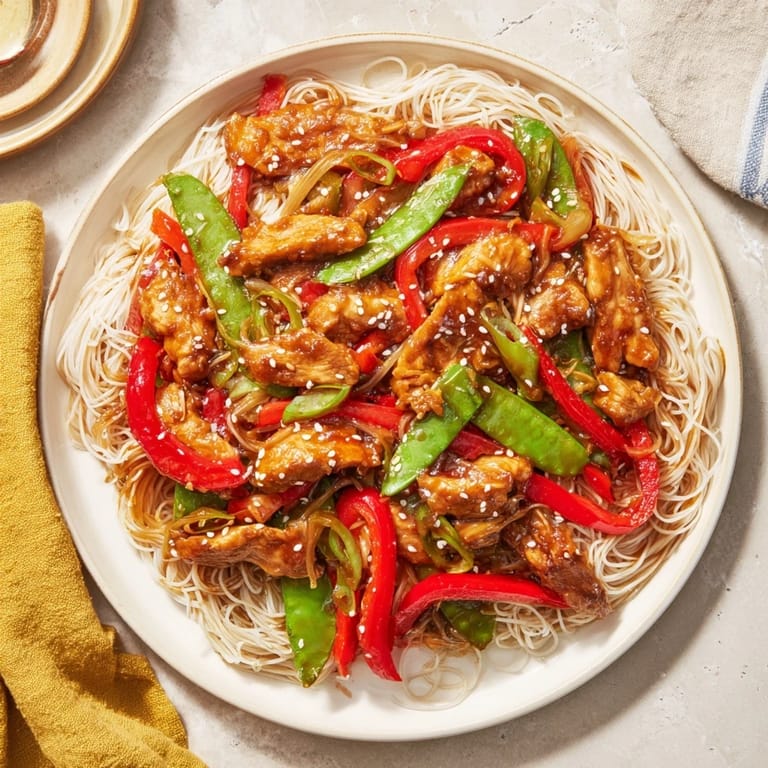
- Add the cooked noodles or pasta to the pan and toss everything together with tongs until every strand is slicked with sauce and heated through. The noodles should look glossy and smell like a kitchen victory.
- Serve:
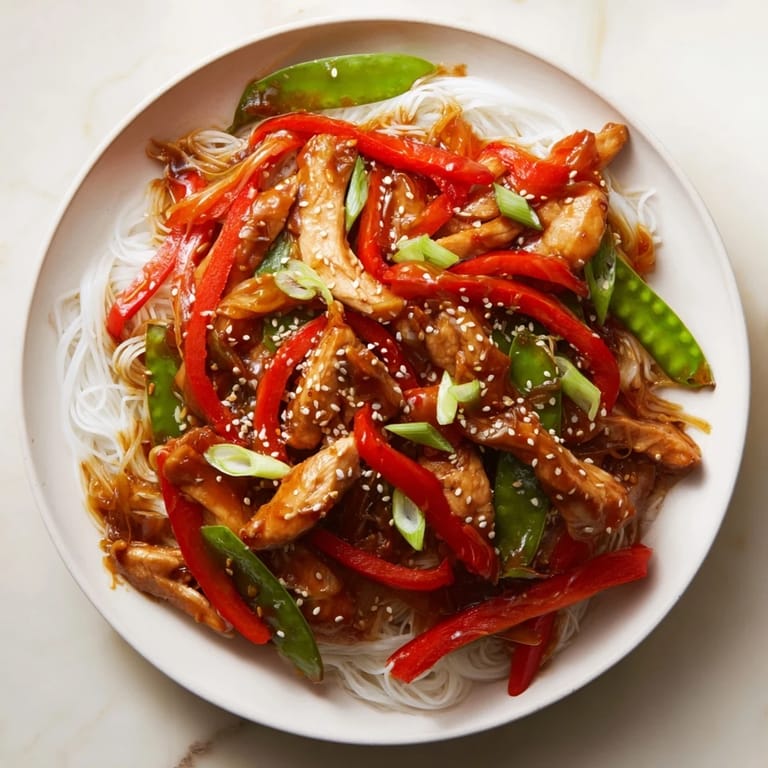
- Pile it into bowls and top with fresh spring onions and a generous sprinkle of toasted sesame seeds. Eat it while its hot and the sauce is still clinging to everything.
 Save to Pinterest
 I made this on a rainy Sunday when my sister came over unannounced, soaked and grumpy. She sat at the counter while I chopped and stirred, and by the time I set a bowl in front of her, she was smiling. She told me it tasted like the kind of meal that makes you forget you were having a bad day. Ive made it a dozen times since, and it still does that.
Swapping Proteins and Vegetables
If chicken isnt your thing, firm tofu works beautifully as long as you press it well and cut it into cubes so it crisps up in the pan. Shrimp is another great option and cooks even faster, just toss it in at the end so it doesnt turn rubbery. For vegetables, water chestnuts add a satisfying crunch, and baby corn brings a touch of sweetness that plays well with the sauce. Broccoli florets, thinly sliced carrots, or even bok choy would all fit right in without changing the spirit of the dish.
Making It Ahead and Storing Leftovers
You can prep the chicken, chop the vegetables, and mix the sauce a few hours ahead, then just stir-fry everything when youre ready to eat. Leftovers keep in the fridge for up to three days in an airtight container, and they reheat surprisingly well in a hot pan with a splash of water to loosen the sauce. The noodles might soak up some of the liquid overnight, but a quick toss over heat brings them back to life. I wouldnt freeze this one, the texture of the noodles suffers too much and it loses that fresh, just-made snap.
Adjusting Heat and Sweetness
If you like things spicy, double the red pepper flakes or add a drizzle of chili oil at the end for a slow, building heat. For a milder version, skip the pepper flakes entirely and let the ginger and garlic carry the flavor. The brown sugar can be dialed up or down depending on how sweet you like your sauces, I usually taste it before it goes in the pan and adjust from there. Some nights I want it sticky and caramelized, other nights I pull back and let the soy sauce take the lead.
- Taste the sauce before you add it to the pan and tweak the sugar or vinegar to suit your mood.
- If youre cooking for kids, cut the soy sauce with a little extra water and leave out the heat entirely.
- A squeeze of lime at the end brightens everything up and adds a fresh, unexpected twist.
 Save to Pinterest
 This dish has become my weeknight rescue, the one I turn to when I want something that feels generous without asking too much of me. It tastes like care, like flavor, like the kind of meal that makes everyone lean back in their chair and ask for seconds.
Recipe FAQs
- → Can I use other proteins besides chicken?
Yes, tofu or shrimp can be excellent alternatives, providing different textures and flavors while maintaining the essence of the dish.
- → How do I prevent the rice noodles from sticking together?
After cooking, rinse the noodles with cold water and toss lightly with a small amount of oil to keep them separate and silky.
- → What can I use if I don't have hoisin sauce?
Substitute hoisin with a mixture of soy sauce and a touch of brown sugar or plum sauce to mimic the sweet-savory flavor.
- → How can I adjust the heat level in the sauce?
Modify the amount of crushed red pepper flakes or omit them entirely to suit your preferred spice level.
- → Is it possible to prepare this dish gluten-free?
Yes, use gluten-free soy and hoisin sauces to avoid gluten while keeping the authentic taste.