 Save to Pinterest
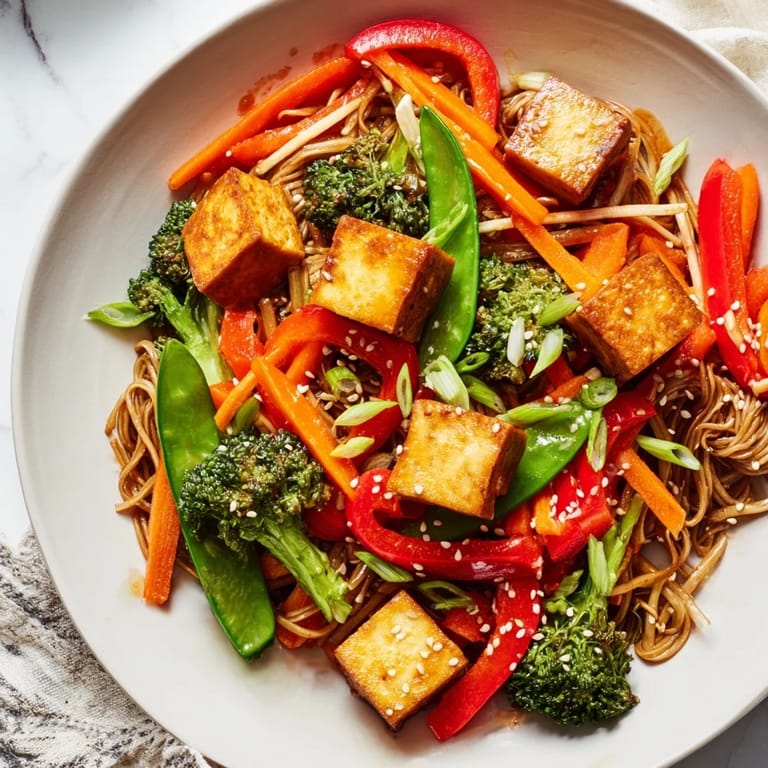
 There's something about the sizzle of tofu hitting hot oil that still catches me off guard—that moment when you realize something quiet and unassuming is about to become the star of the plate. I discovered this sesame ginger stir-fry on a weeknight when I had exactly what was in my fridge and zero desire to order takeout. The tofu crisped up in ways I didn't expect, the vegetables stayed bright, and the sauce tasted like someone had bottled pure umami with a ginger kick. That night convinced me that the simplest meals sometimes taste the best.
I made this for a friend who'd just turned vegetarian and was nervous about protein, watching her face light up when she realized how filling it could be. She asked for the recipe before dessert—that's when I knew I'd nailed something. Now it's become the meal I reach for when I want to feel like I've cooked something impressive without the stress.
Ingredients
- Firm tofu, 400g, drained and pressed: Pressing tofu is non-negotiable; it removes water so the cubes can actually crisp instead of steam.
- Cornstarch, 1 tbsp: This is the secret to that golden, crunchy exterior that makes tofu taste like it actually has personality.
- Vegetable oil, 2 tbsp plus extra: Use something neutral with a high smoke point so your tofu browns without burning.
- Red bell pepper, 1, thinly sliced: Slice thin enough that it softens quickly but stays snappy.
- Carrot, 1 medium, julienned: Thin julienne means it cooks in minutes without turning to mush.
- Sugar snap peas, 100g, trimmed: These are worth their price because they stay crisp and add sweetness naturally.
- Broccoli florets, 100g: Keep florets small so they cook evenly and stay tender with a slight resistance.
- Spring onions, 2, sliced: Save these for the end—they taste brightest when they're barely warm.
- Dried wheat or rice noodles, 250g: Choose based on your mood; wheat noodles are heartier, rice noodles feel lighter.
- Soy sauce, 3 tbsp: This is the backbone of the sauce, so don't skimp on quality.
- Toasted sesame oil, 1 tbsp: This oil smells like a nut roastery and tastes like pure gold; a little goes a long way.
- Rice vinegar, 2 tbsp: The acidity cuts through the richness and keeps everything from tasting heavy.
- Honey or maple syrup, 1 tbsp: A touch of sweetness balances the salt and tang.
- Fresh ginger, 2 tbsp grated: Grate it fresh; bottled ginger tastes tired.
- Garlic, 2 cloves, minced: Two cloves is right for balance—more and it drowns out the ginger.
- Sesame seeds, 2 tbsp total (1 for sauce, 1 for garnish): Toast them first if you have time; it deepens their nutty flavor.
- Fresh coriander or cilantro, optional: A handful scattered on top adds brightness and a green color that makes the whole dish feel fresh.
- Lime wedges, optional: A squeeze right at the table wakes up all the flavors.
Tired of Takeout? 🥡
Get 10 meals you can make faster than delivery arrives. Seriously.
One email. No spam. Unsubscribe anytime.
Instructions
- Get the noodles ready:
- Boil them according to the package, then rinse under cold water so they don't clump together. Set them aside in a bowl with a light drizzle of oil.
- Cube and coat the tofu:
- Cut your pressed tofu into bite-sized pieces—about the size of a grape—and toss them gently with cornstarch until every surface is covered. The cornstarch creates the magic that turns tofu golden and crispy.
- Fry the tofu until it's golden:
- Heat oil in your wok or large skillet over medium-high heat until it shimmers. Add tofu and don't touch it for the first two minutes—let each side develop a golden crust. You'll hear it sizzle and smell something almost nutty when it's getting there. Turn carefully with a spatula and keep going until all sides are golden and slightly crispy, about 6 to 8 minutes total. This is patience rewarded.
- Stir-fry the vegetables:
- Add a splash more oil if the pan looks dry, then add your bell pepper, carrot, sugar snap peas, and broccoli. Keep the heat high and keep moving them around constantly—you want them soft enough to eat but still with a slight snap when you bite. This should take about 3 to 4 minutes; you'll see the colors brighten and the kitchen will smell amazing.
- Mix the sauce while vegetables cook:
- In a small bowl, whisk together soy sauce, sesame oil, rice vinegar, honey, ginger, garlic, and one tablespoon of sesame seeds. The mixture should smell complex and a little spicy from the ginger.
- Bring everything together:
- Return the crispy tofu to the pan with the vegetables, add your cooked noodles, and pour in the sauce. Toss gently but thoroughly until everything is coated and the heat spreads the sauce around, about 2 to 3 minutes. The noodles should glisten and the whole dish should feel warm and cohesive.
- Finish and serve:
- Turn off the heat and scatter spring onions, extra sesame seeds, and cilantro across the top. Serve in bowls with lime wedges on the side so people can brighten it to their taste.
 Save to Pinterest
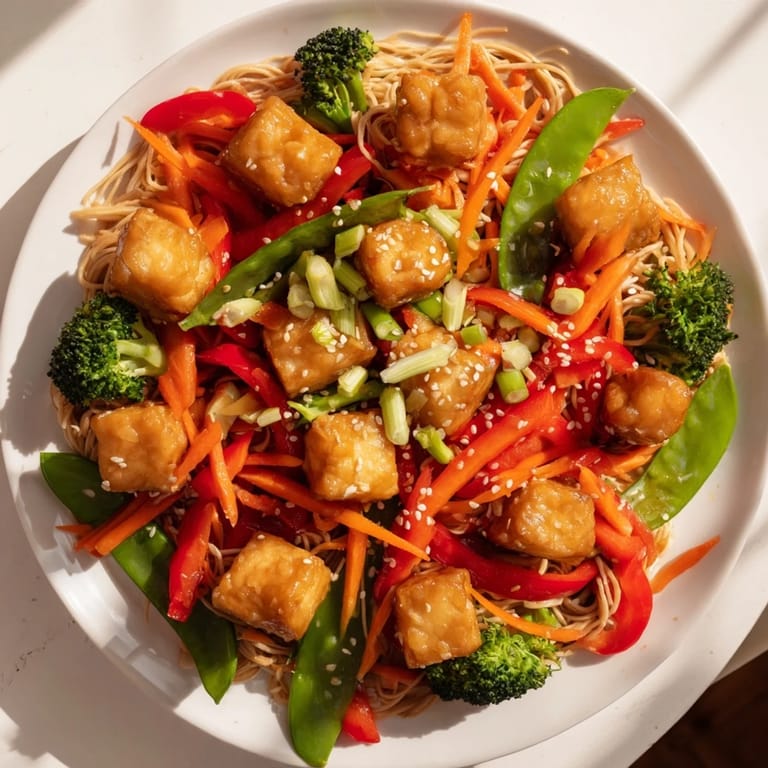
 This dish became my comfort meal during a week when everything felt overwhelming—nothing fancy, just fresh vegetables and golden tofu that actually tasted like something worth eating. There's real comfort in a meal that comes together quickly and tastes like you tried, even when you're barely holding it together.
Why Tofu Deserves Better
Tofu gets a bad reputation because so often it's either ignored in the background of a dish or overcooked until it's rubbery. But when it's treated right—pressed, coated, and given heat—it transforms into something with real texture and presence. The cornstarch coating is the difference between tofu that disappears and tofu that people actually want to eat. I've learned that the best tofu dishes are the ones where you respect the ingredient enough to let it be the main event, not the supporting player.
Building Flavor Layers
The magic of this stir-fry is that no single ingredient overwhelms—the sesame oil adds nuttiness, the ginger adds warmth and spice, the rice vinegar adds brightness, and the soy sauce ties everything together with depth. I used to make stir-fries where one flavor would shout over all the others, but I learned that the best ones feel balanced, where you taste something different with each bite. The honey is barely noticeable but absolutely essential; without it, the sauce tastes one-dimensional.
Flexibility and Swaps
This recipe is genuinely flexible, and that's one reason it became a regular in my kitchen. I've added mushrooms when I had them, thrown in baby corn, swapped rice noodles for wheat, and even used whatever vegetables were about to go soft in my vegetable drawer. For a gluten-free version, tamari swaps in seamlessly for soy sauce and tastes almost identical. If you want heat, a pinch of chili flakes or a dash of sriracha stirred into the sauce takes it in a completely different direction.
- Try mushrooms, baby corn, or bok choy as vegetable swaps without changing the cooking time.
- For extra heat, add chili flakes or sriracha to the sauce and taste as you go.
- This dish tastes even better the next day when the flavors have had time to get to know each other.
 Save to Pinterest
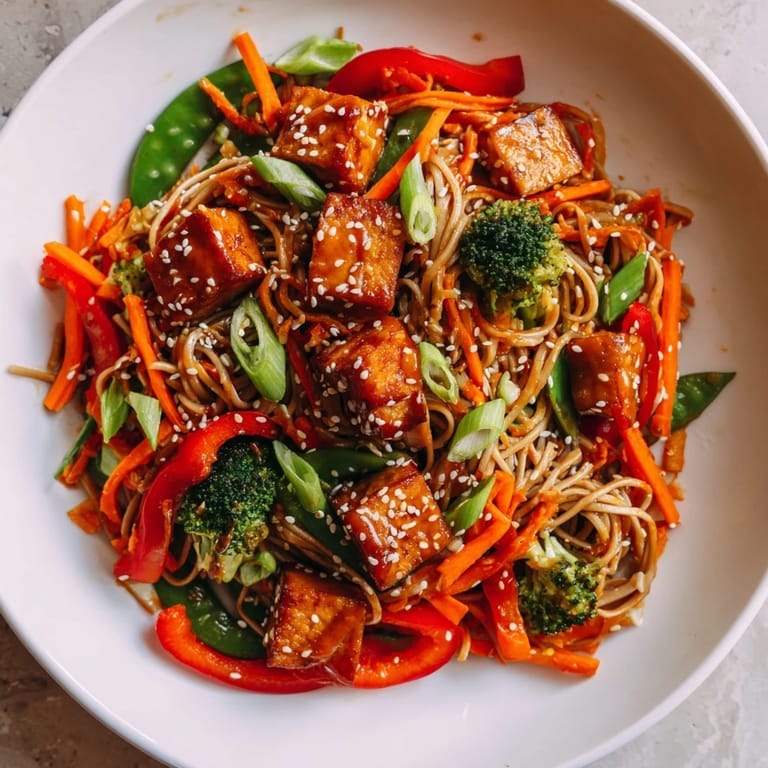
 This is the kind of meal that reminds you why cooking matters—something nourishing, flavorful, and genuinely satisfying made in your own kitchen. Make it once and you'll find yourself coming back to it again and again.
Recipe FAQs
- → How do I achieve crispy tofu in this dish?
Press the tofu to remove excess moisture, coat evenly with cornstarch, and fry in hot oil until golden and crisp on all sides, about 6–8 minutes.
- → Can I substitute the noodles for a gluten-free option?
Yes, rice noodles or certified gluten-free alternatives work well, and using tamari in place of soy sauce keeps the dish gluten-free.
- → What vegetables pair best with the sesame-ginger sauce?
Red bell pepper, carrot, sugar snap peas, broccoli, and spring onions complement the sauce's flavor and provide a nice textural contrast.
- → Is it possible to add extra heat to this stir-fry?
Absolutely, a pinch of chili flakes or a dash of sriracha mixed into the sauce can add a subtle kick without overpowering the other flavors.
- → How should I store leftovers for best freshness?
Keep leftovers refrigerated in an airtight container for up to 2 days; reheat gently to maintain tofu crispness and vegetable texture.
- → What garnishes enhance the final dish?
Sprinkle extra sesame seeds, fresh coriander leaves, and serve with lime wedges to add brightness and depth.