 Save to Pinterest
 My kitchen smelled like a county fair the first time I cranked the heat too high and watched my chicken turn dark before it cooked through. I learned fast that a thermometer isn't optional, it's survival. Now, every time I drop a piece into shimmering oil and hear that confident sizzle, I know I've got it right. This sandwich isn't delicate or apologetic. It's loud, messy, and worth every napkin.
I made these for a birthday dinner once, and my friend who never finishes anything polished off two sandwiches and asked for the recipe before dessert. Watching someone reach for seconds without speaking is the highest compliment a cook can get. The kitchen was a mess, the counters dusted with flour and cornstarch, but no one cared. We ate standing up, sauce dripping onto paper towels, laughing at how good something this simple could be.
Ingredients
- Boneless, skinless chicken breasts: Pounding them to half an inch ensures they cook evenly and stay tender, never dry or rubbery.
- Buttermilk: The acid tenderizes the meat and helps the dredge cling like a second skin.
- Hot sauce: It adds heat and acidity to both the marinade and the sauce, tying the whole sandwich together.
- Cayenne pepper: A little goes into the marinade, a little into the dredge, this is where the heat builds in layers.
- Cornstarch: Mixed with flour, it creates an extra crisp, almost glassy crust that doesn't turn soggy.
- Mayonnaise: The creamy base of the sauce, rich and tangy, it cools the heat without erasing it.
- Sour cream: Adds body and a slight tang that makes the sauce feel more complex than it is.
- Smoked paprika: A subtle smoky note that makes the sauce taste like it took longer than it did.
- Brioche buns: Buttery, soft, and sturdy enough to hold everything without falling apart in your hands.
- Dill pickles: The sharp brine cuts through the richness and adds a snappy crunch.
Tired of Takeout? 🥡
Get 10 meals you can make faster than delivery arrives. Seriously.
One email. No spam. Unsubscribe anytime.
Instructions
- Marinate the chicken:
- Whisk buttermilk, hot sauce, salt, paprika, cayenne, garlic powder, and onion powder in a large bowl until smooth. Submerge the pounded chicken breasts, cover tightly, and refrigerate for at least one hour or up to overnight for deeper flavor.
- Prepare the dredge:
- Combine flour, cornstarch, paprika, garlic powder, onion powder, salt, cayenne, and black pepper in a shallow dish. Mix thoroughly so every scoop coats evenly.
- Heat the oil:
- Pour vegetable oil into a heavy skillet or Dutch oven and heat to 350°F. Use a thermometer, guessing will ruin your day.
- Dredge the chicken:
- Lift each piece from the marinade, let excess drip off, then press firmly into the dredge on both sides. For extra crunch, dip back into the marinade and dredge again.
- Fry until golden:
- Carefully lower chicken into the hot oil and fry for 4 to 6 minutes per side, until deep golden and the internal temperature hits 165°F. Transfer to a wire rack to drain, never paper towels, they make it soggy.
- Make the sauce:
- Whisk mayonnaise, sour cream, hot sauce, lemon juice, smoked paprika, garlic powder, and honey in a small bowl. Taste and adjust salt, pepper, or heat as needed.
- Toast the buns:
- Split the brioche buns and toast them lightly in a dry skillet or under the broiler until just golden.
- Assemble the sandwiches:
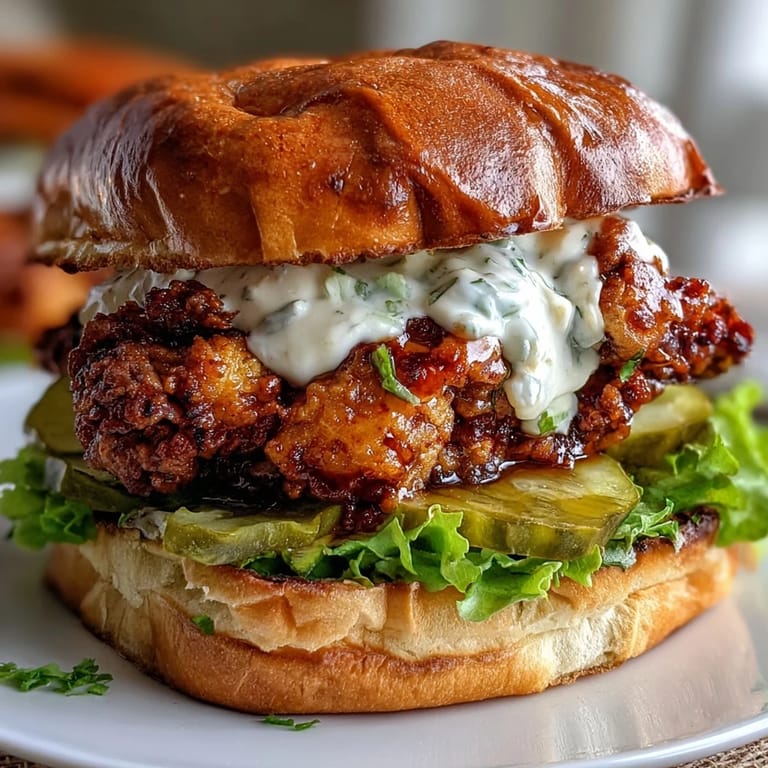
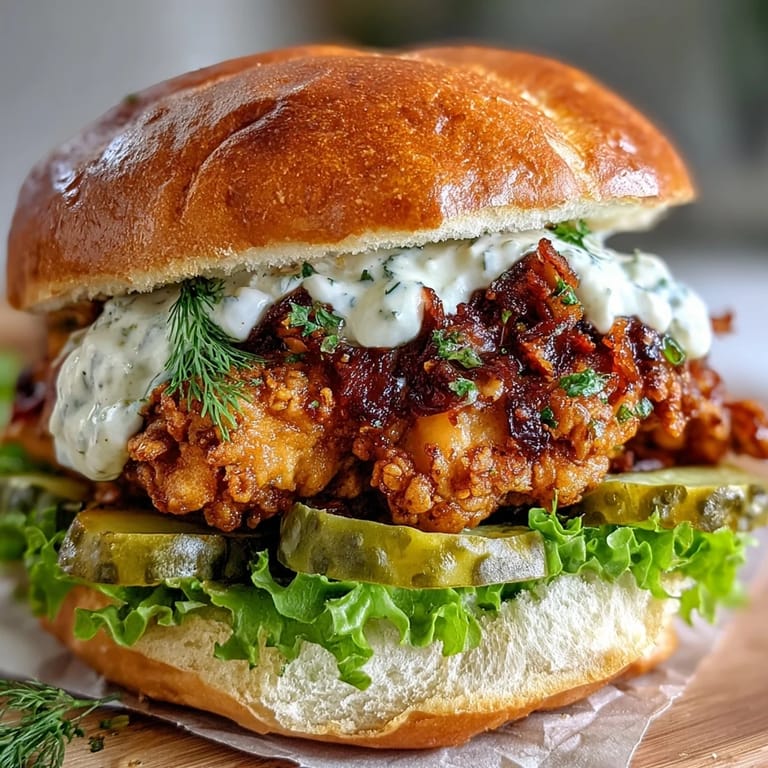
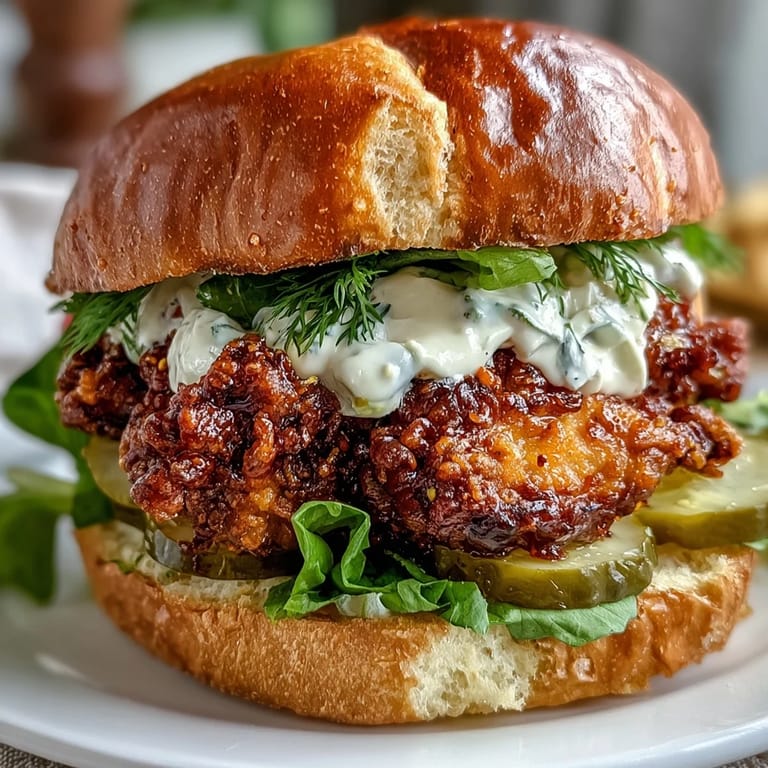
- Spread sauce generously on both sides of each bun, layer with fried chicken, pickles, lettuce, and tomato if you like. Press gently and serve immediately.
 Save to Pinterest
 One Sunday, I packed these sandwiches into foil and brought them to a park picnic. Even cold, they tasted incredible, the sauce soaked into the bun just enough, the pickles still snappy. My brother, who usually picks at food, ate his in four bites and asked if I'd make them again next weekend. That's when I realized this wasn't just a recipe, it was a request waiting to happen.
How to Get the Crispiest Crust
The secret is in the double dredge. After the first coat, dip the chicken back into the marinade quickly, then press it into the dredge again. This builds texture and creates little craggy bits that fry up shatteringly crisp. Don't rush it, let the oil come back to temperature between batches. If you crowd the pan, the temperature drops and the crust steams instead of fries.
Adjusting the Heat Level
If you want more fire, add an extra half teaspoon of cayenne to both the marinade and the dredge. For a milder version, cut the cayenne in half and use a sweet paprika instead of the regular kind. The sauce is where you have the most control, start with one teaspoon of hot sauce, taste, then add more if you're brave. I've learned that heat is personal, and it's easier to add than to take away.
Storing and Reheating
Fried chicken keeps well in the fridge for up to three days if stored in an airtight container. To reheat, skip the microwave, it makes everything soggy. Instead, place the chicken on a wire rack over a baking sheet and bake at 375°F for about 10 minutes until heated through and crispy again. You can toast fresh buns and build new sandwiches, or eat the chicken on its own with extra sauce.
- Store the sauce separately so the buns don't get soggy overnight.
- Freeze uncooked marinated chicken for up to a month, then thaw and fry fresh when you're ready.
- If you're meal prepping, fry the chicken and keep it plain, then assemble sandwiches throughout the week.
 Save to Pinterest
 This sandwich doesn't pretend to be healthy or dainty, and that's exactly why it works. Make it when you're hungry, when you want something that feels like a celebration, and don't forget the extra napkins.
Recipe FAQs
- → How long should I marinate the chicken?
Marinate the chicken in the buttermilk mixture for at least 1 hour, but overnight marinating in the refrigerator yields the most flavorful and tender results. The acid in buttermilk helps break down proteins for maximum juiciness.
- → What oil temperature is best for frying?
Heat your vegetable oil to 350°F (175°C) for optimal frying. This temperature creates a crispy golden exterior while ensuring the chicken cooks through completely without burning the coating.
- → Can I use chicken thighs instead of breasts?
Absolutely. Chicken thighs provide more natural fat and juiciness compared to breasts. Pound them to even thickness and adjust cooking time slightly—thighs may need an extra minute or two per side.
- → How do I make the coating extra crunchy?
Double dredge the chicken by coating it twice in the flour mixture, pressing firmly to adhere. The cornstarch in the dredge creates an extra crispy crust, and letting the coated chicken sit for 5 minutes before frying enhances crunchiness.
- → Can I make this gluten-free?
Yes. Substitute all-purpose flour with a 1:1 gluten-free flour blend, use gluten-free buns, and ensure your hot sauce and other condiments are certified gluten-free. The frying technique remains the same.
- → How long can I store the homemade sauce?
The creamy sauce keeps well in an airtight container in the refrigerator for up to 1 week. The flavors actually meld and improve after a day. Bring to room temperature before serving for best consistency.