 Save to Pinterest
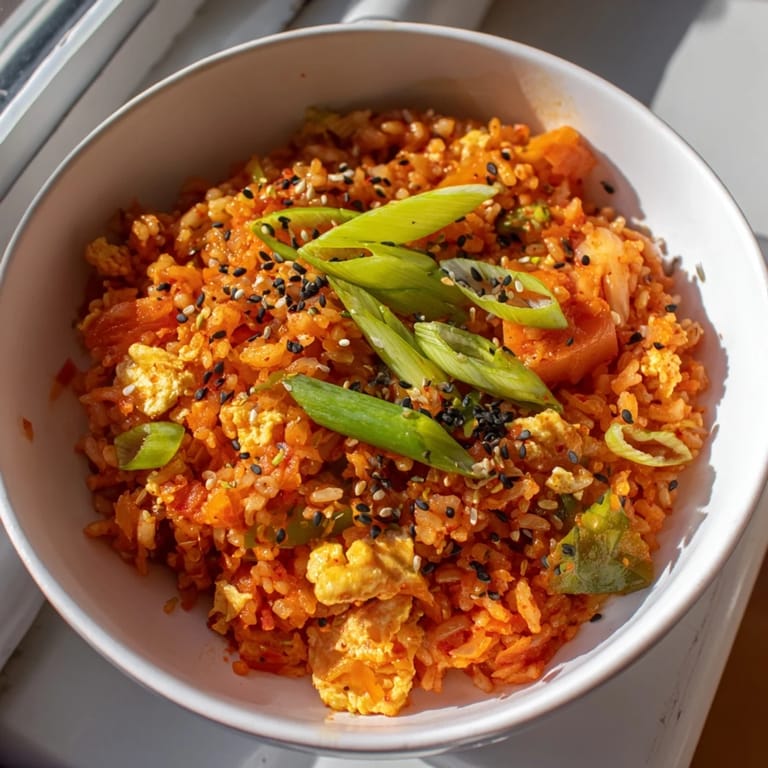
 My roommate burst through the kitchen door one weeknight with a container of kimchi from a Korean market downtown, insisting I had to learn this one dish that could save my life on busy nights. Twenty minutes later, I understood the hype—the way gochujang blooms in hot oil, how leftover rice transforms into something vibrant and alive, and why this became the recipe I reach for when I need something bold but don't have time to fuss. It's the kind of meal that tastes like you've been cooking all day, even though you haven't.
I made this for my sister when she was going through a rough patch, and she ate it standing at the counter without saying a word until the bowl was empty. Then she looked at me and said, "Where has this been my whole life?" That's when I realized it wasn't just about the food—it was about having something real and uncomplicated to share when words felt too heavy.
Ingredients
- 2 cups cold cooked white rice (preferably day-old): Day-old rice is non-negotiable here—it's drier and won't turn mushy when you're stir-frying, keeping each grain separate and crispy instead of clumping into a disappointing paste.
- 1 cup napa cabbage kimchi, chopped (plus 2 tbsp kimchi juice): This is your flavor backbone, so grab the good stuff from a proper Korean market if you can—the funk matters, and so does that tangy liquid gold you'll need later.
- 2 large eggs: They scramble right in the pan and become little pockets of richness that make every bite feel more complete.
- 1/2 small onion, finely diced: Keep it small so it softens quickly and distributes sweetness without overpowering the kimchi.
- 2 green onions, sliced (green and white parts separated): White parts cook down and mellow out, while the greens hit the pan at the very end for a fresh, sharp finish.
- 1 small carrot, finely diced (optional): A little sweetness and texture that makes the dish feel more complete, though it's totally optional if you want to keep things simple.
- 2 tbsp gochujang (Korean chili paste): This is where the fire comes from—buy it from the Korean aisle and store it in your fridge, and trust me, you'll use it constantly.
- 1 tbsp soy sauce: The umami anchor that ties everything together and makes you wonder why you ever thought salt alone was enough.
- 1 tsp toasted sesame oil: A small drizzle at the end that somehow makes the whole thing smell like you know what you're doing.
- 1 tbsp vegetable oil: High smoke point matters here since you're cooking hot and fast.
- 1 tsp sugar (optional, to balance acidity): Sometimes the kimchi needs a gentle hand to soften its tangy edge.
Tired of Takeout? 🥡
Get 10 meals you can make faster than delivery arrives. Seriously.
One email. No spam. Unsubscribe anytime.
Instructions
- Get your pan ready and start with the aromatic base:
- Heat vegetable oil in a large skillet or wok over medium-high heat until it shimmers, then add your diced onion, the white parts of green onion, and carrot. Let them soften for 2 to 3 minutes, stirring occasionally—you'll know it's right when the onion starts to turn translucent and the carrot pieces have lost their hard edges.
- Wake up the kimchi:
- Add your chopped kimchi directly to the pan and let it sit for a moment before stirring, allowing it to caramelize slightly in the hot oil for about 2 to 3 minutes. The smell that rises up is incredible—funky, spicy, and somehow familiar even if you've never made this before.
- Build the sauce:
- Stir in the gochujang, soy sauce, and sugar if you're using it, mixing everything together until the paste breaks down and coats the vegetables in a deep red sauce. This is where you taste and adjust—if it seems too fiery, add a pinch more sugar; if it feels flat, a dash more soy sauce wakes it up.
- Scramble the eggs:
- Push everything to one side of the pan and crack your eggs into the empty space, letting them cook undisturbed for just a moment before scrambling them directly in the pan. They should be mostly set but still a little soft when you combine them with everything else.
- Bring in the rice and bind it all together:
- Add your cold rice to the pan, breaking up any clumps with your spatula as you go, then pour in that reserved kimchi juice. Stir-fry everything for 3 to 4 minutes, making sure the rice heats through and every grain gets coated in that spicy, gochujang-tinged oil.
- Finish with brightness and warmth:
- Drizzle the sesame oil over everything and fold in the green parts of your green onion plus any optional meat or tofu you're adding. Give it one final stir to make sure the heat gently warms the more delicate ingredients without cooking the fresh onion into submission.
- Taste, adjust, and serve:
- Take a small spoonful, let it cool for a second, and taste—this is your moment to decide if it needs more spice, more salt, or a squeeze of something bright. Scoop it into bowls and top with sesame seeds, extra green onion, and those roasted seaweed strips if you have them.
 Save to Pinterest
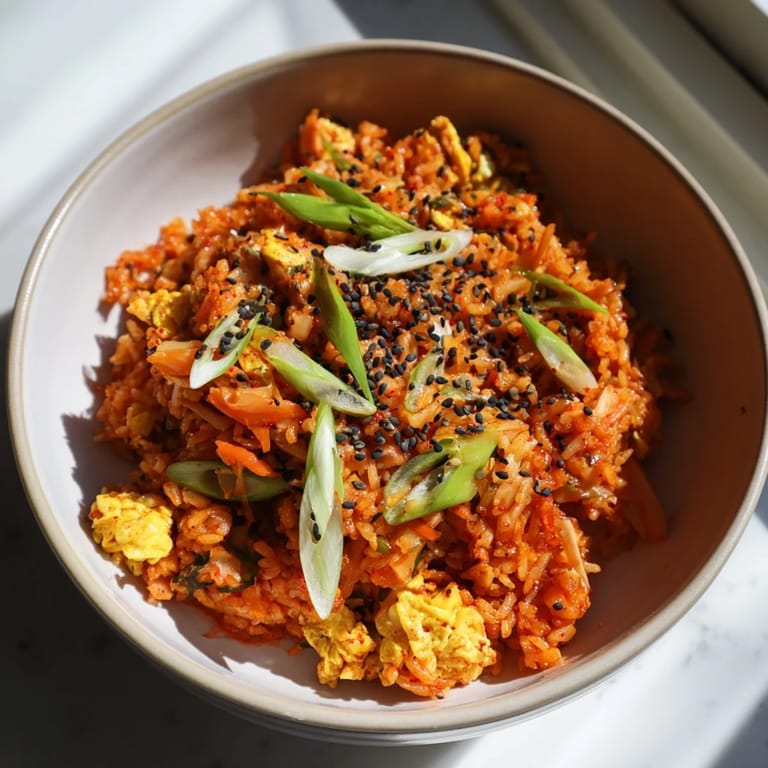
 There's something about the steam rising off the bowl and that first bite where the heat hits, the kimchi's tang brightens, and you realize you can absolutely do this on a weeknight—that's when cooking becomes less about following rules and more about feeding yourself and the people you care about well.
Playing With Heat and Balance
Gochujang is spicy, but it's not just heat—it's deep and fermented and slightly sweet if you let it be. The first time I made this, I was timid with the paste, and the dish felt muted. Now I understand that Korean food is built on bold flavors that play against each other, so don't be afraid of the gochujang; instead, respect it by balancing it with soy sauce's saltiness and a tiny bit of sugar if things get too loud.
Why Day-Old Rice Changes Everything
Fresh, hot rice absorbs liquid like a sponge and turns into porridge when you stir-fry it—it's frustrating and sad. But rice that's been in the fridge overnight dries out just enough that each grain can slide around in the pan independently, catching the oil and sauce without clumping. This single decision is the difference between a beautiful stir-fry and a disappointing rice situation.
Making It Your Own and Keeping It Simple
The beauty of this dish is that it adapts to what's in your fridge without losing its soul—I've made it with leftover roasted vegetables, with crispy tofu, with nothing but an egg and some kimchi, and it's always been honest and satisfying. Don't feel like you need every garnish or addition; the core of rice, kimchi, gochujang, and egg is already complete.
- Spam or pork belly adds richness, but a perfectly scrambled egg is honestly enough protein to make this a meal.
- If you're vegetarian, just verify your kimchi doesn't contain fish sauce, and you're golden.
- Leftovers keep beautifully for a couple days and actually taste better the next morning—cold, out of the fridge, or gently reheated in a pan.
 Save to Pinterest
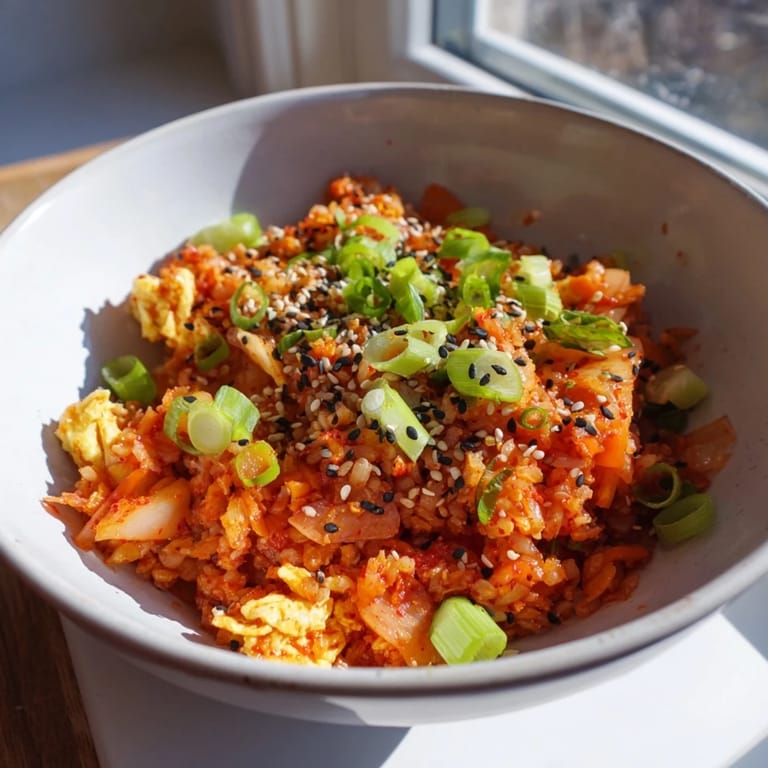
 This is the kind of recipe that becomes a quiet favorite, something you make often enough that it stops feeling like a recipe and starts feeling like home. It's quick, it's honest, and it tastes better than it has any right to given how little time you spent making it.
Recipe FAQs
- → Why use day-old rice for this dish?
Day-old rice is drier and separates easily during stir-frying, preventing clumping. Fresh rice tends to get mushy and won't achieve the ideal texture.
- → Can I adjust the spice level?
Absolutely. Start with 1 tablespoon of gochujang and add more to taste. You can also reduce the spice by adding more soy sauce or a touch of sugar to balance the heat.
- → What are good protein additions?
Cooked pork belly, Spam, bacon, or firm tofu work wonderfully. For a vegan version, omit the eggs and use extra-firm tofu, crisped in the pan before adding other ingredients.
- → How do I prevent soggy fried rice?
Use cold, day-old rice and stir-fry over medium-high heat. Add the kimchi juice near the end and toss quickly so the rice stays separated and lightly coated rather than wet.
- → Is this dish suitable for meal prep?
Yes, you can prepare components in advance, but cook and serve fresh for best texture. Store leftovers in an airtight container for up to three days and reheat gently in a pan.
- → What beverages pair well with this dish?
A cold Korean lager, light beer, or green tea complements the spicy, tangy flavors beautifully. The acidity in these beverages balances the richness of the dish.