 Save to Pinterest
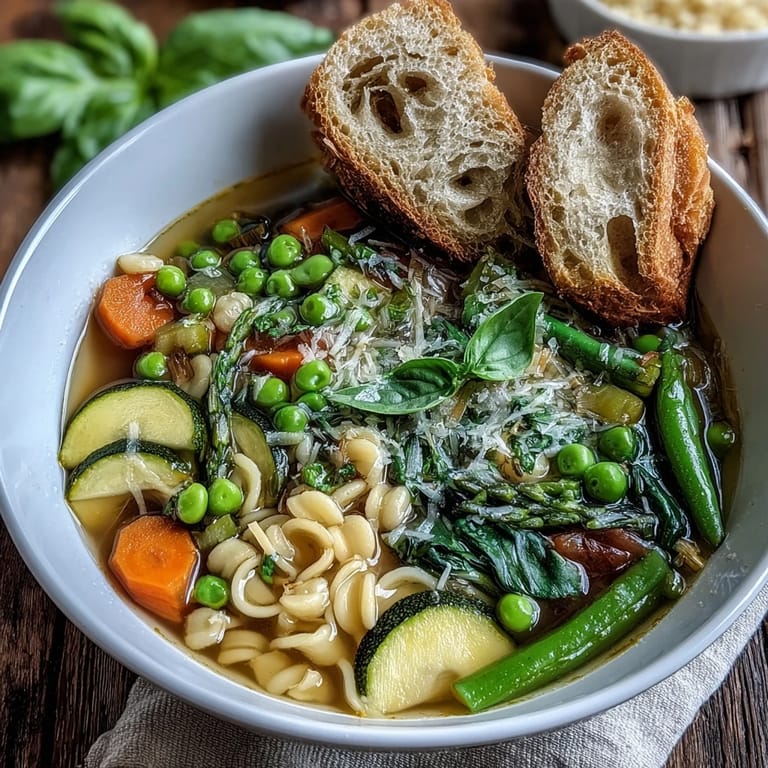
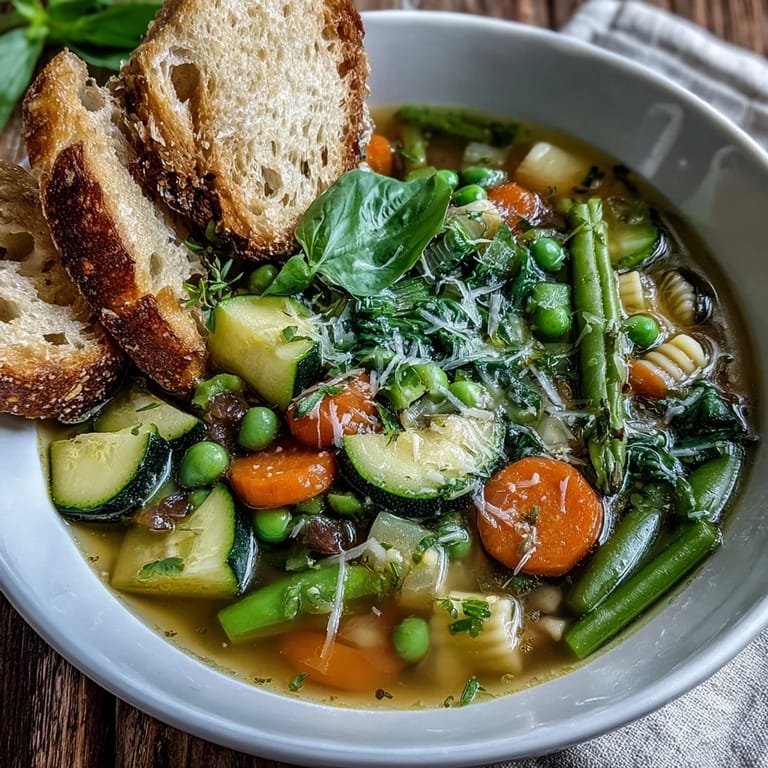
 There is a peculiar joy in chopping vegetables for a bubbling spring minestrone when the kitchen windows are cracked open and the scent of grass drifts in. I stumbled onto this soup one breezy Wednesday afternoon after a spontaneous visit to the farmers& market sent me home with an overflowing tote of green things. The promise of something light but filling seemed just right that day: a bowlful of sunshine, a little messy, with stray basil leaves stuck to my fingers. As the soup simmered and the air filled with mingling scents of garlic and sweet peas, I realized spring had well and truly arrived—right in my own kitchen.
I once made this minestrone for friends on a drizzly Saturday, with everyone passing vegetables around the kitchen table, arguing about which shape of pasta is truly best. Laughter bounced between countertop spills and someone snatching a carrot before it hit the pot—I think that moment turned an ordinary meal into a tiny festival.
Ingredients
- Olive oil: Brings everything together and keeps the veggies glossy; don& be stingy with it at the start.
- Onion: I always chop it finely to let it melt gently into the broth for a subtle sweetness.
- Garlic: Those two cloves are non-negotiable for lifting the whole aroma of the soup.
- Carrots and celery: The essential base, their color and crunch make the soup cheerful as well as hearty.
- Zucchini: Dice it evenly so it softens but never disappears by the end of cooking.
- Peas: Fresh if you can, frozen if you need to—just make sure they stay bright and pop with each bite.
- Baby spinach: Folded in at the last minute, it wilts quickly but adds a fresh green flavor that finishes the bowl perfectly.
- Green beans: I cut these into bite-sized pieces so you never get a tangle on your spoon.
- Vegetable broth: Low-sodium lets the veggies shine, and it& easy to adjust seasoning as you go.
- Bay leaf: One is enough—remember to fish it out before serving, unless you want a game of &who finds the leaf& at the table.
- Small pasta shapes: Ditalini is traditional, but shells or orzo always work for scooping up those brothy bites.
- Fresh parsley: Chopped roughly for bursts of flavor and color at the finish.
- Salt and black pepper: Start slow and adjust at the end so you never overwhelm the delicate flavors.
- Parmesan, basil, and extra olive oil (optional): Each a final flourish; skip the cheese or use dairy-free if needed.
Tired of Takeout? 🥡
Get 10 meals you can make faster than delivery arrives. Seriously.
One email. No spam. Unsubscribe anytime.
Instructions
- Start the base:
- Swirl the olive oil into a large pot over medium heat—listen for a gentle sizzle as you add the onion, then let it go translucent and soft, never browned.
- Build the flavor:
- Toss in garlic, carrots, and celery, stirring as the kitchen fills with their sweet, earthy fragrance; sauté until the pieces are just tender but still hold their shape.
- Add the greens:
- In go the zucchini, green beans, and peas, letting their colors brighten and their flavors mingle for a couple of minutes.
- Simmer away:
- Pour in the vegetable broth and slip in the bay leaf; turn the heat so you see a gentle bubble, then let it all simmer and relax together.
- Pasta time:
- Sprinkle the pasta straight into the pot and watch as it softens and plumps, checking after eight minutes for that perfect not-too-soft texture.
- Last greens:
- With a final handful, add spinach and parsley—stir and let the spinach just wilt, turning bright and silky in the hot soup.
- Final seasoning:
- Now taste, add salt and pepper bit by bit, and pull out that bay leaf before you forget.
- Serve and finish:
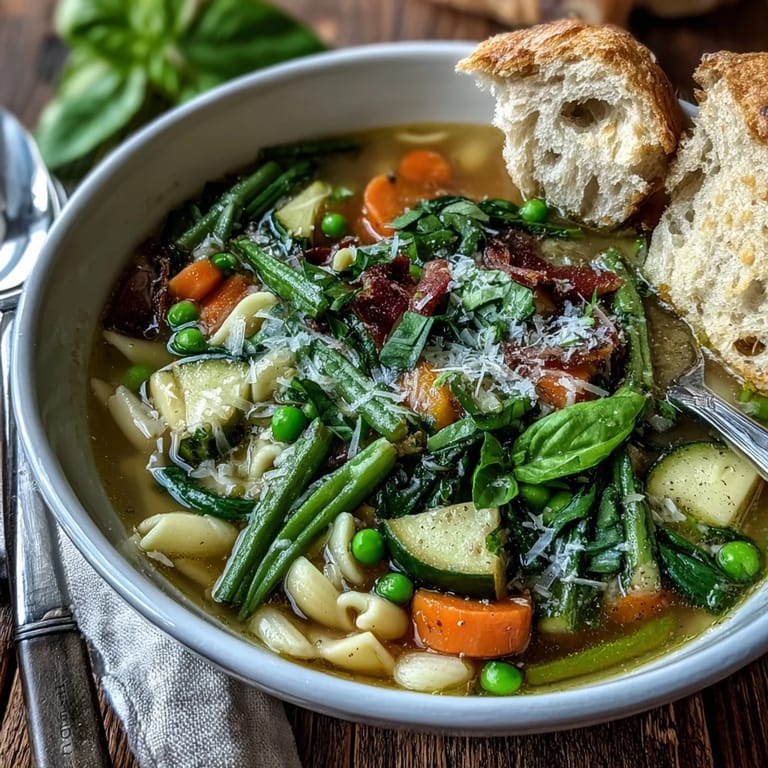
- Ladle into bowls, garnishing each with a snowy sprinkle of Parmesan, fresh basil, and a joyous drizzle of olive oil—let everyone dress their bowl as they like.
 Save to Pinterest
  Save to Pinterest
 The first time someone called for seconds, the pot clattered as I tried to pour without sloshing broth everywhere, and suddenly this soup felt like a kitchen tradition in the making. It& amazing how something so humble can draw out stories and second helpings with such ease.
Choosing Your Best Spring Vegetables
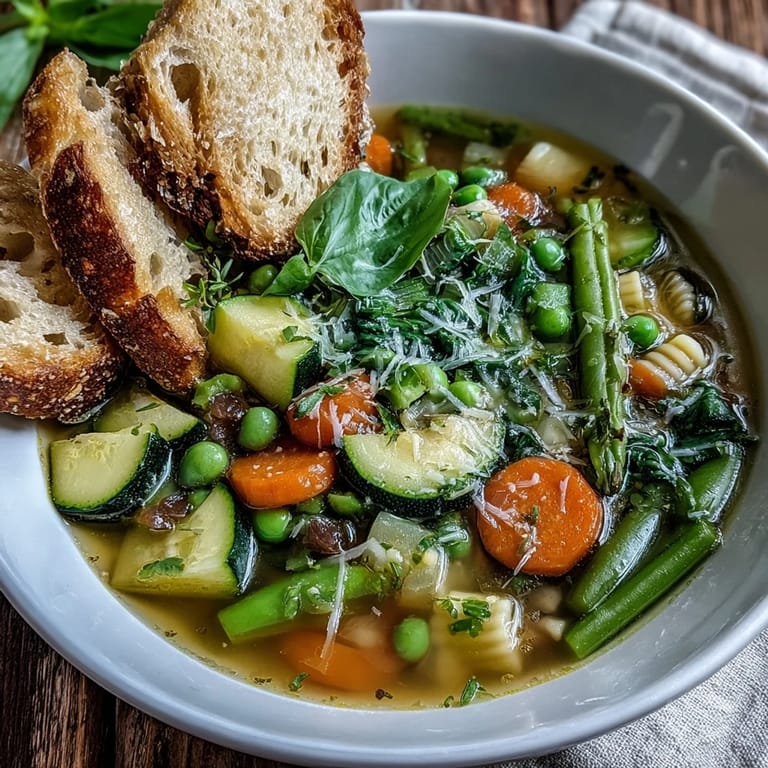
It& truly fun to pick out whatever is freshest that week—sometimes I&ll add a handful of asparagus tips or the odd fava bean if the market stand looks especially tempting. The more variety you use, the brighter and more layered your soup will taste, giving every bowl its own cheerful personality.
Making It for Everyone
This recipe has stood up to lots of substitutions for friends& allergies and preferences. If you need gluten-free, spiral-shaped pasta made from brown rice or chickpeas is a great swap that holds up in the broth and satisfies even the pasta purists at my table.
Tiny Kitchen, Big Flavor
You don& need anything fancy to bring this soup to life—a big pot and a sharp knife are truly all it takes. Sometimes, I&ll use leftover veggies or that last bit of frozen peas, and it still comes out rich with flavor and color.
- If you&re short on time, chop all the veg the night before for a quick assembly.
- A splash of lemon right before serving brightens the whole bowl.
- Remember: good bread on the side is never really optional with a soup like this.
 Save to Pinterest
  Save to Pinterest
 Every spring, this soup reminds me how quickly simple ingredients can become something worth sharing. I hope it finds a sunny spot on your table as effortlessly as it did on mine.
Recipe FAQs
- → Can I make this ahead and reheat?
Yes. Cook through to just before adding spinach, cool quickly, then refrigerate up to 3 days. Reheat gently and add spinach in the last few minutes to preserve color and texture.
- → What pasta works best?
Small shapes like ditalini, orzo or small shells hold up well. Cook al dente in the simmering broth so they don’t become mushy; you can also cook pasta separately to control texture.
- → How can I boost protein in the bowl?
Add canned cannellini or borlotti beans during the simmer, or stir in cooked shredded chicken. Beans also make the dish heartier while keeping a vegetarian profile.
- → Is freezing recommended?
Freezing is fine if pasta is removed or undercooked initially. Freeze the soup base without spinach and pasta, then add fresh spinach and cooked pasta when thawing and reheating.
- → How do I adjust saltiness when using store-bought broth?
Use low-sodium broth and taste near the end of cooking. Reduce added salt if the broth is salty, and remember grated cheese as a garnish will add saltiness too.
- → What seasonal vegetables work well as substitutions?
Asparagus, peas, fava beans, baby leeks or early spring carrots all complement the base. Add firmer vegetables earlier and tender ones like asparagus tips toward the end.