 Save to Pinterest
 My first attempt at teriyaki salmon happened on a Tuesday night when I'd promised to cook something impressive but had barely thirty minutes to spare. The smell of garlic and ginger hitting hot oil while the salmon sizzled created this moment where everything suddenly felt effortless, even though I was quietly panicking about timing. What started as a desperate dinner plan became the recipe I keep reaching for, especially when I want something that feels both restaurant-quality and actually achievable on a weeknight.
I made this for my sister during a rainy Sunday when she mentioned feeling tired of takeout boxes piling up in her kitchen. Watching her face light up when she took that first bite, realizing she could make this at home whenever she wanted, reminded me why I love cooking for people. It became her go-to recipe, and now she texts me photos of her bowl variations like she's invented something entirely new.
Ingredients
- Salmon fillets: Look for firm, bright-pink flesh that doesn't smell fishy, which means it's genuinely fresh and will cook beautifully without any unpleasant aftertaste.
- Soy sauce: This is where the umami lives, so don't skip it or substitute with something lighter or you'll lose the depth that makes this dish sing.
- Mirin: This sweet rice wine is non-negotiable for authentic teriyaki, bringing subtle sweetness that balances the salty soy without tasting like candy.
- Brown sugar: Adds deeper caramel notes that plain white sugar can't quite achieve, creating a more complex glaze.
- Rice vinegar: The bright acidity cuts through the richness and keeps the sauce from feeling one-dimensional.
- Sesame oil: A little goes a long way here, lending that toasted, nutty flavor that makes everything taste more intentional.
- Fresh garlic and ginger: Mince the garlic finely and grate the ginger fresh, as these transform from supporting players into the backbone of your sauce's personality.
- Cornstarch slurry: This is your secret weapon for achieving that glossy, coating consistency that clings to salmon instead of running off.
- Bell pepper, carrot, broccoli, and snap peas: The vegetable mix brings color and texture, but swap them for whatever's in season because flexibility here means you'll actually make this more often.
- Jasmine or sushi rice: The subtle floral notes of jasmine rice work beautifully here, though sushi rice gives you that slightly stickier texture if that's what you prefer.
- Sesame seeds and spring onions: These finishing touches add crunch and freshness that elevate a bowl from good to something you'll remember.
Tired of Takeout? 🥡
Get 10 meals you can make faster than delivery arrives. Seriously.
One email. No spam. Unsubscribe anytime.
Instructions
- Prepare your rice foundation:
- Rinse the rice under cold water until the water runs clear, which removes excess starch and prevents gummy rice. Bring rice and water to a boil, then cover and reduce heat to low for 15 minutes, letting it steam undisturbed.
- Build your glossy sauce:
- While rice simmers, combine soy sauce, mirin, brown sugar, rice vinegar, sesame oil, garlic, and ginger in a small saucepan over medium heat. Stir occasionally until the sugar dissolves completely, then add your cornstarch slurry and cook for another minute or two until it thickens into something shiny and coat-able.
- Sear the salmon to golden perfection:
- Season salmon with a light touch of salt and pepper, then sear skin-side down in a hot skillet with just a splash of oil for three to four minutes until the skin turns crispy and golden. Flip and cook another two to three minutes until the flesh is opaque but still tender in the center.
- Glaze and finish:
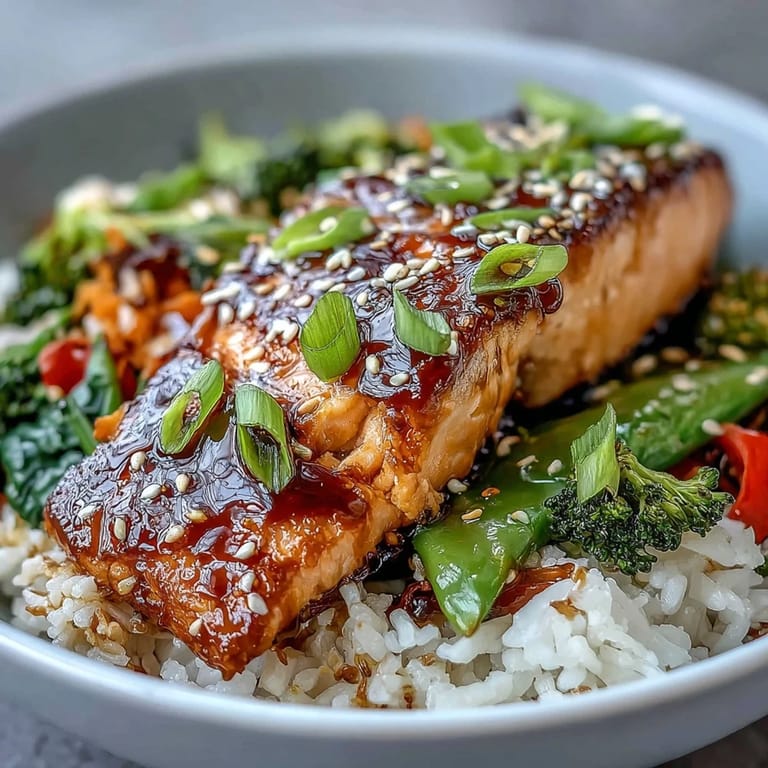
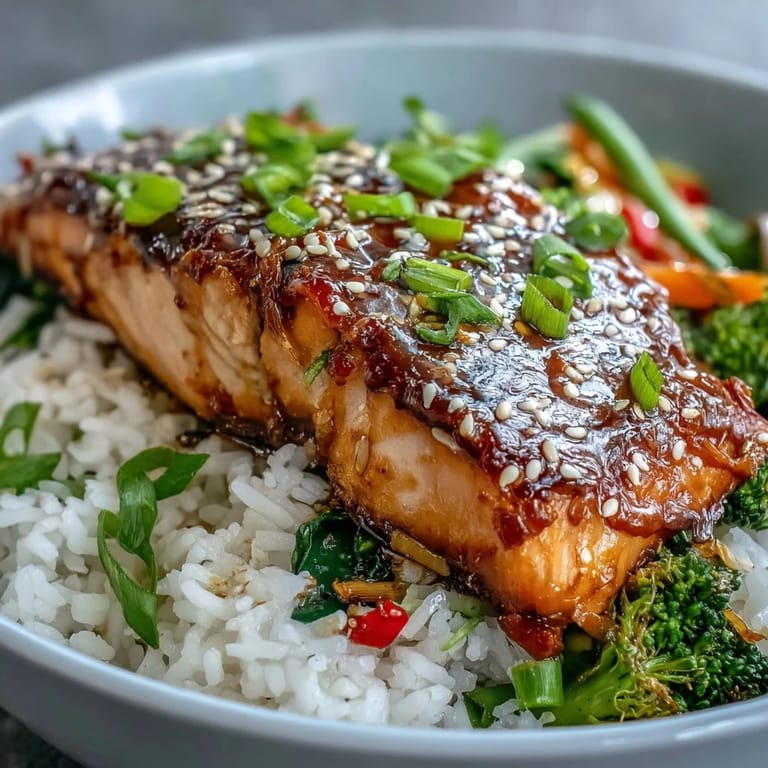
- Brush your cooked salmon generously with that beautiful teriyaki sauce and let it cook for just one more minute, watching the glaze deepen and cling to the fish. The contrast between the caramelized glaze and tender salmon is what makes this moment worth the wait.
- Stir-fry vegetables until crisp-tender:
- Heat oil in a wok or large skillet over high heat and add bell pepper, carrot, broccoli, and snap peas all at once. Toss constantly for three to four minutes, listening for that gentle sizzle that tells you things are cooking at the right speed, until they're bright, slightly softened, but still snappy when you bite into them.
- Assemble your bowl:
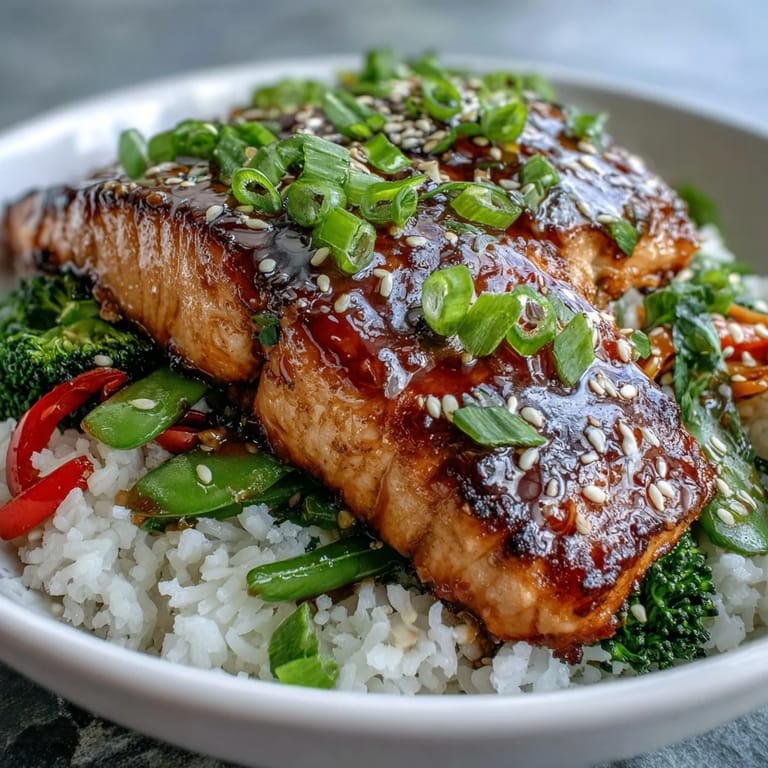
- Divide rice among bowls, top with stir-fried vegetables and your glossy salmon fillet, then drizzle everything with extra sauce and scatter sesame seeds and spring onions on top. This is your moment to make it look as good as it tastes.
 Save to Pinterest
 There's something quietly magical about a bowl where everything has its purpose and nothing feels crowded or competing. I realized this dish had become more than dinner when a friend asked for the recipe not because it tasted fancy, but because it made her feel capable in her own kitchen.
The Sauce That Changes Everything
The teriyaki sauce is honestly the star here, and understanding why each ingredient matters will make you a better cook. The soy sauce brings saltiness and umami depth, mirin contributes natural sweetness and body, and that rice vinegar brightens everything so it doesn't feel heavy or cloying. Once you understand this formula, you'll start seeing it in other dishes and suddenly realize you can make restaurant-quality sauces at home without any mystery or guesswork involved.
Timing and the Art of Not Rushing
The whole reason this meal comes together in thirty-five minutes is because everything cooks simultaneously without competing for your attention. I used to make the mistake of trying to cook salmon while stir-frying vegetables, which meant the vegetables were done before the salmon was even seared. Now I respect the sequence: rice first because it's patient and forgiving, sauce second because it just sits there getting better, then salmon and vegetables in that order so nothing waits around getting cold.
Making It Your Own
The vegetables listed here are just a starting point, and honestly, this bowl tastes even better when you use whatever is currently at peak season. I've made it with mushrooms and zucchini in summer, roasted cauliflower in fall, and even added some shredded red cabbage for extra crunch and color. The magic is in understanding that the formula stays the same while the details shift with the seasons and what's available.
- Try marinating the salmon in half the teriyaki sauce for fifteen minutes before cooking if you want deeper flavor and have slightly more time.
- If you're cooking for people with dietary restrictions, this bowl works beautifully for pescatarians, gluten-free diets if you use tamari instead of regular soy sauce, and is naturally dairy-free.
- Leftover sauce keeps in the fridge for a week and works on chicken, tofu, or roasted vegetables if you find yourself making this more than once.
 Save to Pinterest
 This is the kind of recipe that proves you don't need complicated techniques or rare ingredients to make something that tastes deliberately made and genuinely delicious. Make it once and it becomes yours, a weeknight anchor that reminds you why cooking for yourself matters.
Recipe FAQs
- → Can I use other types of fish?
Yes, this works well with other firm fish like cod, mahi-mahi, or sea bass. Adjust cooking time based on thickness.
- → How do I store leftovers?
Store components separately in airtight containers. Rice keeps 3-4 days, salmon 2-3 days. Reheat gently to avoid overcooking.
- → Can I make the sauce ahead?
Absolutely. The teriyaki sauce keeps refrigerated for up to 2 weeks. Warm slightly before using.
- → Is this gluten-free?
Use tamari instead of soy sauce to make it gluten-free. All other ingredients are naturally gluten-free.
- → Can I use brown rice?
Yes, brown rice works well but requires longer cooking time—about 45 minutes total.
- → What vegetables work best?
Any quick-cooking vegetables work: bok choy, snow peas, mushrooms, zucchini, or baby corn are excellent options.