 Save to Pinterest
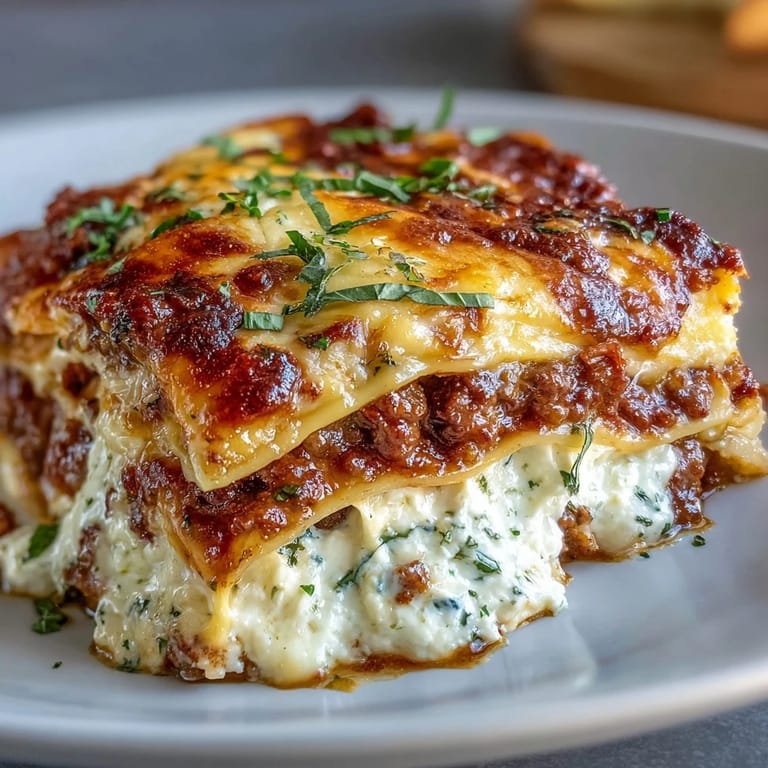
 My neighbor Maria once told me that a real lasagna should smell so good that people start wandering into your kitchen before you even call them. She was right. The smell of garlic hitting hot olive oil, then meat browning with Italian sausage, then everything simmering together with basil—it pulls people in like a magnet. I've made this lasagna dozens of times now, and every single time, someone appears in the doorway asking when dinner will be ready.
I made this for my brother's birthday one winter, and he ate three slices before anyone else had finished their first. He's not usually a big eater, but he kept saying the cheese pull was unreal. We laughed so hard watching him try to cut through all those gooey layers without making a mess. That night, lasagna became our official celebration food.
Ingredients
- 12 sheets lasagna noodles, uncooked: Using uncooked noodles saves time and lets them absorb the sauce beautifully, just make sure your sauce is a bit saucy so they soften perfectly.
- 15 oz ricotta cheese: This creamy layer is what makes lasagna feel luxurious, and mixing it with an egg helps it set up so it doesn't ooze everywhere when you slice.
- 1 large egg: It binds the ricotta so each layer stays put and gives you clean, pretty slices instead of a landslide.
- 4 cups shredded mozzarella cheese: The star of the cheese pull, mozzarella melts into stretchy, golden bubbles that make every forkful irresistible.
- 1 cup grated Parmesan cheese: Parmesan adds a sharp, nutty finish on top and helps create that beautiful golden crust we all want.
- 1 lb ground beef, lean recommended: Lean beef keeps the sauce from getting greasy, but it still brings deep, savory flavor to the meat layer.
- 1 lb Italian sausage, casing removed: Sweet or spicy, this sausage is where the real flavor magic happens, adding fennel and spice that make the sauce unforgettable.
- 4 cups marinara sauce: A good marinara is your foundation, whether homemade or store bought, just pick one that tastes great on its own.
- 4 cloves garlic, minced: Fresh garlic sautéed in olive oil is the aromatic backbone that makes your whole kitchen smell like an Italian grandmother's house.
- 2 tablespoons olive oil: This gets everything started, coating the pan and helping the garlic release its fragrance without burning.
- ¼ cup fresh basil, chopped: Fresh basil stirred into the sauce at the end brings a bright, sweet note that dried basil just can't match.
- 1 teaspoon salt: Salt wakes up all the other flavors and keeps the meat sauce from tasting flat.
- ½ teaspoon black pepper: A little pepper adds gentle warmth and depth without overwhelming the other seasonings.
Tired of Takeout? 🥡
Get 10 meals you can make faster than delivery arrives. Seriously.
One email. No spam. Unsubscribe anytime.
Instructions
- Preheat your oven:
- Set it to 375°F so it's ready when you finish assembling. A properly heated oven ensures even baking and that perfect bubbly top.
- Sauté the garlic:
- Heat olive oil in a large skillet over medium heat, then add minced garlic and stir for about a minute until it smells incredible and just starts to turn golden. Don't let it brown too much or it'll taste bitter.
- Brown the meat:
- Add ground beef and Italian sausage, breaking it up with a wooden spoon as it cooks for 8 to 10 minutes. Drain any excess fat so your sauce doesn't get greasy.
- Simmer the sauce:
- Stir in marinara, salt, pepper, and chopped basil, then let it bubble gently for 10 minutes. This is when all the flavors come together and the sauce thickens just enough.
- Mix the ricotta:
- In a bowl, combine ricotta cheese and the egg, stirring until smooth and creamy. This simple step makes a huge difference in how the layers hold together.
- Start layering:
- Spread a layer of meat sauce on the bottom of a 9x13 inch baking dish to keep the noodles from sticking. It also gives you a head start on flavor in every bite.
- Add the first noodle layer:
- Lay down 4 uncooked lasagna sheets, slightly overlapping them to cover the sauce. They'll soften as they bake and soak up all that goodness.
- Build the first ricotta layer:
- Spread half the ricotta mixture over the noodles, then sprinkle a third of the mozzarella on top and add more meat sauce. Each layer should be generous but not so thick that it won't cook through.
- Repeat the layers:
- Do it again with noodles, the rest of the ricotta, another third of mozzarella, and more meat sauce. You're creating a delicious tower of flavor.
- Finish with cheese:
- Top with the last layer of noodles, remaining meat sauce, then pile on the rest of the mozzarella and all the Parmesan. This final cheese layer will turn golden and bubbly in the oven.
- Bake covered:
- Cover the dish tightly with foil and bake for 25 minutes so the noodles steam and soften. The foil traps moisture and prevents the top from burning before the inside is done.
- Bake uncovered:
- Remove the foil and bake another 15 minutes until the cheese is golden and bubbling at the edges. This is when you get that irresistible crispy, cheesy top.
- Rest before serving:
- Let the lasagna sit for at least 15 minutes after pulling it from the oven. This resting time lets everything set up so you get clean, beautiful slices instead of a saucy mess.
 Save to Pinterest
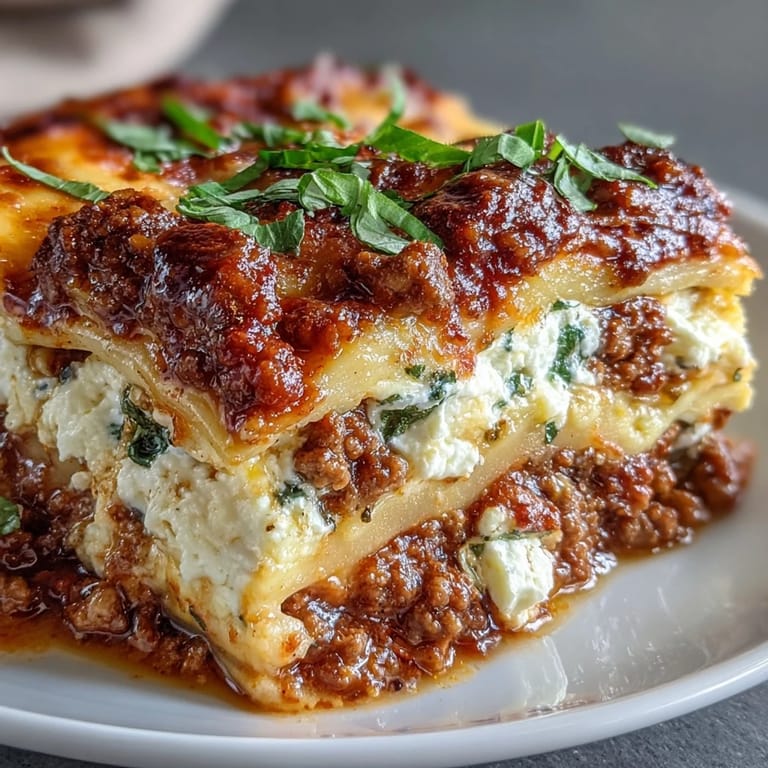
 One rainy Sunday, I made this lasagna and invited a few friends over with no real plan except to eat and talk. We ended up sitting around the table for hours, refilling our plates and laughing until our sides hurt. That's when I realized this dish isn't just about the food, it's about the way it keeps people at the table a little longer.
Making It Your Own
You can fold sautéed spinach or mushrooms into the ricotta for extra vegetables and a bit of earthy flavor. I've also swapped in part skim cheeses when I want to lighten things up, or gone full whole milk ricotta and mozzarella when I'm feeling indulgent. Either way, the lasagna turns out rich and satisfying.
Pairing and Serving
A robust Italian red like Chianti or Sangiovese cuts through the richness of the cheese and complements the savory meat sauce beautifully. If you're serving a crowd, a simple green salad with a tangy vinaigrette and some crusty bread on the side round out the meal perfectly. Leftovers reheat like a dream, and I've even frozen individual portions for up to two months.
Storage and Reheating
Cool the lasagna completely before covering it tightly with foil or transferring slices to airtight containers. In the fridge, it keeps for up to four days and tastes even better as the flavors deepen. To reheat, cover with foil and warm in a 350°F oven until heated through, or microwave individual slices with a damp paper towel on top to keep them from drying out.
- Freeze assembled lasagna before baking, then bake from frozen adding an extra 20 minutes covered.
- Label your containers with the date so you remember when you made it.
- Let frozen lasagna thaw overnight in the fridge for more even reheating.
 Save to Pinterest
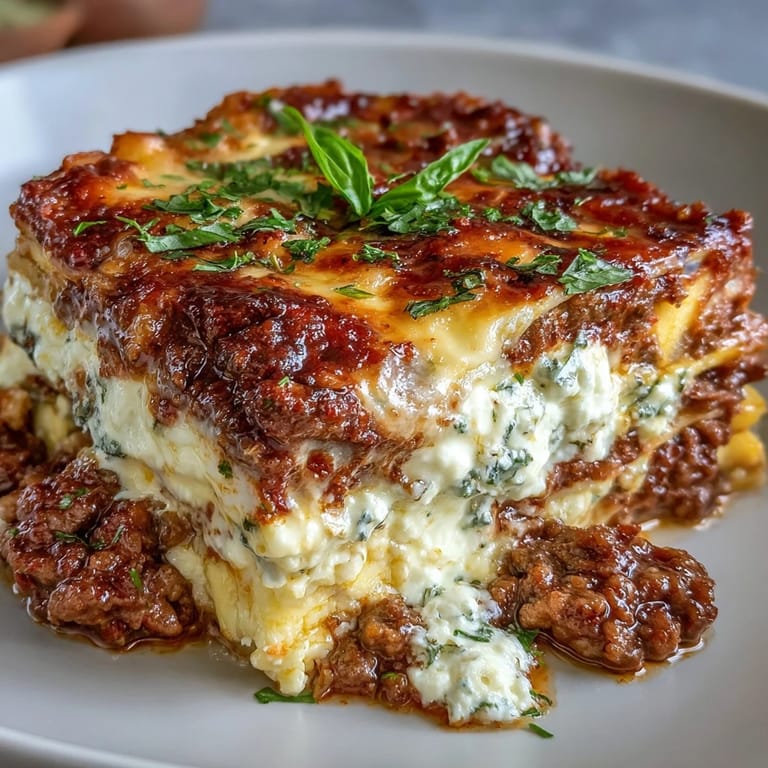
 Every time I pull this lasagna from the oven, I feel that little thrill of pride when the cheese is perfectly golden and bubbling. It's the kind of dish that makes any night feel special, no occasion required.
Recipe FAQs
- → Why should I let the lasagna rest before serving?
Resting for 15 minutes allows the layers to set and makes slicing much cleaner. The cheese firms up slightly, preventing everything from sliding apart when you cut portions.
- → Can I use no-boil noodles instead?
Absolutely. No-boil noodles work perfectly and may even reduce cooking time slightly. They absorb the sauce moisture during baking just like traditional noodles.
- → How do I store leftovers?
Refrigerate in an airtight container for up to 5 days, or freeze individual portions for up to 2 months. Reheat covered in the oven or microwave until steaming hot throughout.
- → Can I make this ahead of time?
Yes. Assemble the entire dish, cover tightly, and refrigerate for up to 24 hours before baking. You may need to add 5-10 minutes to the covered baking time if baking cold from the refrigerator.
- → What can I substitute for Italian sausage?
Ground pork, turkey, or additional beef work well. Add extra fennel seeds, red pepper flakes, and Italian herbs to mimic the sausage flavor profile if using plain meats.
- → How do I know when it's done?
The cheese should be golden and bubbly, and the sauce should be bubbling around the edges. A knife inserted into the center should come out hot to the touch.