 Save to Pinterest
 There's a particular kind of magic that happens when you catch the exact moment a fish fillet turns golden in a hot pan, and the kitchen suddenly smells like the coast. I discovered this dish on a Tuesday evening when I had pristine white fish and a lime sitting on my counter, along with a stubborn craving for something bright and alive. What started as improvisation, layering sharp lime juice over delicate flakes with a whisper of heat, became something I now make whenever I want to feel like I'm dining somewhere far more interesting than my own kitchen. The beauty of this recipe is its simplicity masking elegance: five minutes of focused cooking, one bowl of sauce magic, and you're transported.
I made this for my sister on a Friday night when she mentioned she was tired of cooking, and watching her close her eyes after the first bite was worth every second of prep. She asked for the recipe immediately, and now it's her go-to when she wants to feel like she's treating herself without the guilt of heavy cream or complicated techniques. That's when I knew this dish had moved from my kitchen into something more meaningful.
Ingredients
- 4 skinless white fish fillets (cod, snapper, or tilapia; ~150 g each): The real secret here is patting them absolutely dry before they hit the pan—moisture is the enemy of that golden crust, and wet fish steams instead of sears.
- Salt and freshly ground black pepper: Don't underseasoned the fish itself; this foundation matters more than most home cooks realize.
- 2 tbsp rice flour or cornstarch (optional): This creates an almost invisible, delicate crust that keeps the inside tender while the outside develops character.
- 2 tbsp vegetable oil: Use something neutral that won't smoke—peanut or grapeseed work beautifully if you have them.
- 2 tbsp fresh lime juice: Squeeze it yourself if possible; bottled juice tastes hollow compared to the real thing.
- 1 tbsp fish sauce: I know it smells like the ocean floor in the bottle, but trust the process—it's the backbone of authentic flavor.
- 1 tbsp soy sauce (gluten-free if needed): This adds umami depth that balances the brightness of the lime.
- 1 tbsp honey or palm sugar: A touch of sweetness rounds out the heat and acid into something harmonious.
- 2 cloves garlic, finely minced: Don't use a garlic press; mince it by hand so you get proper texture in the sauce.
- 1–2 red bird's eye chillies, finely sliced: These are deceptively hot—start with one and taste as you go, because you can always add more fire but you can't take it back.
- 1 tsp grated fresh ginger: Microplane is your friend here for the most delicate, efficient texture.
- 1/3 cup fresh cilantro leaves, roughly chopped: Add this at the very last moment so it stays bright and doesn't wilt into the warm sauce.
- 1/4 cup crispy fried shallots: These provide textural contrast and a sweet, oniony note that ties everything together.
- Extra lime wedges for serving: People love the choice to add more acid if they want it.
Tired of Takeout? 🥡
Get 10 meals you can make faster than delivery arrives. Seriously.
One email. No spam. Unsubscribe anytime.
Instructions
- Prepare and season the fish:
- Pat your fillets completely dry with paper towels—this is non-negotiable if you want that beautiful golden exterior. Season both sides generously with salt and pepper, then dust lightly with rice flour or cornstarch if you're using it, shaking off any excess so you get a subtle coating, not a heavy crust.
- Get the pan singing:
- Place a large non-stick skillet over medium-high heat and let it warm for a full minute until a drop of water skitters across the surface. Add your oil and swirl it around; you want the pan hot enough that the fish immediately starts to sizzle when it touches down.
- Sear the fish to golden perfection:
- Carefully lay each fillet into the hot pan—listen for that satisfying hiss. Resist the urge to move it; let it sit for 3–4 minutes until the underside develops a golden crust, then flip gently and cook the other side for another 3–4 minutes until the fish is opaque and flakes easily with a fork. Transfer to your serving platter and tent loosely with foil to keep warm.
- Build the sauce in one bowl:
- While the fish rests, whisk together the lime juice, fish sauce, soy sauce, honey, minced garlic, sliced chillies, and ginger in a small bowl. Taste it and adjust—if it's too salty, add a splash more lime juice; if it's too sharp, a touch more honey softens it beautifully.
- Finish and serve with intention:
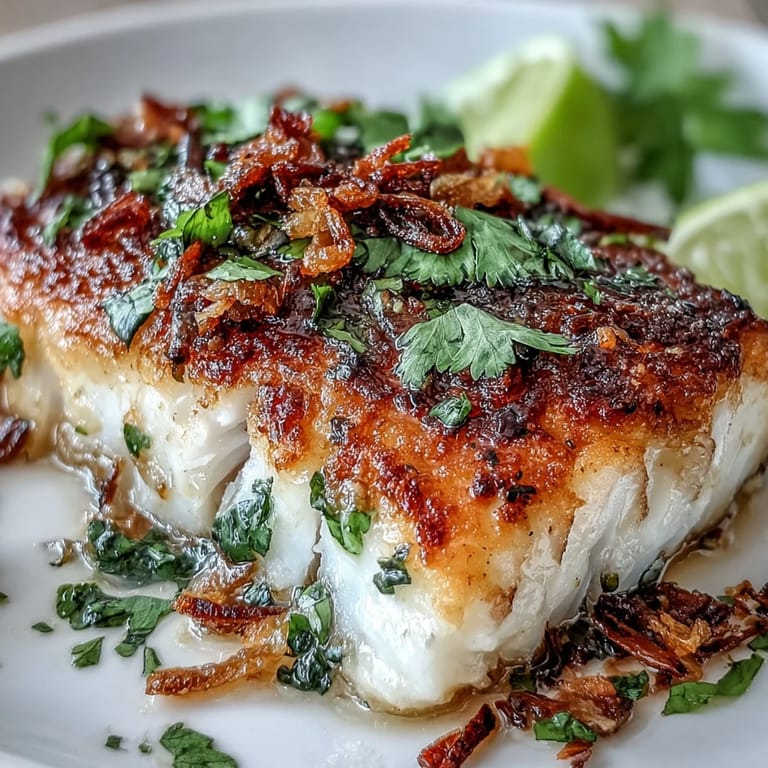
- Wipe out your skillet and pour in the sauce, letting it bubble for about a minute so the flavors marry together and the raw edge of the garlic mellows slightly. Spoon this hot, aromatic sauce generously over each fillet, then scatter the fresh cilantro and crispy shallots on top. Serve immediately with extra lime wedges so people can adjust the brightness to their preference.
 Save to Pinterest
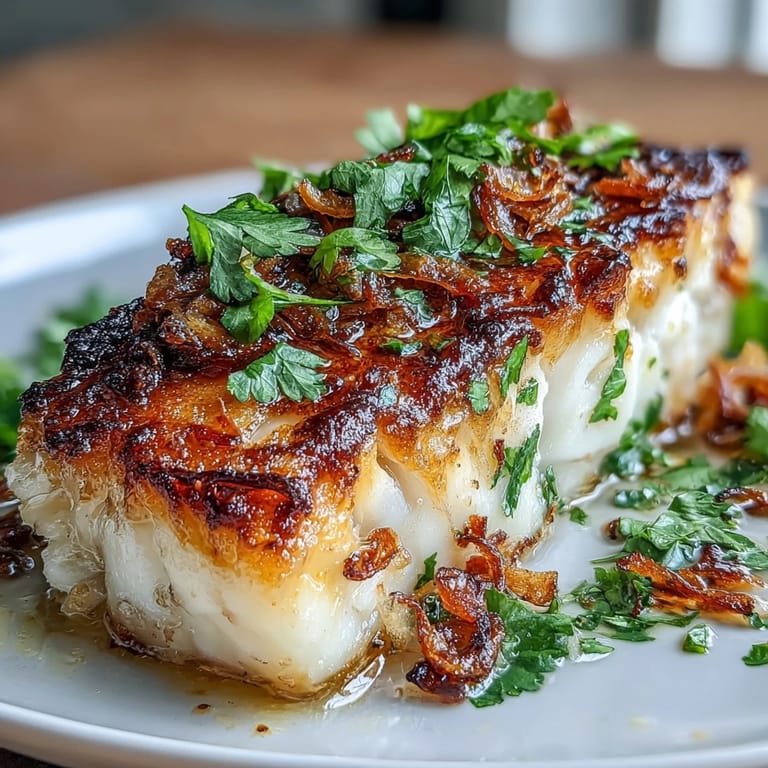
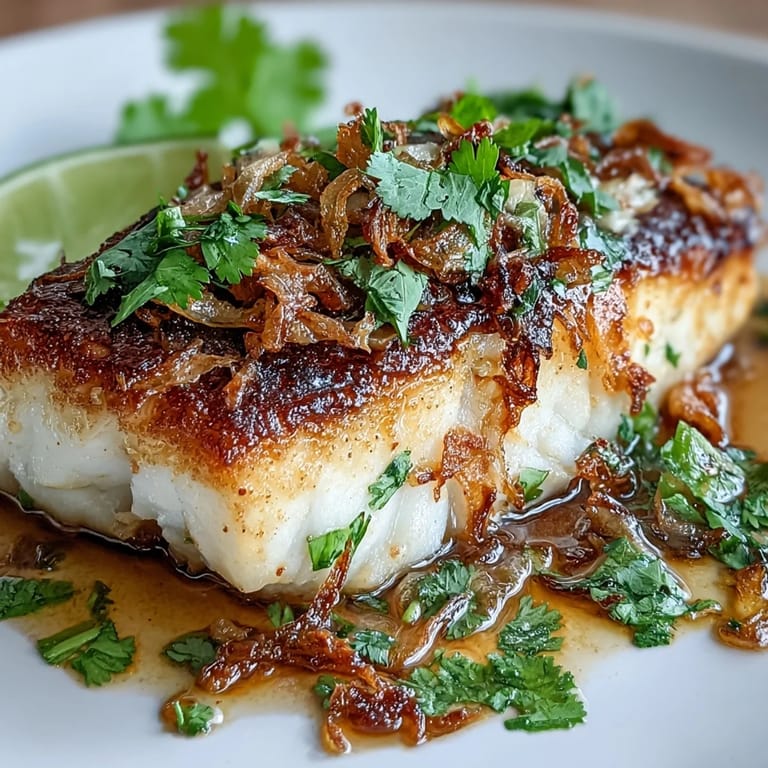
 There's a moment when you pour that vibrant golden sauce over the cooked fish and watch it glisten under the cilantro and shallots, and you realize you've created something that looks restaurant-quality without any of the restaurant fuss. That's when cooking stops being a chore and becomes a quiet kind of joy.
The Science Behind the Sear
A proper sear on fish isn't just about aesthetics—it's about creating a flavor-enhancing crust through the Maillard reaction, where proteins and sugars meet high heat and transform into something deeper and more complex. The key is ensuring your pan is genuinely hot and your fish is genuinely dry; if either condition is compromised, you'll get steaming instead of searing, and the texture becomes mushy rather than delicate. Think of the crust as a protective barrier that locks in moisture while adding textural contrast to the tender flesh inside.
Why This Sauce Works
The chilli-lime sauce is basically Thai flavor in microcosm: the fish sauce provides umami depth, the lime juice brings acid and brightness, the honey adds sweetness to balance the heat, and the chillies deliver that characteristic tingle. What makes it work instead of feeling scattered is the ginger and garlic, which act as flavor bridges, helping all these disparate notes communicate with each other rather than competing. This sauce is actually forgiving—you can adjust the ratios based on your mood and what you have on hand, and it rarely fails.
Serving Suggestions and Pairings
This fish wants something starchy underneath to catch that extraordinary sauce, so jasmine rice is practically mandatory—it's aromatic enough not to disappear alongside the bold flavors, and its subtle sweetness echoes the honey in the sauce. You could also serve it alongside steamed bok choy or a crisp cucumber salad to add cooling, herbaceous elements that let your palate reset between bites.
- Jasmine rice soaks up the sauce in a way that feels almost meditative.
- A simple slaw with lime vinaigrette provides textural contrast and another hit of brightness.
- Steamed vegetables keep things light if you want to feel virtuous alongside something this delicious.
 Save to Pinterest
 This dish has taught me that elegance doesn't require complexity, and sometimes the most impressive meals come from trusting simple, quality ingredients to speak for themselves. Make it once, and it'll become part of your regular rotation.
Recipe FAQs
- → How do I achieve a crispy crust on the fish fillets?
Lightly dust the fish fillets with rice flour or cornstarch before pan-searing in hot vegetable oil for a crisp exterior without sacrificing flakiness.
- → Can I adjust the heat level of the chilli lime sauce?
Yes, reduce the number of bird's eye chillies or remove their seeds to mellow the heat without losing the sauce’s bright flavors.
- → What fresh herbs complement this dish best?
Fresh cilantro leaves add a fresh, citrusy note that enhances the tangy chilli lime sauce and balances the spice.
- → What are suitable side dishes for this main?
Jasmine rice, steamed vegetables, or a light slaw pair well, providing neutral, fresh accompaniments that highlight the vibrant fish.
- → Are there alternatives to fish for this preparation?
Yes, shrimp or chicken breast can be used with the same seasoning and sauce for a similar bright, savory profile.