 Save to Pinterest
 One summer afternoon, a friend handed me a container of fattoush she'd made for a neighborhood gathering, and I bit into it expecting the usual salad experience. Instead, my teeth met this glorious contrast—cool, peppery greens giving way to warm, crispy pita that had absorbed just enough of the tart, sumac-bright dressing to taste alive. That moment made me understand why this salad has traveled across the Mediterranean for generations. It's not just vegetables on a plate; it's a conversation between textures and flavors that refuse to stay predictable.
I made this for a potluck once and watched people return to the bowl three times, each time claiming they were just grabbing a few more radish slices before their plate tipped over. Someone asked if I'd added some secret spice, and when I showed them the sumac, they ordered it online that week. That's when I realized this salad isn't just filling—it's the kind of dish that makes people curious about their own kitchens.
Ingredients
- Mixed greens (romaine, arugula, or spinach): The foundation should be sturdy enough to hold the weight of the dressing without wilting, so avoid delicate lettuces unless you're serving immediately.
- Cherry tomatoes: Halving them lets them release their juice into the dressing, creating pockets of flavor throughout.
- Cucumber: Dice it into medium pieces so it stays crisp and doesn't turn mushy from the acid in the dressing.
- Bell pepper: Red or yellow varieties are sweeter than green, balancing the sumac's tartness with brightness.
- Radishes: Their peppery snap is what makes you keep reaching for more; thin slicing ensures they stay tender rather than fibrous.
- Green onions: Use both white and green parts for a mild onion bite that won't overpower the delicate herbs.
- Fresh parsley and mint: These aren't garnishes—they're essential players that give the salad its Mediterranean soul and should be chopped right before assembly.
- Pita breads: Choose flatbreads without too much air; they crisp up faster and won't turn into hard shells.
- Olive oil: Extra-virgin for the dressing so you taste its fruity notes, but regular oil works fine for toasting the pita.
- Ground sumac: This is the magic ingredient, offering lemony tartness without the harshness of citrus; buy it from a Middle Eastern market if possible, where it's fresher and more fragrant.
- Red wine vinegar: It adds depth that plain vinegar can't match, complementing the earthiness of the greens.
- Garlic: One clove minced fine so it distributes evenly rather than presenting any aggressive chunks.
Tired of Takeout? 🥡
Get 10 meals you can make faster than delivery arrives. Seriously.
One email. No spam. Unsubscribe anytime.
Instructions
- Heat your oven and prepare the pita:
- Set the temperature to 375°F and let it warm while you cut the pita into bite-sized pieces—uneven sizes are actually good because some edges will crisp faster than others, giving you interesting texture variations. This isn't the place for perfectionism.
- Toast the pita chips until golden:
- Toss the pieces with olive oil, sea salt, and sumac, spreading them on a baking sheet in a single layer so they're not crowded. Halfway through the 8–10 minute bake, give the sheet a shake or flip them if you're particular about even coloring, then let them cool completely so they firm up and become truly crispy.
- Build your dressing in a small bowl:
- Whisk together the olive oil, lemon juice, red wine vinegar, sumac, minced garlic, salt, and pepper—taste as you go because you might find you prefer slightly more sumac or lemon depending on your preference. A good dressing should make your mouth water.
- Combine your greens and vegetables:
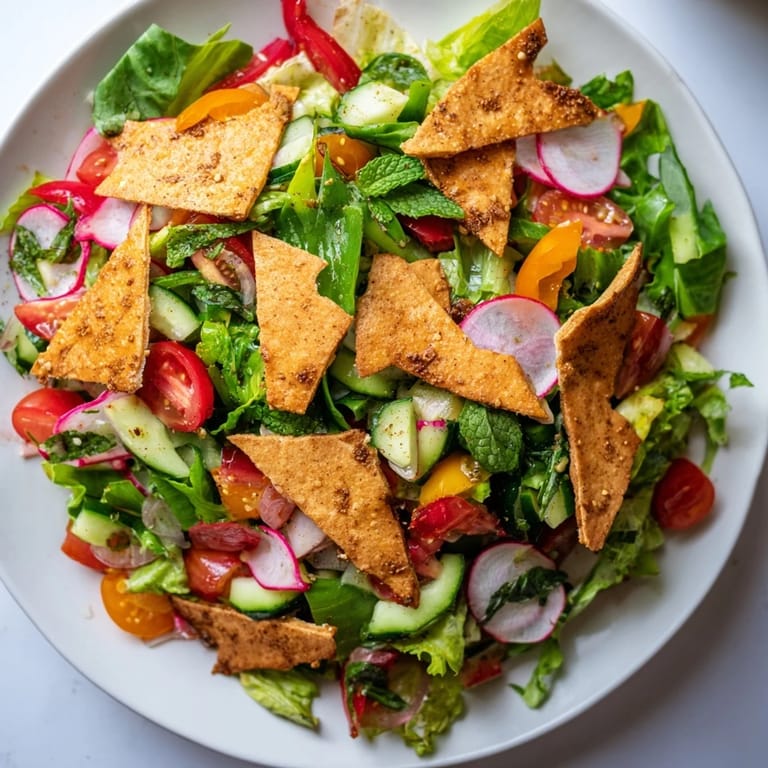
- In a large salad bowl, gently toss together the mixed greens, halved tomatoes, diced cucumber, bell pepper, radish slices, green onions, chopped parsley, and mint. This is where you get to appreciate how much color and fragrance you've assembled before even adding the dressing.
- Dress the salad with care:
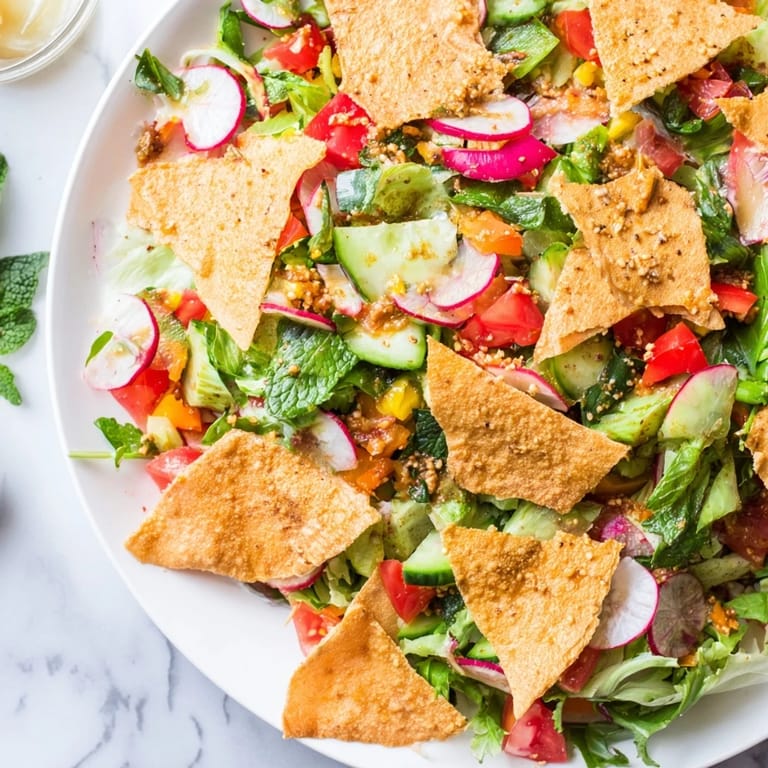
- Pour the dressing over the vegetables and toss gently—your goal is every leaf kissed by the dressing, not drowned in it. You'll know you've done it right when the greens glisten and the radishes have picked up a pink hue from the dressing.
- Add the pita chips at the last moment:
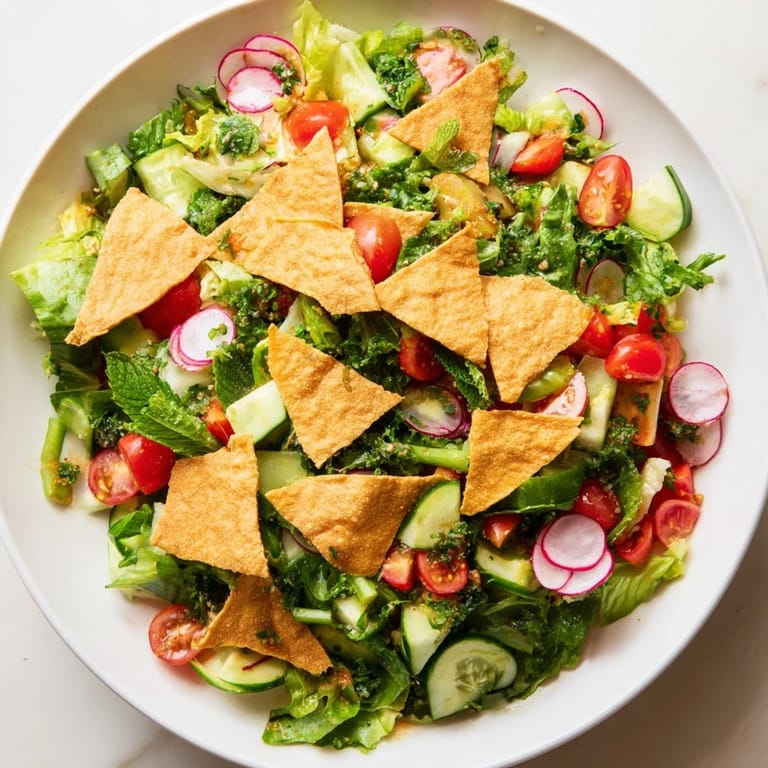
- Top with the cooled pita chips right before serving, and watch them maintain their crack and crunch as people eat. If you add them too early, they'll soften and lose their personality.
 Save to Pinterest
 I brought this to a gathering where someone who claimed they "never eat salad" asked for seconds, and I realized then that fattoush isn't trying to convince you that salad is nutritious—it's showing you that salad can be exciting. That shift in perspective, that moment when you watch someone rediscover vegetables, is when a recipe becomes memorable.
Why Sumac Is Your New Best Friend
Sumac tastes like the sun made sour, and it's not actually sour at all—it's tart, bright, almost peppery in a way that makes everything around it taste more like itself. Once you've used it in a dressing or sprinkled it on roasted vegetables, you'll find yourself reaching for it constantly, turning plain dishes into something with intention. It's one of those ingredients that feels exotic but makes cooking feel effortless because it does so much heavy lifting on its own.
Adapting Fattoush for Your Table
This salad is forgiving in the best way—if you don't have radishes, thinly sliced fennel brings a similar crunch and a different flavor that's equally compelling. If mint isn't your thing, double down on parsley or add fresh cilantro instead; the recipe bends to what your garden or market offers. The only thing you shouldn't compromise on is the sumac and the pita chips, because those are the elements that define fattoush and separate it from any other salad you might throw together.
Making It Your Own
Some people add crumbled feta or kalamata olives for a richer, more substantial meal, which transforms this into something closer to a main course than a side dish. Others top it with grilled chicken, falafel, or lamb to turn it into a complete plate, letting the dressing do the work of tying everything together. The beauty of fattoush is that it's a framework for whatever you want to build around it.
- If you're making this gluten-free, swap the pita for crispy whole-grain crackers or baked chickpea snacks, though the flavor will shift slightly.
- Keep your dressing ingredients separate and dress just before serving if you're bringing this to a picnic or potluck, then toss on-site to keep everything crisp and fresh.
- Taste the dressing on a leaf of green before committing to the whole batch, because every sumac brand varies slightly in intensity and you might want to adjust.
 Save to Pinterest
 Every time I make this, I'm reminded that sometimes the simplest meals—just vegetables, a good dressing, and something crispy—can feel like the most thoughtful thing you've prepared. It's the kind of recipe that belongs on your table again and again.
Recipe FAQs
- → What makes the pita chips crunchy?
They are coated with olive oil, sea salt, and ground sumac, then baked until golden and crisp, enhancing both texture and flavor.
- → Can I substitute the fresh herbs?
Yes, parsley and mint can be swapped or combined with cilantro or basil for a different herbal note.
- → Is the sumac dressing difficult to prepare?
No, it’s a simple blend of olive oil, lemon juice, red wine vinegar, sumac, garlic, salt, and black pepper whisked together.
- → How can I make this dish gluten-free?
Use gluten-free pita bread or omit the pita chips altogether to maintain the crunch with other alternatives like toasted nuts.
- → What pairs well with this salad?
It complements grilled meats, falafel, or can be served alone as a light, refreshing dish.