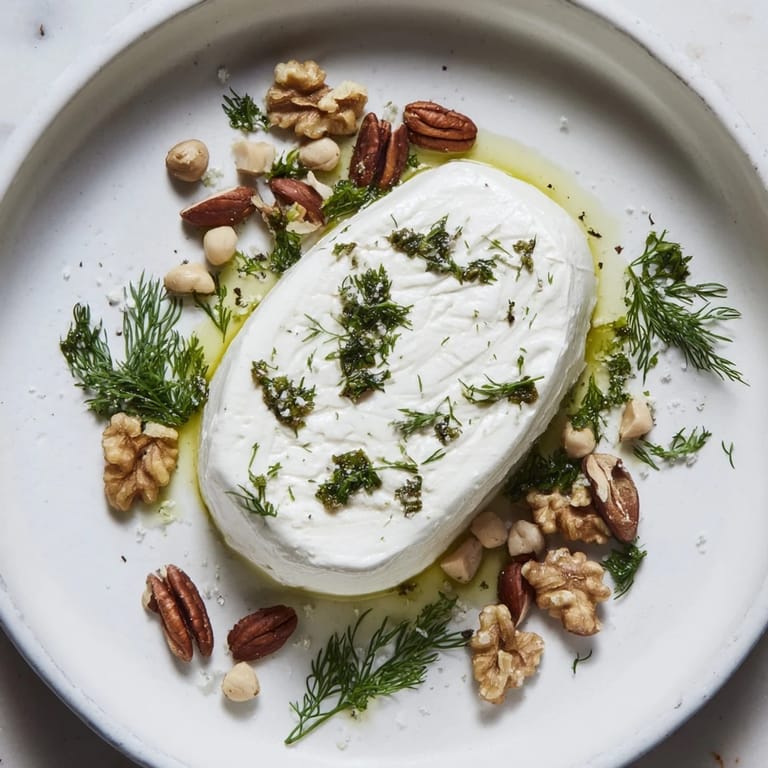
 Save to Pinterest
 I found this idea scribbled on a napkin at a museum gift shop, of all places, and became instantly obsessed with making food look like something you'd find in a natural history display. The Fossil Record was born from that silly daydream—turning soft cheese into an edible artifact with nothing but fresh herbs and some cracked nuts. What started as a whimsical joke for a dinner party turned into one of those appetizers people actually remember, the kind they ask you to make again.
I remember making this for my friend's archaeology-themed birthday party, and she actually gasped when she saw it on the table. Someone immediately grabbed their phone to photograph it before anyone could eat it, which felt like the highest compliment. It became the conversation starter that night, people gathered around it asking what was under the surface, genuinely curious if it was real cheese or some kind of edible clay.
Ingredients
- Soft cheese (250 g): Goat cheese gives tang, cream cheese brings richness, ricotta stays neutral—pick based on your mood and what pairs with your wine.
- Fresh herbs (small bunch): Parsley, dill, cilantro, or chervil all work beautifully; the finer the leaf, the more detailed your fossil impression will be.
- Olive oil (1 tbsp, optional): A light brush adds subtle shine and keeps the surface from drying if you're making this ahead.
- Assorted nuts (100 g): Walnuts, pecans, almonds, hazelnuts—in their shells if you can find them, as the fragments look authentically ancient scattered around.
- Sea salt (1/2 tsp, optional): Just a whisper across the top brightens everything without overwhelming the delicate cheese.
Tired of Takeout? 🥡
Get 10 meals you can make faster than delivery arrives. Seriously.
One email. No spam. Unsubscribe anytime.
Instructions
- Set your stage:
- Line a small tray with parchment paper so your fossil can travel safely from kitchen to table without sticking.
- Form the fossil:
- Spread the soft cheese about 2 cm thick into a loose oval or round, using a spatula to smooth the top until it looks like something ancient and worth protecting. Don't aim for perfection—organic imperfections make it more believable.
- Press the impressions:
- This is where the magic happens: gently press herb sprigs, leaves, or delicate fronds directly into the cheese surface, holding for a few seconds so they make their mark. Carefully lift away each herb and watch the detailed fossil imprint remain—it's oddly satisfying, like you're uncovering something real.
- Add optional sheen:
- If you've made this ahead or want it to look extra polished, brush the surface with olive oil using gentle strokes.
- Arrange the landscape:
- Scatter your cracked nuts around the cheese, letting some shell fragments fall naturally around it like you're at a dig site. This is purely visual, but it completes the whole story.
- Season and serve:
- A light sprinkle of sea salt ties everything together, then present it immediately with good crackers or rustic bread, or slide it into the fridge until guests arrive.
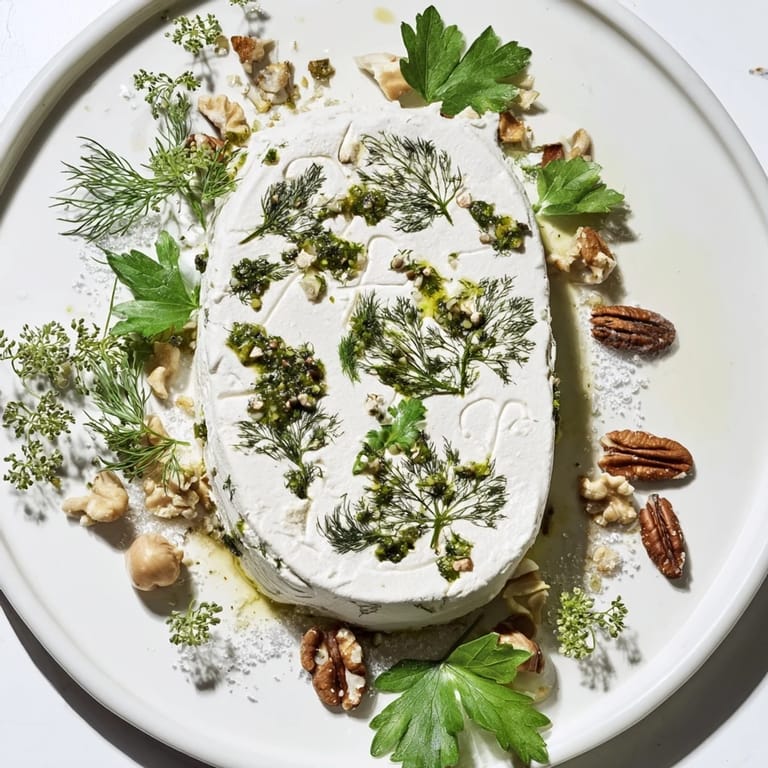 Save to Pinterest
 What I love most is watching people's faces shift from "cute food" to genuine curiosity, bending closer to examine it like they've actually discovered something. It becomes this little moment of wonder before everyone digs in, and somehow that makes the first bite taste better.
The Cheese Matters
Each cheese brings its own personality to this dish. Goat cheese has a pleasantly tangy bite that holds herb impressions cleanly and pairs beautifully with herbs like dill or cilantro. Cream cheese is richer and silkier, creating softer impressions that look almost liquid, which works wonderfully with delicate parsley. Ricotta stays neutral and lets the nuts and herbs be the stars, which is perfect if you're serving this alongside other strong flavors. Temperature makes a difference too—slightly chilled cheese accepts the herb imprints with crisp definition, while room temperature cheese can feel a bit too forgiving under the pressure.
Playing with Texture
The nuts are more than decoration, though they certainly look the part. Crack them just before serving so the fragments are sharp and fresh, not dusty from sitting around. If you can find nuts still in their shells, the broken pieces scattered around the cheese look genuinely excavated, like you've stumbled onto something at the edge of a garden. The contrast between soft, creamy cheese and those hard, bitter-edged nuts is what makes every bite interesting—there's always something unexpected in your mouth.
Making It Your Own
This recipe thrives on variation, so treat it as a starting point rather than a strict formula. Try edible flowers for delicate, unusual fossil shapes, or layer two different cheeses for color contrast. Serve it with honey drizzled on the side for those who like sweet and savory together, or alongside your favorite fruit preserves for guests who want something brighter. Here's what I always keep close by when I'm setting this up:
- Edible flowers like pansies or violets create the most interesting fossil impressions if you want to surprise people.
- A small spoon nearby makes it easy for guests to grab cheese without the whole thing collapsing.
- Have crackers and bread warming slightly so they're ready the moment people reach for them.
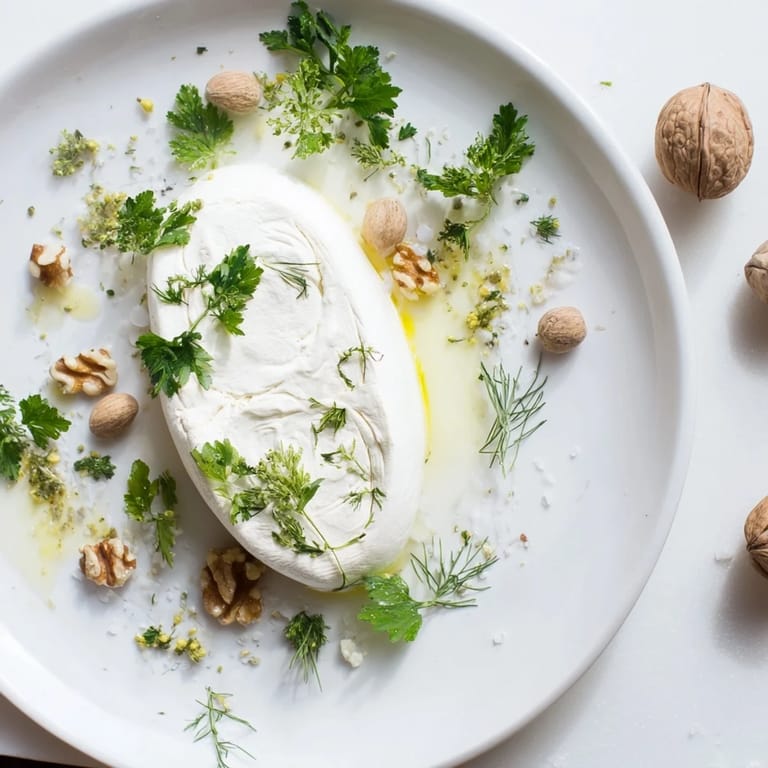 Save to Pinterest
 There's something special about turning everyday ingredients into something that makes people pause and smile before they eat. This little fossil has a way of doing exactly that.
Recipe FAQs
- → What types of cheese work best for the imprint technique?
Soft cheeses like goat cheese, cream cheese, or ricotta hold herb imprints well, maintaining both shape and detail.
- → Can different herbs be combined for varied patterns?
Yes, mixing herbs such as parsley, dill, cilantro, and chervil creates diverse and intricate fossil-like impressions.
- → Is it necessary to use nuts in the shell?
Using nuts in the shell adds a rustic aesthetic, but shelled nuts work well if you prefer easier preparation.
- → How does olive oil affect the final presentation?
Lightly brushing olive oil enhances the cheese’s surface by adding a subtle sheen and helps preserve the herb impressions.
- → Can this be prepared ahead of time?
Yes, it can be refrigerated after assembly; however, best served fresh to retain crisp herb imprints and nut textures.