 Save to Pinterest
 There's something magical about the first time you taste hummus that's been whipped into clouds instead of blended into submission—it happened to me at a tiny Mediterranean restaurant where the owner's grandmother was stirring it in the kitchen, and I watched her catch me staring. She handed me a spoon, smiled, and that's when I understood: hummus wasn't meant to be dense or heavy, but almost alive, crowned with vegetables that had blistered under heat until they sang. I've been chasing that moment ever since, and this version, with its charred roasted vegetables and toasted pine nuts scattered across creamy, whipped chickpeas, is as close as I've gotten.
I made this for a friend who'd just moved to the city and was feeling homesick, and she took one bite and got quiet in that way people do when food reminds them of somewhere else, somewhere warm. She didn't say it was good or bad—she just closed her eyes, and that felt like the truest compliment I could get.
Ingredients
- Canned chickpeas (1½ cups): The foundation of silky hummus; rinsing them removes the starch that would make your blend grainy instead of smooth.
- Tahini (¼ cup): This is where the richness comes from, but if you're using raw tahini straight from the jar, it might taste almost bitter—letting it come to room temperature helps it sweeten and blend more gracefully.
- Fresh lemon juice (2 tablespoons): The brightness that keeps hummus from tasting heavy; if you use bottled, it loses that sharp, almost electric quality.
- Garlic (1 clove, minced): One clove is polite, two is bold—taste as you go because raw garlic grows louder as it sits.
- Extra-virgin olive oil (3 tablespoons for the hummus, plus more for drizzling): The silkiness, the luxury—don't use cooking oil, it changes everything.
- Ground cumin (½ teaspoon): The whisper of the Mediterranean, warming without overwhelming.
- Sea salt (½ teaspoon): Finer than kosher salt, it dissolves into the mixture instead of gritty.
- Cold water (2–3 tablespoons): The secret to the cloud-like texture; add it a tablespoon at a time because over-moistening is hard to fix.
- Red bell pepper (1 medium): Cut into strips so they crisp at the edges but stay tender inside.
- Zucchini (1 small): Half-moons brown more evenly than rounds, developing those charred edges that taste almost nutty.
- Red onion (1 small): Wedges hold together during roasting instead of separating into layers.
- Eggplant (1 small): Cut small enough to roast through; large pieces stay rubbery in the middle.
- Olive oil for vegetables (1 tablespoon): Just enough to coat without drowning them.
- Smoked paprika (½ teaspoon): The smokiness that makes people ask what spice you used.
- Pine nuts (3 tablespoons): Toast them dry—their oils release as they warm, and they'll taste almost buttery if you're patient.
- Fresh parsley (2 tablespoons, chopped): The brightness on top, the counterpoint to all that richness.
- Sumac or zaatar (1 teaspoon, optional): The finishing flourish that makes it look intentional and taste complex.
Tired of Takeout? 🥡
Get 10 meals you can make faster than delivery arrives. Seriously.
One email. No spam. Unsubscribe anytime.
Instructions
- Heat your oven and prep your vegetables:
- Set the oven to 425°F and get it hot—a cold oven means limp vegetables instead of charred ones. While it preheats, cut your bell pepper, zucchini, onion, and eggplant, keeping the pieces roughly the same size so they finish roasting together.
- Coat and spread the vegetables:
- In a bowl, toss everything with olive oil, smoked paprika, salt, and pepper until each piece glistens. Spread them in a single layer on your baking sheet—crowding them makes them steam instead of char, so resist the urge to pile them.
- Roast until the edges blacken:
- Slide them into the oven for 22 to 25 minutes, stirring once halfway through. You want them blistered and tender, with charred edges that taste almost sweet from caramelization.
- Build your hummus while vegetables roast:
- Add chickpeas, tahini, lemon juice, minced garlic, olive oil, cumin, and salt to a food processor and blend until completely smooth. This takes longer than you'd think—it'll go from chunky to almost creamy, then it'll suddenly transform into something fluffy and alive.
- Add water with purpose:
- Drizzle in cold water one tablespoon at a time, blending between each addition. Too much and you've made a sauce instead of hummus; too little and it'll be thick and heavy.
- Toast the pine nuts:
- Assemble on the platter:
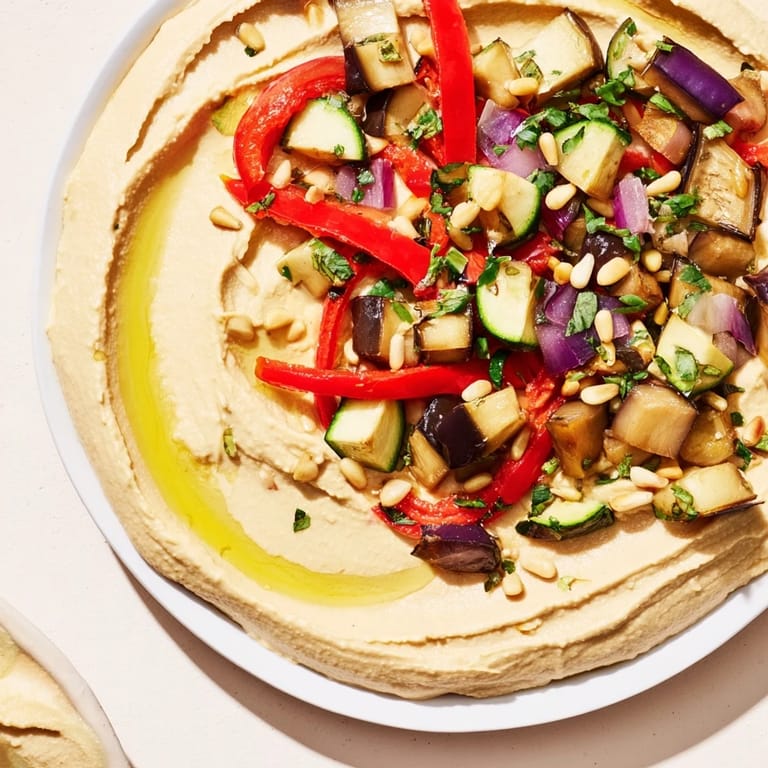
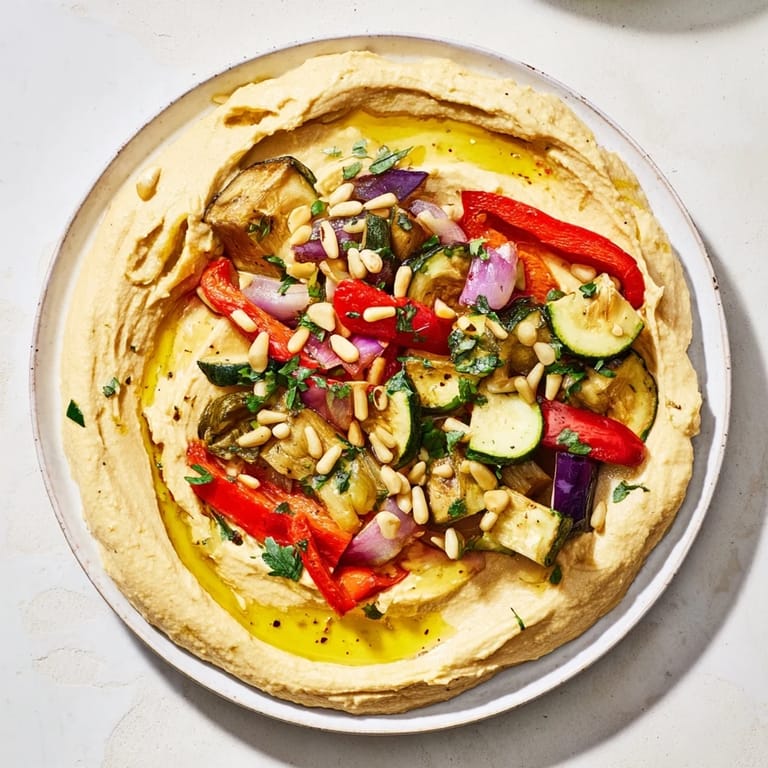
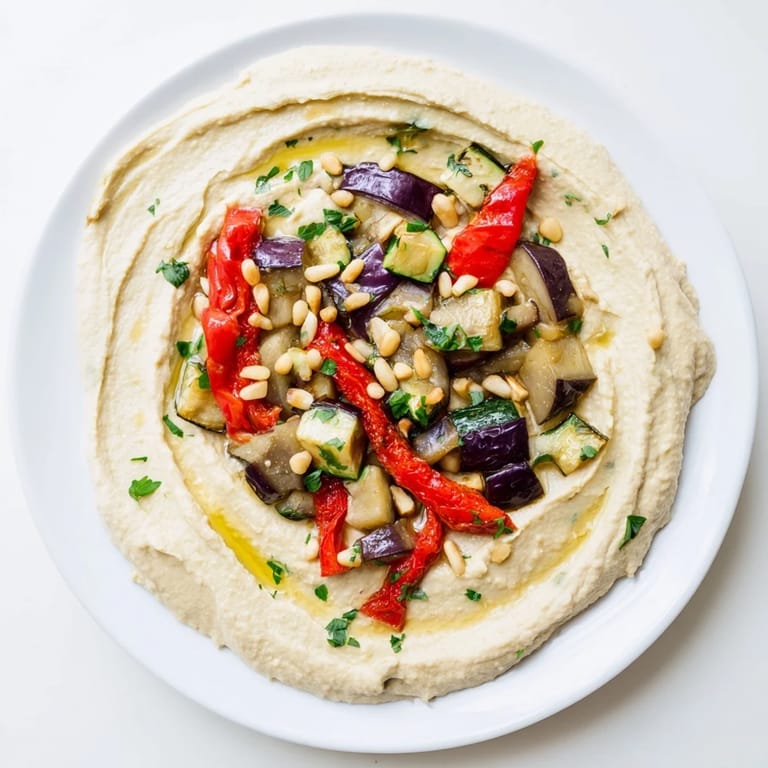
- Spread the hummus across a shallow bowl in a swoosh, creating a landscape instead of a flat surface. Pile the roasted vegetables on top, scatter the pine nuts and parsley, dust with sumac if you have it, and finish with a drizzle of olive oil that catches the light.
 Save to Pinterest
 I learned this dish feeds people in a way that goes beyond hunger—it becomes the thing you return to, the first thing you offer guests, the recipe people ask for. There's something about sitting around a platter of hummus and vegetables that makes conversation soften, makes people linger longer than they planned.
Variations Worth Trying
The skeleton of this recipe is forgiving—roasted vegetables, whipped hummus, toasted nuts. In summer, I roast thin strips of zucchini until they're almost crisp, then pile them high; in autumn, I swap in cubed carrots and cauliflower that caramelize into something unexpected. A friend makes this with harissa stirred into the hummus itself, turning everything warm and spiced, and I found myself making it that way ever since she showed me. The vegetables are the canvas, and your pantry is the palette.
Serving and Storage
This is best served immediately after assembly, while the hummus is cool and the vegetables are still warm enough to soften the edges of whatever you're dipping into it—warm pita, fresh bread, crudités of cucumber and carrot. The hummus keeps for three days in the fridge, and the vegetables can be roasted hours ahead and served at room temperature, which actually deepens their flavor. If you're making this ahead, assemble it just before people arrive, because the vegetables will weep into the hummus if left sitting.
Why This Works as a Meal
Most hummus is a side dish, background music, but this one carries its weight—the vegetables are substantial, the nuts add texture and richness, the hummus is substantial enough to feel like something, not just a vehicle for bread. I've served it as the main course at casual dinners, alongside grains for substance, and found it holds up beautifully. It's Mediterranean enough to feel special, vegan enough to feed any table, and simple enough that you'll make it again the moment you finish eating it.
- Toast the pine nuts separately in a dry skillet, stirring constantly, because they can go from golden to burned in the time it takes to look away.
- If your hummus looks too thick, resist adding more oil—cold water is your friend, adding dimension without greasiness.
- Smoked paprika is non-negotiable here; regular paprika tastes flat by comparison, and the smokiness is the whole point of roasting these vegetables.
 Save to Pinterest
 This is the kind of dish that feels like more than food—it's an excuse to gather, a way of saying you care enough to spend time in the kitchen. Every time I make it, someone asks for the recipe, and I give it to them knowing they'll make it their own, adding what they love and changing what they don't. That's the whole point.
Recipe FAQs
- → How do I achieve a creamy texture for the chickpea base?
Process chickpeas with tahini, lemon juice, garlic, olive oil, cumin, and a little cold water gradually until smooth and creamy. Adjust seasoning to preference.
- → What vegetables work best for roasting alongside this dish?
Bell pepper, zucchini, red onion, and eggplant provide smoky, tender flavors. Seasonal swaps like carrots or cauliflower also work well.
- → How should pine nuts be prepared for topping?
Toast pine nuts in a dry skillet over medium heat for 2-3 minutes until golden and fragrant to add a crunchy, nutty layer.
- → Can additional spices enhance the flavor profile?
Yes, adding sumac, zaatar, harissa, or chili flakes brings extra warmth and complexity to this dish.
- → Is this suitable for gluten-free diets?
This dish is gluten-free if served without bread or with gluten-free accompaniments. Always verify ingredient labels to avoid cross-contamination.