 Save to Pinterest
 The first time I made The Neon Night, it was for a dinner party where I'd promised something nobody had ever seen before. I wanted to create something that would make people stop mid-conversation when they walked into the kitchen. The idea came to me while I was staring at a bunch of radishes at the farmer's market, thinking about how food didn't have to be complicated to feel special. That night, as I arranged those jewel-toned pickles and those shocking magenta eggs on a black board, I realized I'd created something that tasted as good as it looked.
I'll never forget watching my neighbor take that first bite—she went for a pickled radish slice first, and her whole face lit up. The brightness of the vinegar, that gentle heat from the mustard seeds, the snap of the radish itself. She turned to me and said, "This tastes like summer looks." That's when I knew this recipe had something beyond just aesthetics.
Ingredients
- Mini cucumbers: Use the smallest ones you can find—they pickle faster and stay crunchier.
- Rainbow carrots: Bias-cut means they soak up the brine faster and look more intentional on the board.
- Radishes: They're the real star here; thinly sliced means they pickle in hours instead of overnight.
- Red onion: Adds a sharp note that balances all the sweetness from the fruit.
- White vinegar: Clean and sharp, it lets the colors stay true without muddying them.
- Sugar and salt: This ratio creates a brine that's tangy without being overwhelming.
- Mustard seeds and peppercorns: Don't skip these—they're the background flavor that makes people ask "what is that spice?"
- Large eggs: The bigger they are, the more dramatic the beet dye shows through.
- Cooked beet: Use a fresh one if possible; canned works but tastes slightly metallic.
- Apple cider vinegar: Warmer and more complex than white vinegar, it deepens the color faster.
- Fresh blueberries and blackberries: Buy these the day you're serving if possible—they stay plump and glossy.
- Kiwi, mango, and dragon fruit: Cut these just before serving so they don't weep juice onto the board.
- Microgreens or edible flowers: These tiny touches make the whole thing feel intentional and luxe.
- Flaky sea salt: Maldon or similar is worth it—regular salt looks like it belongs in a lab, not on a beautiful board.
Tired of Takeout? 🥡
Get 10 meals you can make faster than delivery arrives. Seriously.
One email. No spam. Unsubscribe anytime.
Instructions
- Build your brine with intention:
- Combine the vinegar, water, sugar, salt, mustard seeds, and peppercorns in a saucepan and bring it to a gentle simmer. You should see small bubbles breaking at the surface, and the smell should be so sharp it makes you take a quick breath. Let it simmer for about three minutes so the mustard seeds release their flavor into the liquid.
- Pickle your vegetables in layers:
- Pack your cucumbers, carrots, radishes, and red onions into a heatproof container, then carefully pour that hot brine over everything. The vegetables will immediately start absorbing the color and flavor; you'll see small bubbles clinging to the radish slices. Let it cool completely before refrigerating—at least two hours, but overnight is when the magic really happens.
- Dye your eggs the dramatic way:
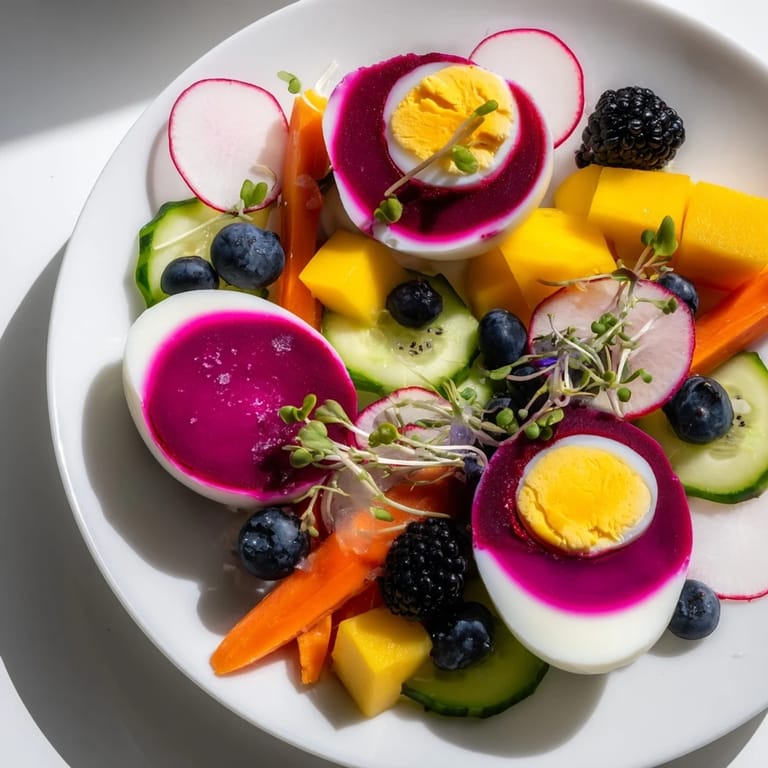
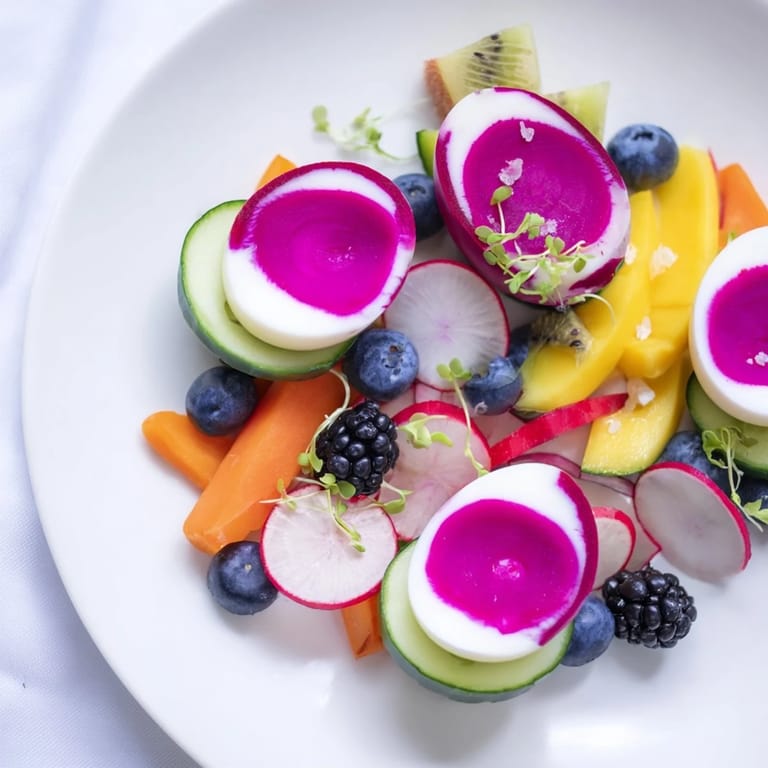
- Boil your eggs for exactly 8 to 9 minutes (8 for jammy, 9 for fully set), then shock them immediately in ice water. This step matters because cold water stops the cooking and makes them easier to peel. Once peeled, place them in a jar with your sliced beet, apple cider vinegar, water, sugar, and salt—the beet will start painting them a deep magenta within an hour, but let them sit for at least two hours so the color is even and dramatic.
- Arrange with confidence:
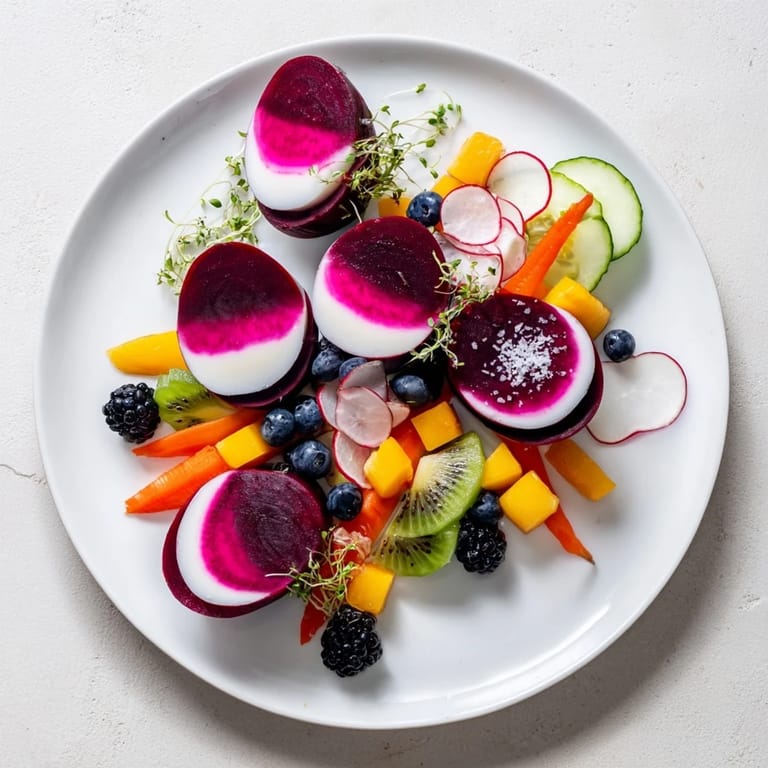
- Choose a large black board (this is non-negotiable—the colors won't sing against white or wood). Start by placing your halved or sliced beet eggs in a loose cluster, then arrange the pickled vegetables in groups by color—all the carrots together, the radishes in their own section, the onions nestled in between. Leave some intentional gaps; your board should feel curated, not crowded.
- Add the living elements at the last moment:
- Scatter your fresh fruits—blueberries, blackberries, kiwi, mango, and dragon fruit—in groups that complement the pickled vegetables. Some should touch the board directly; others can nestle between the eggs and pickles. A handful of microgreens and a final sprinkle of flaky sea salt should go on just before serving.
 Save to Pinterest
 My favorite moment came when someone who never thinks about food presentation looked at The Neon Night and said, "I want to eat with my eyes first." That's exactly what this dish is meant to do—it makes people feel like something special is about to happen.
The Magic of Black Boards
A black board isn't just a serving vessel for this recipe; it's essential to the whole experience. The deep background makes every color feel more saturated, more jewel-like. I've tried white plates, wooden boards, even marble, and nothing comes close. Black acts like a night sky for your food, making each element glow. If you don't have a black board, use the darkest ceramic platter you own, or even a dark-painted piece of wood. The contrast is everything.
Preparing Ahead Without Stress
This recipe was designed for people with actual lives, not just weekend time in the kitchen. The pickles and eggs can both be made two or three days ahead and will only get better as they sit. Keep them refrigerated in separate containers so the beet dye doesn't stain your other pickles. You can even wash and slice your fruits the morning of and store them in airtight containers in the fridge. The only thing that needs to happen fresh is arranging everything on the board—which takes about five minutes and is actually kind of meditative when you think of it as creating art rather than cooking.
Variations That Work
Once you make this once, you'll start seeing variations everywhere. Purple cabbage brines create deep blue pickles that are absolutely stunning. Turmeric makes a golden brine for eggs that tastes warm and slightly earthy. In winter, I've added pomegranate seeds instead of the lighter berries, and it feels more elegant somehow. The structure stays the same, but the colors shift with the season and what's available at your market.
- For vegan versions, replace the eggs with blocks of marinated tofu or extra quantities of pickled vegetables—the board will still feel abundant and showstopping.
- If gluten is an issue, just serve this as-is without crackers, or pair it with gluten-free bread if anyone wants it.
- The entire recipe can be doubled for larger crowds without any adjustments to technique.
 Save to Pinterest
 The Neon Night is proof that restaurant-quality presentation doesn't require complicated cooking. Serve it chilled, and watch your guests arrive at your table already smiling.
Recipe FAQs
- → How long should the pickled vegetables marinate?
For best flavor, marinate pickled vegetables for at least 2 hours or overnight in the refrigerator.
- → What is the purpose of beet-dyeing the eggs?
Beet-dyeing imparts a vibrant pinkish hue to the eggs, adding visual appeal and subtle earthy flavors.
- → Can I use other fruits instead of those listed?
Yes, seasonal or favorite fresh fruits can be substituted to maintain vibrant colors and flavor contrasts.
- → What type of vinegar is recommended for pickling?
White vinegar is used for the pickled vegetables, while apple cider vinegar is used in the beet dye solution for eggs.
- → How should the platter be served?
Serve chilled on a dark board for dramatic contrast, garnished with microgreens or edible flowers and a sprinkle of flaky sea salt.