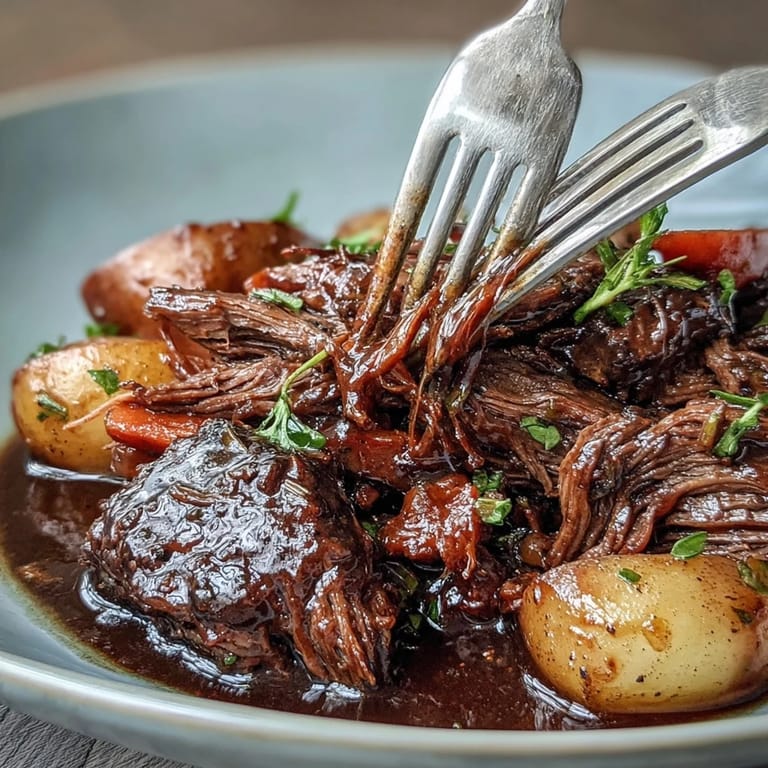
 Save to Pinterest
 My neighbor dropped by on a freezing February afternoon with a packet of onion soup mix and a knowing smile—she'd learned that this humble ingredient transforms a slow cooker into a flavor factory. I was skeptical at first, honestly, but eight hours later when that chuck roast practically dissolved at the touch of a fork, I understood why she'd made the trip. The kitchen smelled like caramelized onions and beef broth, and suddenly winter didn't feel quite so long.
I made this for my sister's book club one winter, and I'll never forget how everyone went quiet the moment they took their first bite—not out of politeness, but genuine surprise that something this good came from a slow cooker. She told me later that two people asked for the recipe before dessert even arrived, which felt like the highest compliment.
Ingredients
- Chuck roast (3 lbs): This cut has enough marbling to stay juicy during the long, slow cook, and it practically shreds when it's done.
- Onion soup mix (1 packet): The secret weapon here—it's seasoned with caramelized onion powder and spices that bloom in the liquid.
- Carrots, potatoes, celery, and onion wedges: These become almost creamy as they break down, thickening the broth naturally.
- Beef broth (2 cups): Use good quality broth; it's the foundation of your gravy, so it matters.
- Tomato paste and Worcestershire sauce: These add umami depth and a subtle tang that ties everything together.
- Black pepper and dried thyme: Thyme is optional but gives a whisper of herb flavor that elevates the whole dish.
- Cornstarch and water (for gravy): Keep these on hand if you like a thickened sauce, though the natural reduction works beautifully too.
Tired of Takeout? 🥡
Get 10 meals you can make faster than delivery arrives. Seriously.
One email. No spam. Unsubscribe anytime.
Instructions
- Dry the roast and season:
- Pat that chuck roast completely dry with paper towels—this matters more than you'd think for even browning if you decide to sear it first. Season generously with black pepper and thyme, letting the spices settle into the meat.
- Lay your vegetable foundation:
- Spread the carrots, potatoes, celery, and onion wedges across the bottom of your slow cooker like you're building a bed. The roast will nestle into these vegetables as it cooks, keeping it elevated above the liquid.
- Position the roast:
- Place the chuck roast directly on top of the vegetables, fat side up if possible. This positioning allows the flavors to mingle while the meat stays tender.
- Mix your braising liquid:
- In a bowl, whisk the beef broth with the onion soup mix until the powder is fully dissolved—you don't want any gritty bits. Stir in the tomato paste and Worcestershire sauce until smooth and combined.
- Braise low and slow:
- Pour that liquid over everything, cover, and set to LOW for 8 hours. The slow heat breaks down the connective tissue in the beef while the vegetables soften into the gravy.
- Rest and serve:
- Transfer the roast and vegetables to a serving platter and let them rest for a few minutes. The meat will be so tender it might want to fall apart, which is exactly what you're after.
- Thicken if desired:
- If you like a richer gravy, mix cornstarch with cold water to form a slurry, stir it into the slow cooker, and cook on HIGH for 5-10 minutes until it coats the back of a spoon. Otherwise, the natural reduction is just as delicious.
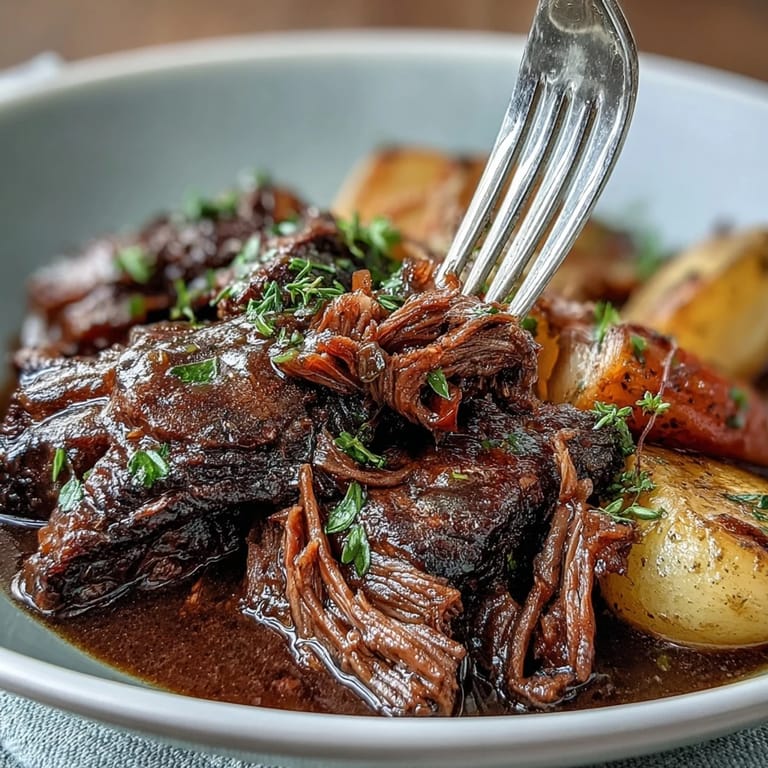 Save to Pinterest
 There's a moment when you lift that slow cooker lid and the steam hits your face—that's when you know it's worked. My dad once said this was the kind of meal that heals something small inside you, the kind you remember on cold days.
Should You Sear the Roast First?
Honestly, it's optional, but I think about it this way: if you have an extra 10 minutes and a hot skillet, the Maillard reaction that happens when you brown the beef creates a flavor foundation that's hard to beat. It's not necessary—the slow cooker does beautiful work on its own—but it does elevate the depth. I sear mine when I'm not rushed, and skip it when life is hectic; both versions are genuinely good.
Vegetable Swaps and Variations
This recipe is flexible in the best way. Parsnips bring an earthy sweetness, turnips add a gentle bitterness that's lovely, and mushrooms create an almost meaty texture. I've even added a cup of red wine once, replacing some of the broth, and it was darker and more complex. The beauty is that whatever vegetables you choose will soften into the gravy and become part of the story.
Serving and Pairing Ideas
Crusty bread is the obvious choice, but don't overlook creamy mashed potatoes or egg noodles—anything that catches the gravy is fair game. A robust red wine like Cabernet Sauvignon isn't just a suggestion; it's the natural companion, as if they were meant to sit at the same table. Some nights I serve it in a shallow bowl with just the roast and vegetables, letting the gravy shine as its own course.
- Have good bread on hand because you will want to soak up every drop of gravy.
- Leftovers transform into the best sandwiches the next day, or shredded over rice for an entirely different meal.
- This dish actually tastes better the second day as the flavors deepen and marry together.
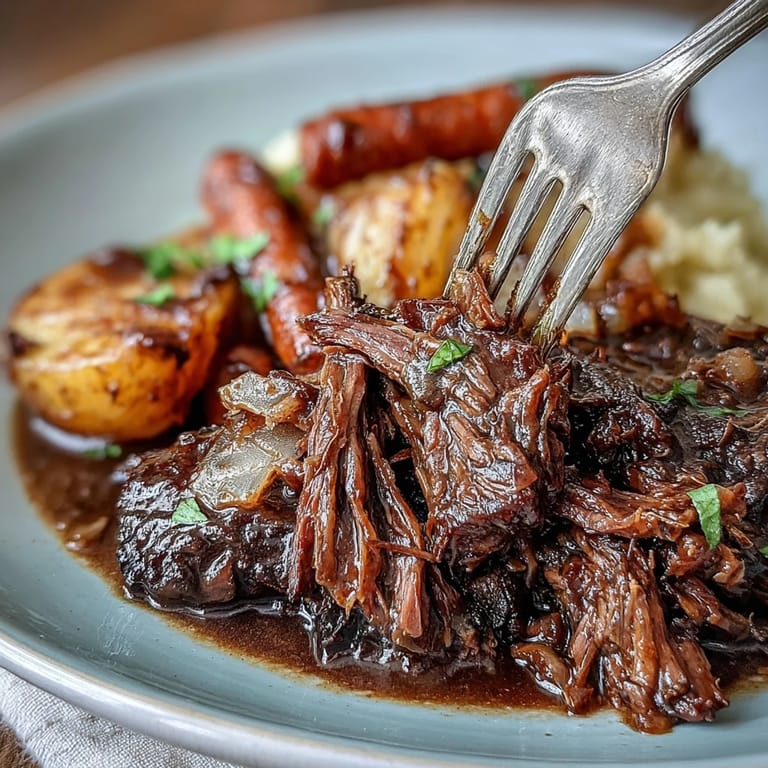 Save to Pinterest
 This pot roast has become my go-to comfort meal, the kind I make when I need the kitchen to smell like home. It's simple enough that anyone can pull it off, but honest enough that it never feels ordinary.
Recipe FAQs
- → Can I sear the roast before slow cooking?
Yes, searing the roast in a hot skillet before placing it in the slow cooker enhances flavor and texture but is optional.
- → What vegetables work best with this pot roast?
Carrots, baby potatoes, celery, and onions are ideal, providing a balanced mix of sweetness and earthiness.
- → How do I thicken the cooking liquids for gravy?
Mix cornstarch with cold water and stir into the slow cooker juices. Cook on HIGH for 5-10 minutes until thickened.
- → Can I substitute any ingredients for dietary needs?
Use gluten-free onion soup mix and Worcestershire sauce to keep the dish gluten-free. Vegetables like parsnips or turnips can replace potatoes.
- → What is the best cooking time for tender results?
Cook on LOW for 8 hours or on HIGH for 5-6 hours to achieve fork-tender beef and perfectly cooked vegetables.