 Save to Pinterest
 I discovered this dish while flipping through old travel photos, realizing how much of my life has been spent chasing flavors across continents. There was the morning in Istanbul when the scent of cumin hit me like a memory I didn't know I had, then the night in a tiny Athens taverna where I watched someone casually crumble feta over warm vegetables, and later, a market in Bangkok where everything smelled alive. I wanted to bring all of that into one meal, so I started layering cuisines side by side instead of pretending they belonged in a single pot. The Spice Route was born from a simple thought: why choose between worlds when you can have them all?
The first time I made this for friends, I was so nervous about juggling three pans that I nearly burned the sesame oil—but someone noticed the aroma shift and actually thanked me for it, swearing it was intentional. We ended up eating everything mixed together in chaotic, delicious bites, and then we tried eating each cluster alone, debating which region was winning. By the end of the meal, everyone was rearranging their plates like they were solving a puzzle, and I realized the real magic wasn't in perfection but in the conversation it sparked.
Ingredients
- Extra-virgin olive oil: Use the good stuff here—you'll taste every drop, especially in the Mediterranean cluster where it carries all the oregano's warmth.
- Eggplant: Dice it small so it absorbs the oil and seasoning instead of staying stubborn and dense.
- Red bell pepper and zucchini: These provide the brightness that keeps the Mediterranean side from feeling heavy.
- Cherry tomatoes: Halve them so they release their juice into the oil and create a light sauce.
- Garlic: Mince it fine and add it near the end so it perfumes the vegetables without turning bitter.
- Toasted sesame oil: This is your shortcut to depth in the Asian cluster—a little goes miles.
- Shiitake mushrooms: They're meaty enough that you won't miss chicken, and they brown beautifully if you give them space in the pan.
- Snap peas and carrot: The carrot adds sweetness that balances the soy, while snap peas stay crisp if you don't overcook them past three minutes.
- Soy sauce or tamari: Taste your sauce before serving—soy salt levels vary wildly by brand.
- Ginger and rice vinegar: Together, they create that bright, clean finish that makes you want another bite.
- Chickpeas: Make sure they're well-drained so they don't make the Middle Eastern cluster soggy.
- Bulgur or quinoa: Bulgur has more texture and absorbs flavors faster, but quinoa works if you're avoiding gluten.
- Warm spices: Cumin, coriander, and cinnamon are the holy trinity here—they make people taste something familiar even though they can't name it.
- Fresh parsley and lemon juice: Add these after cooking so they stay bright and don't fade into the background.
- Feta cheese: Crumble it over everything right before serving so it stays creamy instead of melting into oblivion.
- Sesame seeds and fresh herbs: Toast the seeds yourself if you have time—they taste like possibility instead of shelf.
Tired of Takeout? 🥡
Get 10 meals you can make faster than delivery arrives. Seriously.
One email. No spam. Unsubscribe anytime.
Instructions
- Set up your stage:
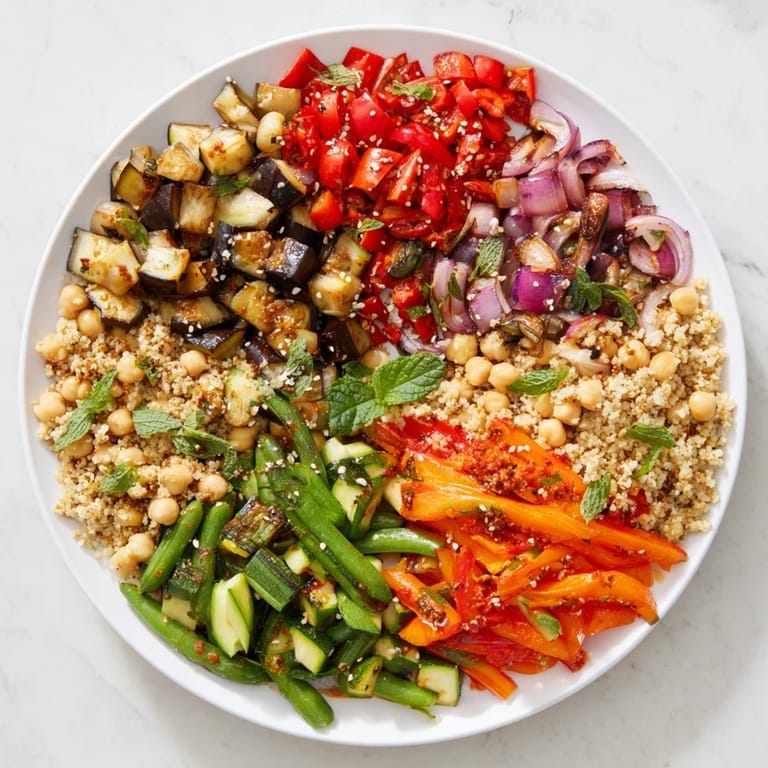
- Dice and prep every vegetable before you turn on any heat, then arrange your three skillets side by side. This moment of calm before the sizzle is when cooking feels less like multitasking and more like orchestrating.
- Build the Mediterranean warmth:
- Heat olive oil until it shimmers, then add eggplant first because it needs the extra time to soften. After three minutes, fold in everything else and let it cook until the vegetables are tender enough to mash slightly but still hold their shape. The kitchen should smell like a Greek hillside, warm and herbal.
- Wake the Asian side:
- Sesame oil heats faster than olive oil, so watch it carefully—the moment it smells toasted, add mushrooms and give them space to brown before crowding the pan with snap peas and carrots. Everything finishes in minutes, and that's the whole point.
- Coax out the Middle Eastern spices:
- Red onion needs time to soften and sweeten, so don't rush it. Once everything is in, the smell of warm spices climbing out of the pan is your signal that this cluster is almost ready. Add the lemon juice and herbs last so they taste bright instead of cooked.
- Compose the plate:
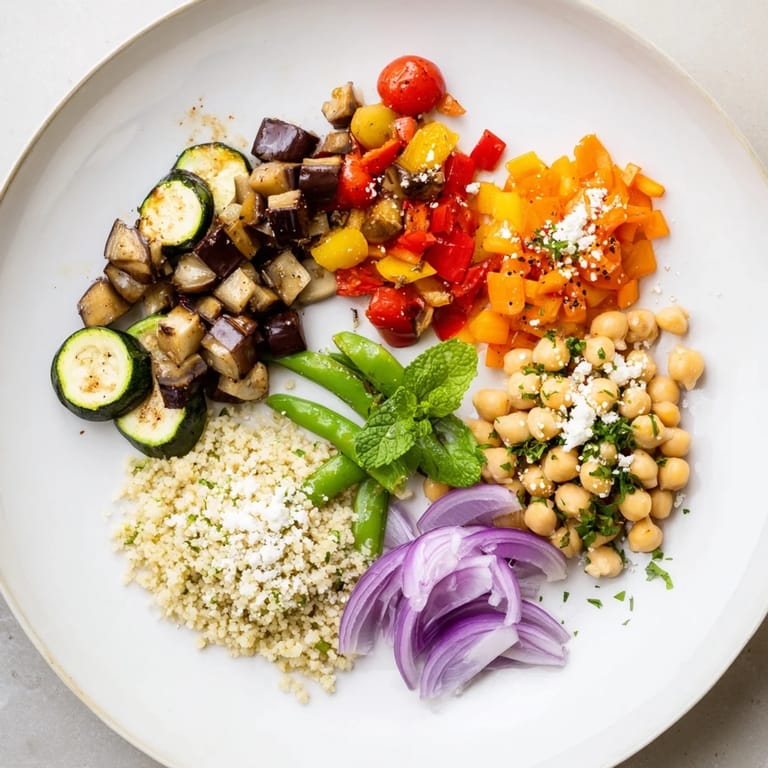
- Arrange each cluster in its own section on a large platter or divide them among individual plates. The visual separation matters as much as the flavors—it tells a story before anyone takes a bite.
 Save to Pinterest
 What surprised me most about this dish is how it became a framework for memory. Someone will take a bite of the Mediterranean cluster and suddenly talk about a trip, or they'll mix the Asian elements with the Middle Eastern ones and create a flavor combination that feels like their own invention. I've learned that sometimes the best meals aren't about perfection—they're about giving people permission to taste the world.
Why This Works as One Meal
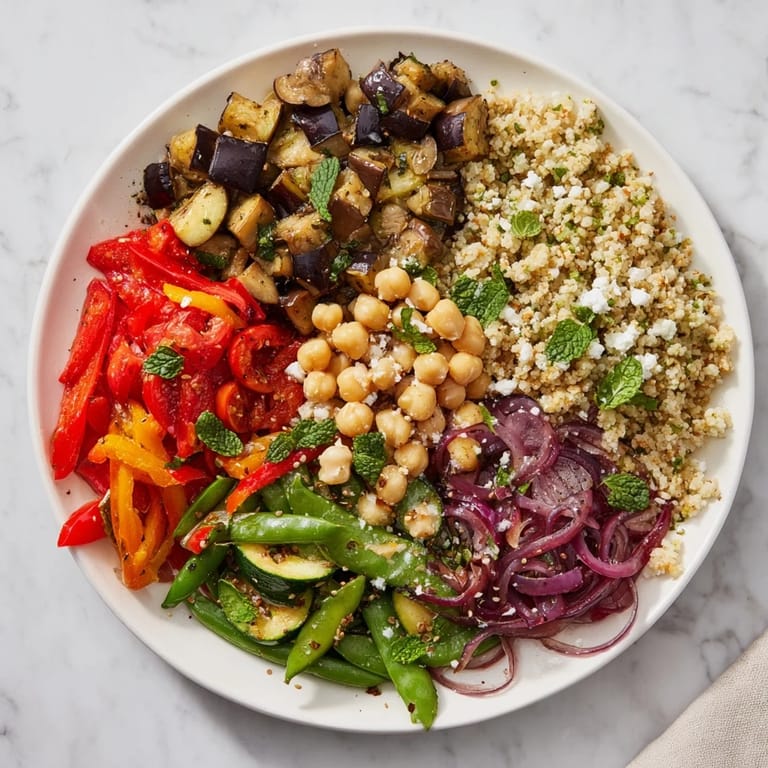
The beauty of cooking three clusters at once is that you're not trying to marry incompatible flavors into a single harmony. Instead, you're letting each one speak its own language on the same plate. Mediterranean vegetables don't compete with Asian sesame notes or Middle Eastern spices—they coexist. It's like hosting a dinner where your Greek friend, your Japanese colleague, and your Lebanese neighbor all bring their favorite dish, and somehow it feels intentional instead of chaotic.
How to Make It Your Own
The skeleton of this recipe is sturdy enough to handle your substitutions and cravings. Swap the eggplant for zucchini if you're not an eggplant person, or add grilled chicken or tofu to any cluster that needs protein. Some nights I add pomegranate arils to the Middle Eastern side because they add texture and a tart surprise. Other nights I double the garlic in the Mediterranean cluster because I'm in that mood. The recipe doesn't break—it just becomes yours.
The Art of Serving and Sharing
This is a dish that asks for conversation. Set it in the middle of the table and watch what happens when people start mixing, comparing, and debating which cluster is their favorite. Some will eat each section methodically, savoring one world before moving to the next. Others will immediately scramble everything together and declare it their new favorite thing. Both are correct. The feta crumbles softer when it sits on warm vegetables, the sesame seeds add crunch if you sprinkle them just before eating, and the fresh herbs stay fragrant when they're not cooked down into submission.
- Serve this warm or at room temperature—it actually gains flavor as it sits.
- Pair it with flatbread to catch the oils, or steamed rice if you want something more substantial.
- A crisp white wine or light red makes everything taste even better.
 Save to Pinterest
 This recipe became my favorite because it taught me that sometimes the most interesting meals come from honoring different traditions without forcing them into one. It's a celebration served on a single plate.
Recipe FAQs
- → What oils are best for cooking the clusters?
Extra-virgin olive oil is used for Mediterranean and Middle Eastern clusters, while toasted sesame oil enhances the Asian cluster's flavor.
- → How can I add protein to this dish?
Grilled chicken, tofu, or lamb can be added to any of the clusters for extra protein and heartiness.
- → What are some suitable side dishes?
Flatbread or steamed rice pairs well, complementing the bold flavors and adding substance to the meal.
- → Can this dish be made gluten-free?
Yes, substitute bulgur for quinoa and use tamari instead of soy sauce to make it gluten-free.
- → What garnishes enhance the dish?
Crumbled feta cheese, toasted sesame seeds, and fresh mint or cilantro leaves add texture, creaminess, and freshness.
- → How should I balance the spices across clusters?
Each cluster uses distinct spices like oregano for Mediterranean, ginger for Asian, and cumin and cinnamon for Middle Eastern, creating a harmonious blend without overpowering one another.