 Save to Pinterest
 There's something about summer that makes you crave brightness, and tabbouleh is exactly that on a plate. I discovered this dish years ago at a neighborhood potluck where someone's grandmother had brought a massive bowl of it, and I watched people go back for thirds. The way the lemon hit first, then the herbaceous waves of parsley and mint—it was unlike anything I'd eaten before, so alive and clean-tasting. Since then, I've made it countless times, each batch reminding me why it's perfect for those days when you want something nourishing but not heavy.
I made this for my coworkers on a sweltering Friday in July, bringing it in a glass container that caught the light from the office window. One colleague took a bite and immediately asked for the recipe, saying it tasted like the Mediterranean vacation she couldn't afford. That moment stuck with me—realizing food could transport people, even just for a lunch break. Now whenever I need to bring something to share, this is my go-to because it never fails to make people feel like they're somewhere better.
Ingredients
- Fine bulgur wheat: Use fine bulgur, not medium or coarse, so it absorbs water quickly and stays tender without becoming mushy.
- Boiling water: The heat matters here—room temperature water won't fully soften the grains in 10 minutes, so don't skip the kettle.
- Sea salt: A touch in the water seasons the grain from within, which makes a real difference in the final taste.
- Ripe tomatoes: This is where quality shines—seek out tomatoes at their peak, diced small so they release their juices throughout the bowl.
- English cucumber: The thin-skinned variety has fewer seeds and a cleaner flavor than standard cucumbers.
- Fresh flat-leaf parsley: Buy a whole bunch and don't be shy with the amount; parsley is the soul of this dish.
- Fresh mint: It adds a cooling note that balances the brightness of the lemon beautifully.
- Scallions: They bring a subtle sharpness that ties everything together without overpowering.
- Extra virgin olive oil: Quality matters in the dressing since it's a main flavor player, not a supporting ingredient.
- Freshly squeezed lemon juice: Bottled juice tastes flat and metallic by comparison; the fresh stuff is worth the small effort.
- Garlic: Just one clove, minced fine, keeps it from being aggressive.
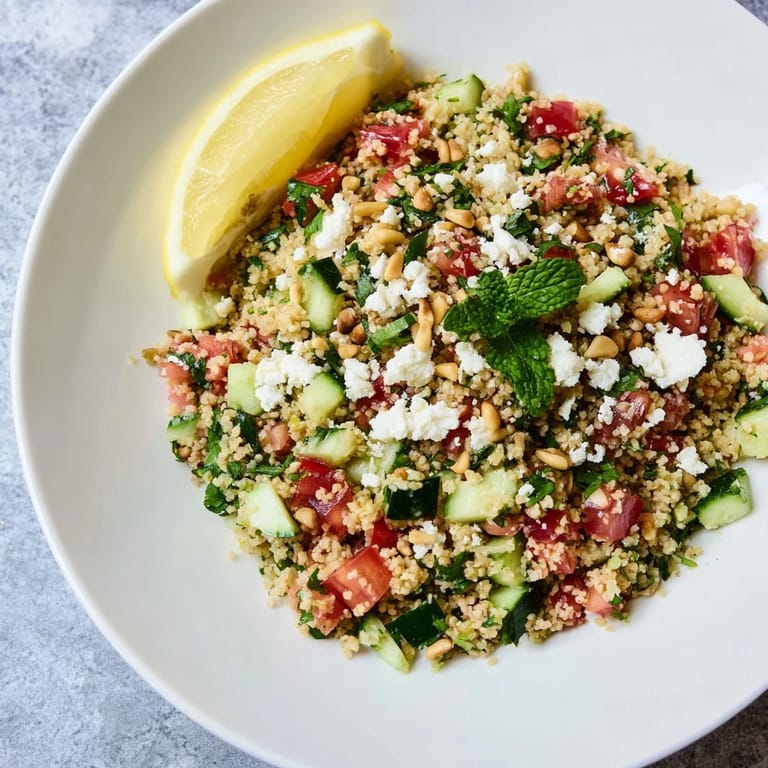
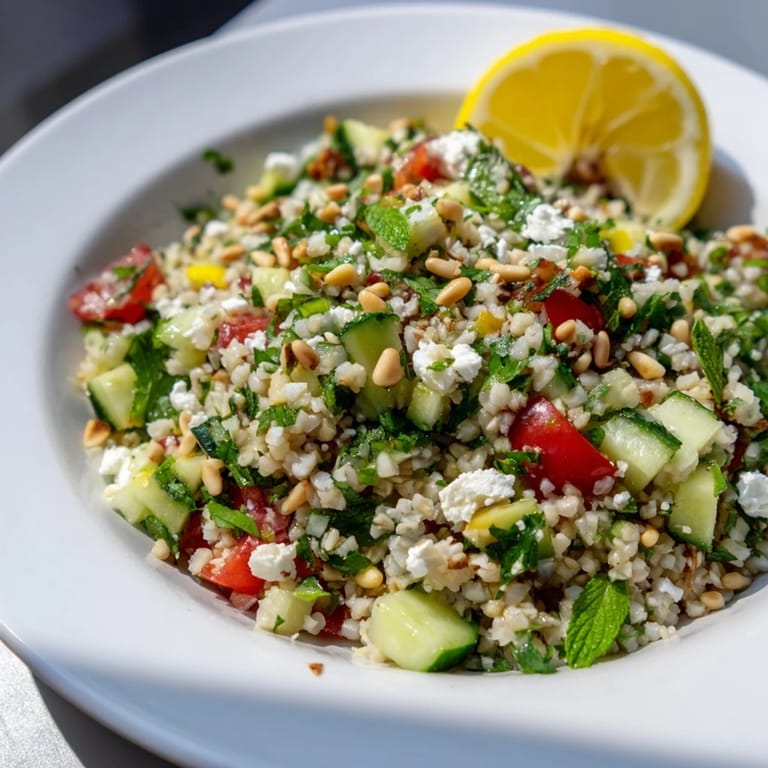
- Feta cheese: Optional but deeply good, adding a salty, creamy element that plays against the herbs.
- Pine nuts: Toast them lightly in a dry pan if you have time; they add texture and a subtle richness.
Tired of Takeout? 🥡
Get 10 meals you can make faster than delivery arrives. Seriously.
One email. No spam. Unsubscribe anytime.
Instructions
- Rehydrate the grain:
- Pour boiling water over bulgur with salt in a large bowl, cover it, and step away for 10 minutes. You'll hear a soft sizzle as the heat does its work. When you lift the lid, the grains should be tender and the water gone—if there's still liquid pooling, give it another minute or two.
- Whisk the dressing:
- In a separate bowl, combine olive oil, lemon juice, minced garlic, and pepper, whisking until they emulsify into something cohesive. Taste it on a spoon—it should make you pucker slightly, then feel rich and balanced.
- Prep the fresh ingredients:
- While the bulgur cools, dice tomatoes and cucumber into small, even pieces and finely chop the parsley and mint. Thinness matters here because smaller pieces distribute flavors more evenly throughout each bite.
- Combine everything:
- Once the bulgur is cooled to room temperature, add all the vegetables and herbs, tossing gently so nothing bruises. The mass will seem large, but it compacts as it sits.
- Dress and rest:
- Pour the dressing over the mixture and fold it together slowly until every grain glistens. Let it chill for 10 minutes if you have time—the flavors meld into something greater than their parts.
- Serve with toppings:
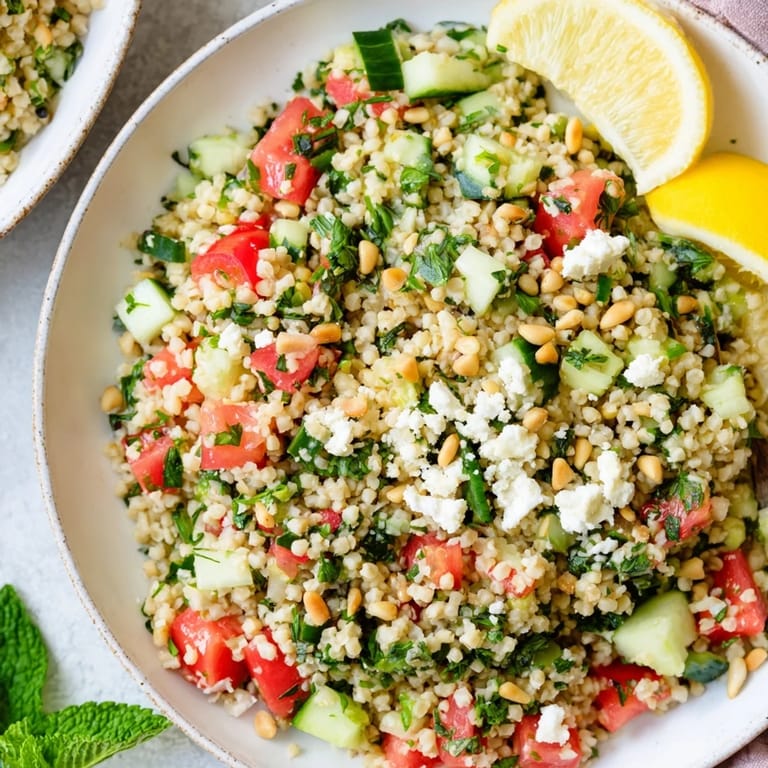
- Spoon into bowls and finish with a scatter of feta, a handful of toasted pine nuts, and a squeeze of fresh lemon. The toppings add textural contrast and brightness right at the moment you eat it.
 Save to Pinterest
 What strikes me most about tabbouleh is that it taught me vegetables don't need to be cooked to be substantial. A bowl of this sits heavy in the best way, satisfying and alive at the same time. It's become the dish I reach for when I want to eat something real but feel light afterward.
Why This Bowl Works
The magic is in the balance—the nuttiness of bulgur, the acidity of lemon, the earthiness of parsley, the cooling mint, the crunch from vegetables. Each element serves a purpose, and nothing dominates. Herbaceous dishes like this used to confuse me because I thought parsley was a garnish, until I tasted it as a main event and realized I'd been missing something essential all along.
Making It Your Own
The base recipe is forgiving, and you can shift things based on what you have or what sounds good. In spring, I might add radishes for peppery crunch; in autumn, roasted chickpeas make it more filling. Some friends add pomegranate seeds or dried currants for sweetness, which I've grown to love. The framework stays the same, but the dish feels different each time, which is part of why I never tire of making it.
Storage and Make-Ahead Tips
This is one of those rare dishes that tastes better the next day, as the grains continue to absorb the dressing and the flavors deepen. Keep it in a glass container in the fridge for up to two days, though it's best eaten within 24 hours while the herbs are still vibrant. If you're serving it for a gathering, assemble everything except the feta and pine nuts in the morning, then add those finishing touches right before serving so they stay crisp.
- Store in an airtight container to prevent the herbs from drying out.
- If it seems dry when you open it the next day, add a squeeze of lemon juice and a drizzle of olive oil to refresh it.
- Bring it to room temperature before eating if it's been chilled, so the flavors come alive again.
 Save to Pinterest
 Tabbouleh is the kind of recipe that settles into your rotation not because it's trendy, but because it simply works. It nourishes you and leaves you feeling light, which is a gift from any meal.
Recipe FAQs
- → What type of grain is used in this bowl?
Fine bulgur wheat forms the base, soaked in boiling water until tender and fluffy.
- → Can I make this dish gluten-free?
Yes, substituting bulgur with cooked quinoa provides a gluten-free alternative without sacrificing texture.
- → How is the dressing made?
The dressing combines extra virgin olive oil, freshly squeezed lemon juice, minced garlic, and ground black pepper for a bright, tangy flavor.
- → What fresh herbs are included?
Fresh parsley and mint are finely chopped and added to impart aromatic and refreshing notes.
- → Are there optional toppings to enhance the bowl?
Yes, crumbled feta cheese, toasted pine nuts, and lemon wedges can be added for richness, crunch, and extra zest.