 Save to Pinterest
 There's something about the smell of Tuscan kale hitting hot olive oil that instantly transports me to a small kitchen in Florence, though honestly I've never been there. My neighbor Maria handed me a bundle of cavolo nero one autumn evening and said, 'Make ribollita, it's what we eat when the weather turns.' I had no idea what I was doing, but something about the way she said it with such certainty made me trust the process completely.
I made this for a dinner party on a rainy March evening when half my guests canceled, and I almost scrapped the whole thing. But something made me push through, and by the time they arrived (the three who braved the weather), the kitchen smelled so inviting that their coats barely left their shoulders before everyone was seated. That soup turned an awkward evening into one of those nights where people linger at the table, refilling bowls and talking until the candles burn low.
Ingredients
- Extra-virgin olive oil: Use the good stuff here, especially for the final drizzle—it's not pretentious, it's the whole point of a simple dish like this.
- Yellow onion, carrots, celery: This is your flavor foundation, and taking time to dice them evenly means they cook at the same pace and create a harmonious base.
- Garlic cloves: Mince them fresh; jarred garlic turns bitter when it simmers for nearly an hour and tastes like regret.
- Tuscan kale (cavolo nero): It's heartier than regular kale and doesn't disintegrate into the broth, holding its character throughout cooking.
- Yukon gold potato: These waxy potatoes don't fall apart, and their subtle sweetness balances the earthiness of the beans and greens.
- Cannellini beans: Canned is perfectly fine—rinsing them removes excess sodium and starch, giving you cleaner flavors without any metallic aftertaste.
- Vegetable broth: Quality matters here since it's your liquid foundation; homemade is ideal, but a good store-bought version works beautifully.
- Bay leaf, thyme, oregano: These three are the backbone of Tuscan cooking—they whisper rather than shout, letting everything else shine.
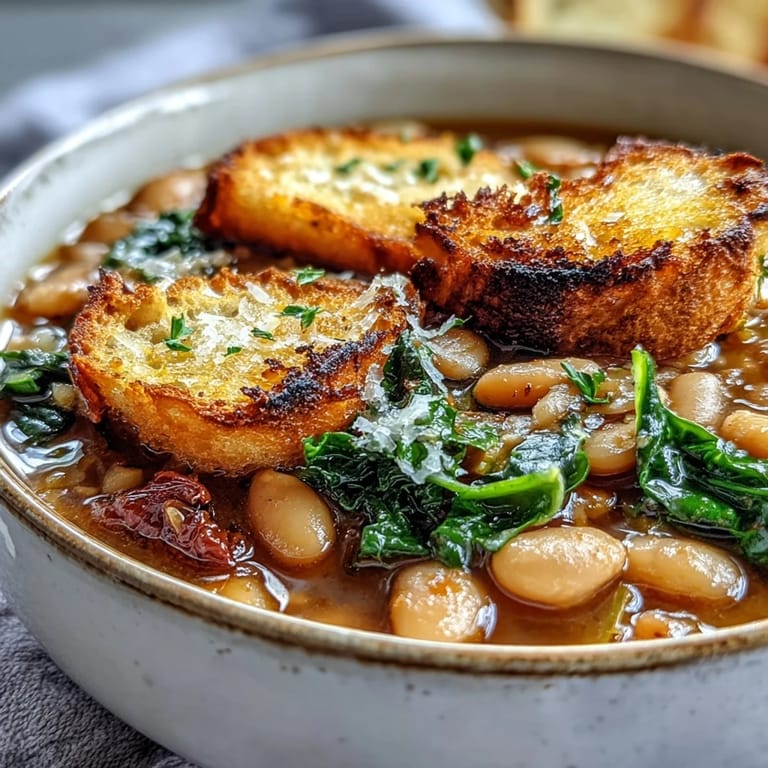
- Day-old sourdough bread: Stale bread gets crispy instead of soggy, and the tang of sourdough adds complexity that white bread simply can't match.
Tired of Takeout? 🥡
Get 10 meals you can make faster than delivery arrives. Seriously.
One email. No spam. Unsubscribe anytime.
Instructions
- Build your flavor base:
- Heat olive oil in your Dutch oven over medium heat, then add onion, carrots, celery, and fennel if you're using it. Let these soften for 8 to 10 minutes—you want them to turn translucent and begin releasing their sweetness, filling your kitchen with that golden, welcoming aroma. Listen for the gentle sizzle; if it's angry and loud, your heat is too high.
- Wake up the garlic:
- Add minced garlic and let it cook for just one minute until it becomes fragrant—this is the moment when the whole soup shifts into gear. Don't walk away during this minute; you want to smell when it's ready, not return to burnt garlic that will haunt the entire pot.
- Layer in the vegetables:
- Stir in zucchini, potato, and kale, cooking for another few minutes until the kale begins to soften and release its moisture. The kale will look like it takes up half the pot, but it shrinks dramatically, almost like magic.
- Build the broth:
- Pour in the tomatoes with their juices, add your rinsed beans, vegetable broth, bay leaf, thyme, oregano, and red pepper flakes if you like a whisper of heat. Season generously with salt and pepper—this is your moment to taste and adjust before the long simmer begins.
- Let it simmer:
- Bring everything to a boil, then lower the heat to maintain a gentle, lazy simmer for 35 to 40 minutes. About halfway through, grab a wooden spoon and gently mash some of the beans and potato against the side of the pot to thicken the broth without creating a puree—you want texture, not smoothness.
- Toast the croutons:
- While the soup simmers, toss your cubed sourdough with olive oil and spread it on a baking sheet, then into a 400°F oven for 10 to 12 minutes. They should turn golden and crisp, and rub them with that halved garlic clove while they're still warm—the heat makes the garlic mellow and aromatic.
- Finish and serve:
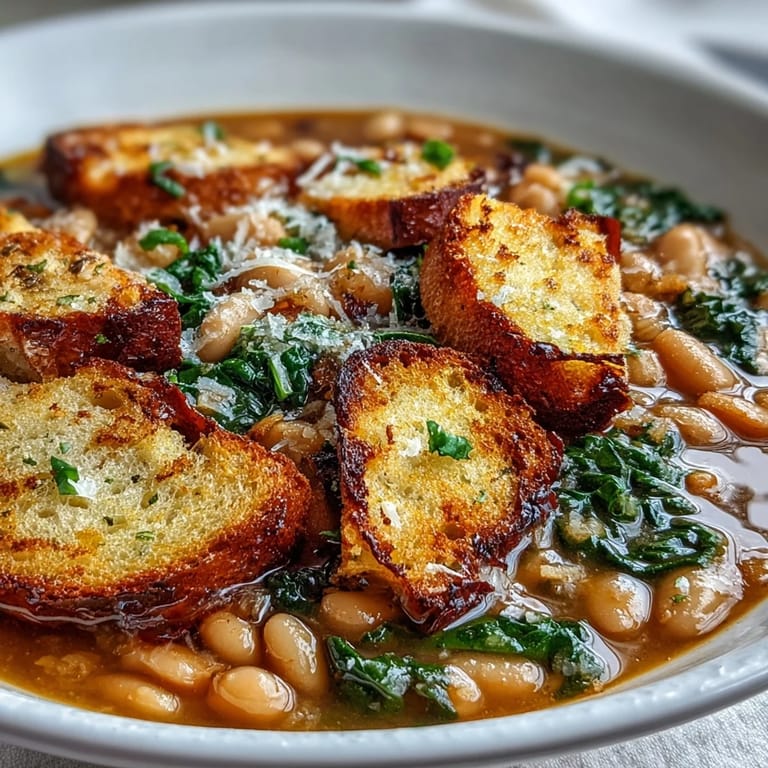
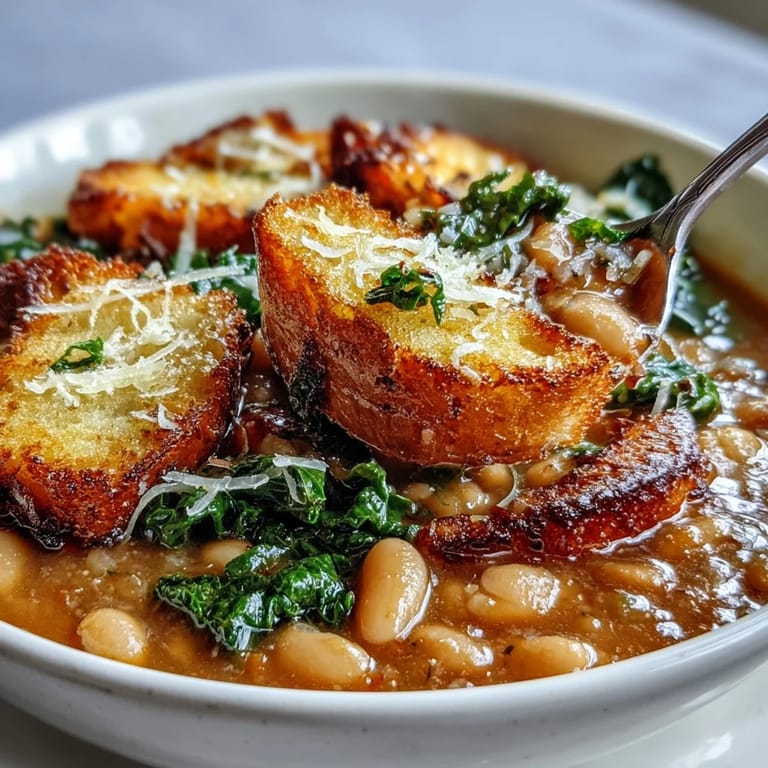
- Remove the bay leaf, taste one more time, and adjust salt and pepper as needed. Ladle into bowls, top with croutons, a generous drizzle of olive oil, and Parmigiano-Reggiano if you have it.
 Save to Pinterest
 My daughter asked me once why I made soup when we could just order takeout, and I realized I'd never explained that this isn't about efficiency. It's about the chopping, the smells, the way a simple pot of vegetables and beans becomes something that nourishes both the body and the evening itself. She understood when she tasted it, but more so when she saw how people gathered around it.
The Sourdough Crouton Moment
Those croutons are the reason this soup went from 'pretty good' to 'people-ask-for-the-recipe' territory. I used to skip them, thinking they were garnish, until a friend brought homemade ones to a potluck and suddenly everyone understood what had been missing. The contrast of crispy, garlicky bread against silky soup is where the whole dish comes alive, so please don't treat them as optional.
Storage and Reheating Magic
This soup tastes better on day two or even day three, which makes it perfect for meal prep or for those moments when you need dinner but didn't plan ahead. Store it in an airtight container for up to four days, and when you reheat, add a splash of broth to loosen it back up since the beans continue to absorb liquid as it sits. The croutons, though, should always be made fresh—they'll turn soft and sad if you store them with the soup, so save them for serving time.
Variations and Personal Touches
This recipe is incredibly forgiving and actually encourages you to play around based on what's in your garden or your crisper drawer. I've made it with Swiss chard when kale ran out, added fennel bulb for subtle anise notes when I was feeling fancy, and even thrown in a parmesan rind for an extra depth that makes people ask what your secret ingredient is. The bones of the soup stay the same, but your kitchen becomes part of the story.
- Add a parmesan rind: Let it simmer with the broth and remove before serving for umami richness that tastes like you've been cooking all day.
- Experiment with herbs: A small pinch of fresh rosemary or a splash of balsamic vinegar at the end can shift the entire mood of the pot.
- Make it vegan: Simply skip the cheese and you have a fully plant-based meal that tastes just as satisfying and special.
 Save to Pinterest
 This soup has become my answer to almost every occasion: when friends are going through something, when the weather turns cold, when I need to feed people without fussing. It's the kind of dish that proves the most meaningful meals are often the simplest ones.
Recipe FAQs
- → What is ribollita?
Ribollita is a traditional Tuscan soup known for its rich combination of white beans, vegetables, and leafy greens, simmered slowly to develop hearty flavors.
- → Can I substitute the kale in this dish?
Yes, Swiss chard or spinach work well as alternatives, offering a similar texture and taste to kale in this preparation.
- → How are the sourdough croutons prepared?
Sourdough cubes are tossed with olive oil, baked until golden and crisp, then rubbed with fresh garlic for extra flavor.
- → Is it possible to make this dish vegan-friendly?
Omit the Parmigiano-Reggiano or use a plant-based cheese alternative to keep the dish vegan.
- → How can I enhance the soup's depth of flavor?
Adding a parmesan rind during simmering intensifies flavor; just remove it before serving.