 Save to Pinterest
 The first time I made these stacks, I was trying to impress someone at a dinner party and had maybe twenty minutes to pull together something that looked intentional. I grabbed what was in my fridge—tomatoes still warm from the counter, fresh mozzarella I'd picked up that morning, basil from the garden—and started slicing. What emerged was so simple it almost felt like cheating, but when I pierced each stack with a toothpick and drizzled it with good olive oil, something clicked. It looked like something a restaurant would serve, but it tasted like summer in the most honest way.
I remember making these for my neighbor who had just moved in, and she stood in my kitchen watching me assemble them with this confused smile, like she wasn't sure if what she was seeing was actually cooking. When she bit into one, her eyes went quiet in that way they do when something tastes better than expected. She asked for the recipe right there, pen in hand, and I realized it wasn't the complexity she was after—it was permission to make something beautiful without overthinking it.
Ingredients
- Fresh ripe tomatoes: Look for ones that smell like tomato, not like nothing—that aroma matters more than perfect shape.
- Fresh mozzarella cheese: The kind that comes in water, not the rubbery stuff in plastic, because this dish lives or dies by texture.
- Fresh basil leaves: Tear them gently by hand if you can; the knife bruises them and they weep their flavor into the air instead of onto the plate.
- Extra-virgin olive oil: Use one you actually like tasting, because you'll taste every drop.
- Balsamic glaze: The reduced, syrupy kind that stays put, not the thin vinegar that slides off.
- Sea salt and freshly ground black pepper: The finishing layer that wakes everything up.
Tired of Takeout? 🥡
Get 10 meals you can make faster than delivery arrives. Seriously.
One email. No spam. Unsubscribe anytime.
Instructions
- Slice everything to the same thickness:
- Cut your tomatoes and mozzarella into rounds about the width of a pencil. Even slices stack better and look intentional. This is where a sharp knife actually matters.
- Prepare your basil:
- Wash and completely dry the leaves—wet basil turns dark and bitter when it sits. Pat them on paper towels until they're actually dry.
- Build your towers:
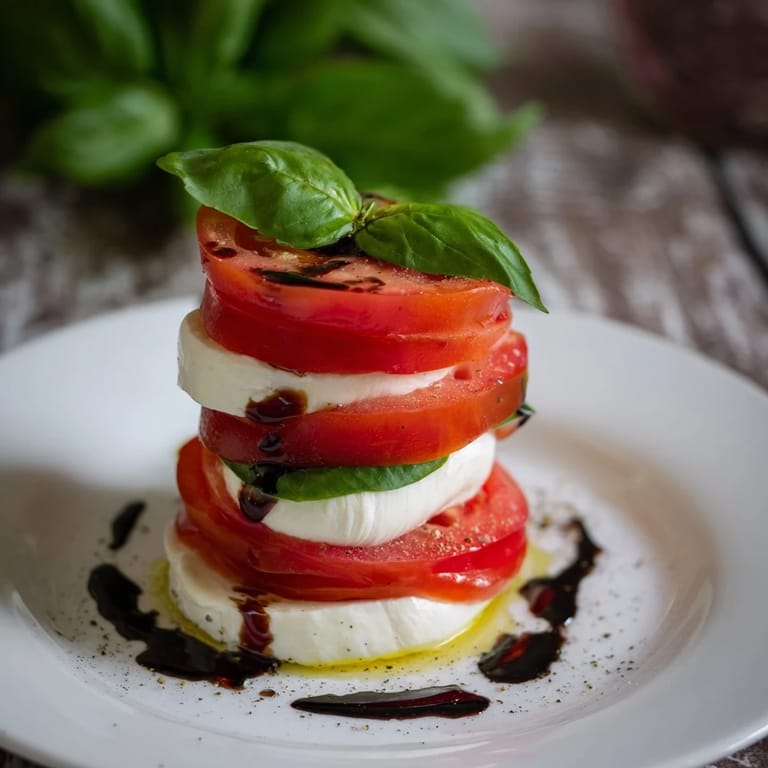
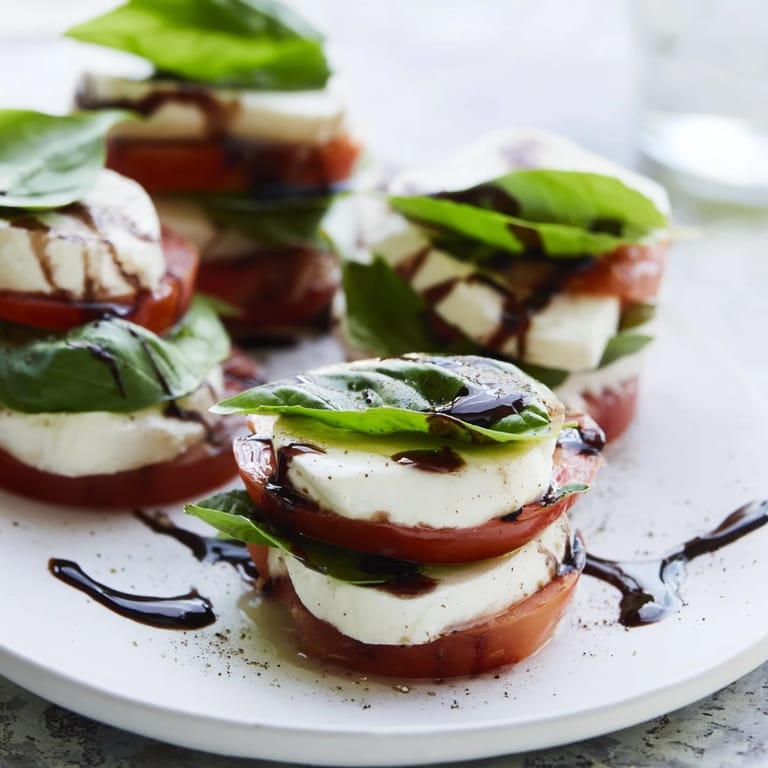
- Start with tomato, then mozzarella, then basil, and repeat until you've got a stack three or four layers high. The basil leaf on top should be visible, like a little green crown.
- Anchor with a toothpick:
- Push a long toothpick or bamboo skewer straight down through the center of each stack. Angle matters less than the gentle pressure—you're not stabbing, you're steadying.
- Finish with oil and vinegar:
- Drizzle the olive oil first, then the balsamic, then a pinch of salt and a grind of pepper. The order matters because salt and pepper need something to cling to.
- Serve right away:
- These are best eaten within an hour of assembly, while the tomato is still firm and the basil is still bright.
 Save to Pinterest
 There was a Tuesday afternoon when my daughter asked why we were making something that looked like building blocks, and I let her help stack them. She got the layers crooked, the basil fell off twice, and somehow hers tasted better than mine. I think it's because she didn't worry about whether it looked right—she just assembled it with focus, the way kids do. I've been a little bit less precious about perfection ever since.
Choosing Your Tomatoes
The tomato is the star here, so it deserves attention. You want ones that feel heavy for their size and smell like tomato when you bring them close to your face. Heirloom varieties work beautifully if you can find them—the colors make the stacks look like something from a painting. Room-temperature tomatoes have better flavor than cold ones, so don't pull them straight from the fridge. If you get stuck with tomatoes that taste like water, a tiny pinch of sugar and a grind of salt will help, but honestly, it's better to wait for better tomatoes or use a roasted tomato instead.
The Mozzarella Matters
Fresh mozzarella is the quiet hero of this dish—it has to be cool, creamy, and hold its shape under the weight of tomato. The kind in brine is better than the kind wrapped in plastic. If you can find it still warm from the shop, even better, but don't use it warm or your towers will weep. Cold mozzarella slices cleanly and holds firm in the stack. I learned this the hard way, standing in my kitchen with a pile of melted, sloppy cheese wondering what went wrong.
Small Touches That Matter
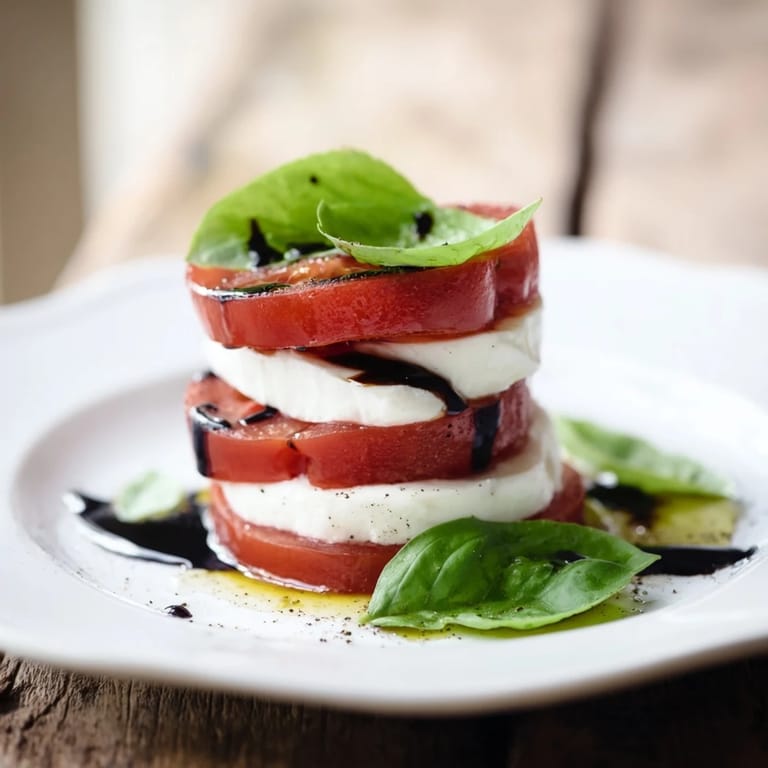
The details are what turn this from simple into special. Good olive oil isn't optional—it's the reason you made this instead of just eating a tomato. The balsamic glaze should be thick enough to hold its shape on the plate. A light dusting of dried oregano adds depth without taking over, and flaky sea salt feels fancier than regular salt, which matters when something this minimal is on the plate. These aren't additions, they're the foundation.
- Chill your serving platter for five minutes before plating if your kitchen is warm.
- Use a skewer long enough that the point doesn't poke through the bottom onto someone's palm.
- Assemble everything just before guests arrive so the basil stays green and the tomato stays crisp.
 Save to Pinterest
 This dish proves that elegant doesn't have to mean complicated. Serve it with something cold and crisp to drink, and watch how quickly people reach for seconds.
Recipe FAQs
- → What type of tomatoes work best?
Medium ripe tomatoes with a firm texture are ideal to hold the layers together without becoming too soft.
- → Can I prepare the stacks in advance?
It's best to assemble just before serving to maintain crispness and prevent sogginess.
- → What alternatives exist for balsamic glaze?
Aged balsamic vinegar or a reduced balsamic syrup can be used to add sweetness and acidity.
- → How can I make the presentation more colorful?
Using heirloom tomatoes of varying colors adds vibrant hues to the stacks.
- → Is there a recommended pairing for this appetizer?
A crisp Italian white wine such as Pinot Grigio complements the fresh flavors well.