 Save to Pinterest
 My neighbor stopped by one Tuesday evening with fresh cod from the farmer's market, and I had about twenty minutes to turn it into something impressive before her book club started. I remembered loving that crispy-cheese crust texture from somewhere, threw together what I had on the counter, and somehow landed on this sheet pan miracle that's become my go-to weeknight move. The kitchen filled with this toasted, savory smell that made everyone pause mid-conversation when they walked in. Since then, I've made it dozens of times, and it never fails to feel both effortless and a little bit special.
I made this for my parents one Sunday, and my dad, who usually picks at fish, asked for seconds. My mom started asking about the cheese blend before she'd even finished her first bite, and I realized right then that a good crust is basically edible confidence. It became the dish I bring when I want to show up without overthinking it.
Ingredients
- Cod filets (4, about 5-6 oz each): Look for filets that are relatively uniform in thickness so they cook evenly; if they vary, you can gently pound the thicker ones to match. Cod is forgiving, mild, and absorbs the crust beautifully, but haddock or tilapia work just as well if that's what your counter offers.
- Panko breadcrumbs (1/2 cup): The secret to actual crunch instead of soggy coating—panko's larger structure holds its texture even when baked. Regular breadcrumbs will work, but you'll lose that signature crispy bite.
- Asiago cheese (1/4 cup grated): This brings a subtle nuttiness and doesn't overwhelm the delicate fish the way sharp cheddar might. If you can't find it, Gruyère is a worthwhile substitute that adds sophistication.
- Parmesan cheese (1/4 cup grated): The salt and umami engine of this crust, giving it depth and that golden-brown color during roasting.
- Fresh parsley (2 tbsp chopped): Adds brightness and a visual reminder that this is a fresh, alive dish—it's not just for looks, though it definitely helps with that too.
- Garlic powder (1 tsp): Concentrated garlic flavor without the moisture that fresh garlic would add, keeping the crust from turning soggy.
- Black pepper and salt (1/2 tsp each): Season the crust boldly; the fish itself is mild, so the coating carries all the flavor responsibility.
- Olive oil (2 tbsp, plus extra for drizzling): Toss this into the breadcrumb mixture to make it clump and crisp up, then add a light drizzle on top of the fish right before baking for extra color and texture.
- Egg (1 large): Your adhesive and gentle binder that keeps the crust attached during roasting—don't skip this step even though it feels extra.
- Bell peppers and onion: The vegetables should be cut into pieces similar in size so they finish cooking at the same time; smaller pieces will caramelize faster, larger ones stay tender inside.
- Cherry tomatoes, zucchini, and olive oil for vegetables: Keep the vegetable portion generous and loose on the pan so they roast rather than steam; crowding them is the only real mistake you can make here.
- Dried oregano (1/2 tsp): One of those background herbs that ties everything together without announcing itself.
Tired of Takeout? 🥡
Get 10 meals you can make faster than delivery arrives. Seriously.
One email. No spam. Unsubscribe anytime.
Instructions
- Heat your oven and prep your pan:
- Get the oven to 425°F and line a large sheet pan with parchment paper or foil—this is the one step that saves you from scrubbing cheese off metal later. Trust me, ten seconds of prep saves ten minutes of frustration.
- Build your crust mixture:
- Combine the panko, both cheeses, parsley, garlic powder, pepper, and salt in a bowl, then stir in 2 tablespoons of olive oil until the mixture looks crumbly and slightly dampened. This helps it stick together and crisp up beautifully in the oven.
- Coat the fish:
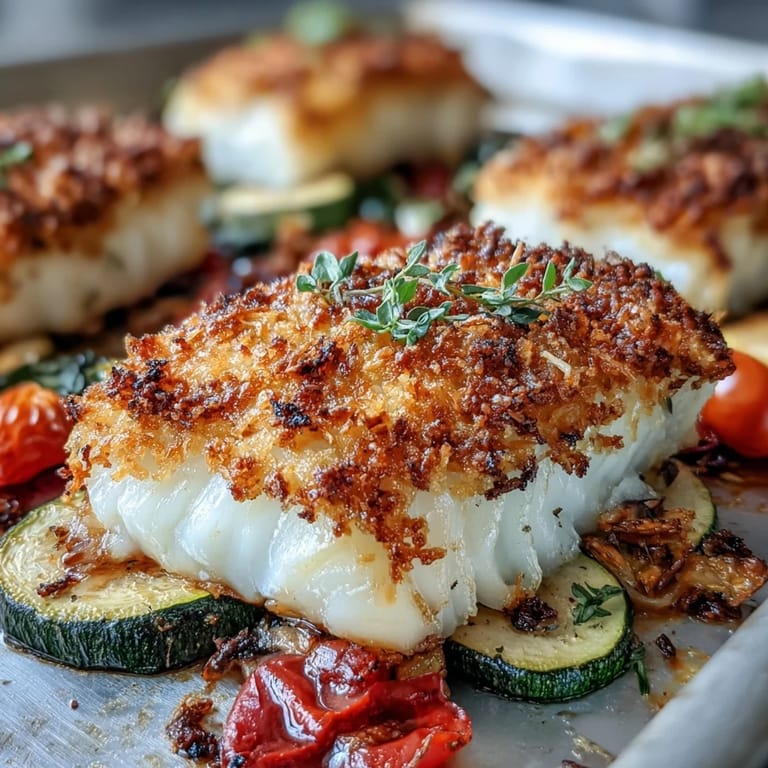
- Beat the egg in a shallow bowl, dip each filet so it's fully moistened, then press it firmly into the breadcrumb mixture on both sides—don't be shy here, thickness equals crunch. Place the coated filets on one side of your prepped sheet pan, leaving space for the vegetables.
- Prepare the vegetables:
- Toss your bell peppers, onion, tomatoes, and zucchini with 2 tablespoons of olive oil, oregano, salt, and pepper in a separate bowl until everything's coated evenly. Spread them out on the other side of the pan in a single layer, giving each piece room to brown instead of steam.
- Finish and roast:
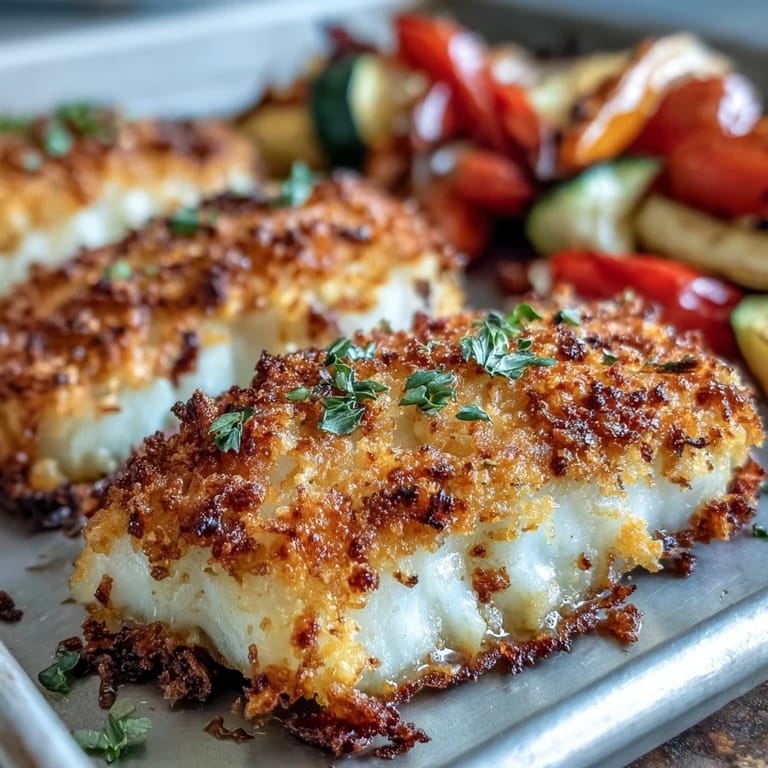
- Give the fish a light drizzle of olive oil to help it brown, then slide the whole pan into the oven for 20 to 25 minutes. About halfway through, give the vegetables a quick stir with a spatula, but leave the fish completely untouched—the less you fuss with it, the crispier the crust stays.
- Check for doneness:
- The fish is ready when it flakes easily with a fork and the crust has turned a deep golden brown. If the crust isn't quite there but the fish feels cooked, broil for the last two minutes to speed up browning.
 Save to Pinterest
 There was a moment last spring when my daughter tried this and said, completely seriously, "This is fancy restaurant food," which made me laugh because it's genuinely one of the easiest things I make. That's when I understood it's not about complexity—it's about letting good ingredients shine through smart technique.
Why This Works as a Complete Meal
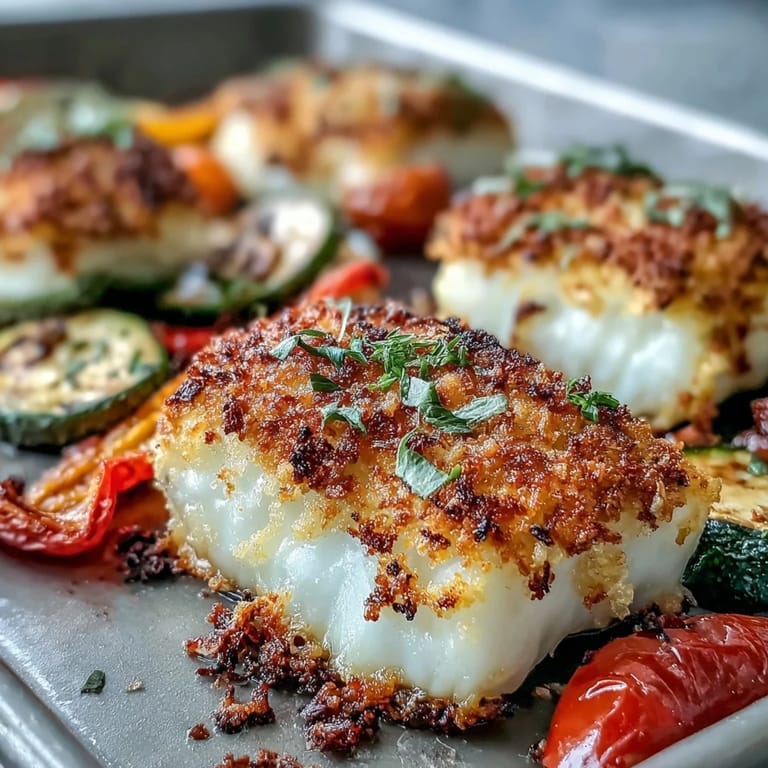
This dish succeeds because it respects the natural cooking times of different components—the fish and vegetables finish at almost exactly the same moment, which is rare and wonderful. You get lean protein, roasted vegetables with caramelized edges, and a crust that justifies eating carbs, all without juggling multiple pans or timing three different things. The one-pan approach isn't just convenient; it's actually how the food achieves its best texture and flavor.
Flavor Combinations That Keep Working
The crust's nutty, salty complexity contrasts perfectly against the mild fish and the slight sweetness from roasted bell peppers and tomatoes. That combination of umami from the cheese and fresh brightness from the parsley means you don't need sauce or butter to make it interesting—the coating is all the flavor architecture you need. I've experimented with swapping the vegetables and the fish type, and the core idea holds up to almost any white fish and almost any vegetable you have on hand.
How to Adapt This Without Losing Its Soul
You can swap the cod for haddock, halibut, tilapia, or any firm white fish, and the whole method stays the same. For vegetables, think about size more than variety—if you add baby potatoes or carrots, cut everything smaller so it roasts in the same window, and roast them a few minutes longer than the fish. If you want more richness, broil the fish for the last two minutes of cooking to deepen the crust color and add a slight char.
- Add a squeeze of fresh lemon juice right at the table if the dish feels like it needs brightness, but taste it first—the cheese crust is already salty and complex.
- Leftover fish can be flaked off and tossed into salads the next day, and reheated vegetables are oddly good as a quick lunch side.
- If you're feeding people who are fussy about fish, remind them this is about the crust, not the fish—let them experience it that way.
 Save to Pinterest
 This recipe exists because good food doesn't have to be complicated, and sheet pan meals don't have to feel like a compromise. It's become my answer to so many different questions—what's for dinner, what should I bring, how do I cook for people I'm trying to impress.
Recipe FAQs
- → What type of fish works best for this dish?
Firm white fish filets like cod, haddock, tilapia, or halibut work perfectly. These varieties hold up well during baking and maintain their texture when coated with the crispy crust. Avoid delicate fish that might flake apart too easily.
- → Can I make the crust ahead of time?
The cheese-panko mixture can be prepared up to 24 hours in advance and stored in an airtight container at room temperature. This makes assembly quicker on busy weeknights. Just give it a quick stir before coating the fish.
- → How do I know when the fish is done?
The fish is finished when it flakes easily with a fork and the crust turns golden brown. The internal temperature should reach 145°F. Typical baking time is 20-25 minutes at 425°F, but timing may vary slightly based on fish thickness.
- → What vegetables can I substitute?
Feel free to swap in whatever seasonal vegetables you enjoy. Broccoli florets, baby potatoes, carrots, asparagus, or green beans all roast beautifully alongside the fish. Just keep pieces similarly sized for even cooking.
- → Can I make this dairy-free or gluten-free?
For dairy-free versions, use nutritional yeast or dairy-free cheese alternatives in place of Asiago and Parmesan. Make it gluten-free by substituting traditional panko with gluten-free breadcrumbs or crushed gluten-free crackers.
- → Should I cover the pan while baking?
No, keep the pan uncovered for the entire cooking time. Covering would trap steam and prevent the crust from getting crispy. The high heat and open air circulation create that perfect golden, crunchy exterior.