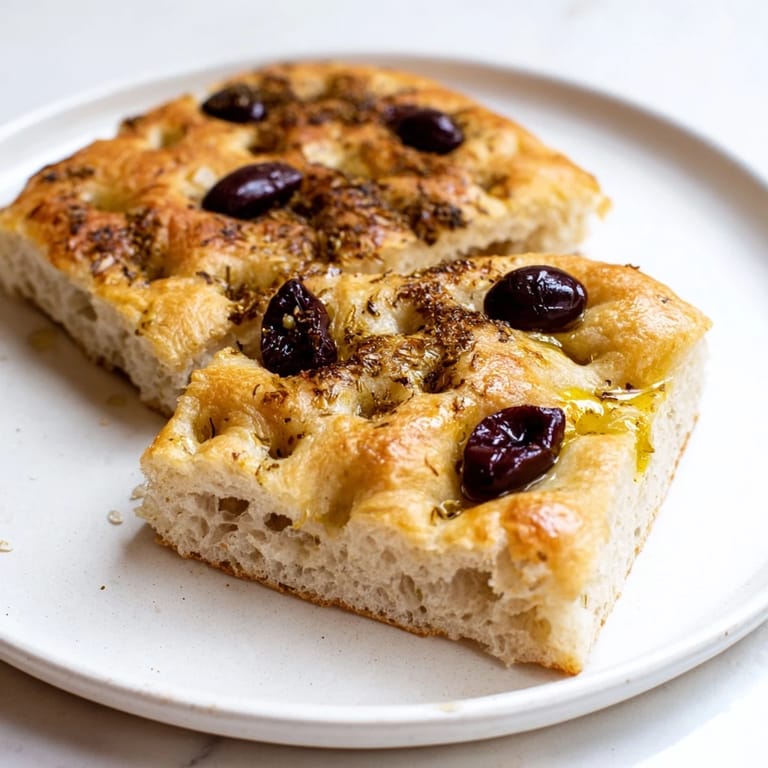
 Save to Pinterest
 The first time I made zaatar focaccia, I wasn't trying to reinvent anything—I just wanted to use up a jar of zaatar that had been sitting in my pantry for months, catching dust. I threw together a simple focaccia dough one lazy Saturday afternoon, and somewhere between the second rise and pulling it golden from the oven, the kitchen filled with this warm, nutty, herbaceous smell that made me pause. That bread became the reason I now make it regularly, and why my friends know to call ahead when they want real food.
I made this for a small dinner party once, and honestly, it was the thing people talked about most—not the main course, not dessert, but this bread. One guest asked for the recipe right there at the table, half a slice still in hand. That's when I knew it wasn't just good; it was the kind of dish that makes people feel like you've given them something thoughtful.
Ingredients
- Bread flour (500 g): You want the higher protein content—it gives you that structure and chew that makes focaccia sing, not collapse into flatness.
- Active dry yeast (7 g): Make sure it's fresh and bloom it in warm water first; this little step tells you if your yeast is alive before you commit the flour.
- Fine sea salt (1½ tsp): For the dough—it seasons the whole thing evenly and helps build gluten structure.
- Warm water (325 ml): About body temperature is the sweet spot; too hot kills the yeast, too cold and it sulks and rises slowly.
- Extra virgin olive oil (60 ml for dough, 2 tbsp for topping): Don't cheap out here—this is where flavor lives, and good olive oil makes the difference between bland and crave-worthy.
- Zaatar spice blend (2 tbsp): This is the whole personality of the bread; it brings thyme, sumac, and sesame together in one earthy, slightly tangy punch.
- Kalamata olives (100 g, halved): The brininess cuts through the richness and keeps each bite interesting—pit them yourself if you can, store-bought pitted ones work fine.
- Flaky sea salt (1 tsp): Scatter this on top just before baking for texture and a hit of salt in every bite.
Tired of Takeout? 🥡
Get 10 meals you can make faster than delivery arrives. Seriously.
One email. No spam. Unsubscribe anytime.
Instructions
- Blend the dry foundation:
- Mix bread flour and fine sea salt in a large bowl. In another bowl, pour warm water over the yeast and let it sit for five minutes until it's foamy and alive—this bloom is your proof that everything will work.
- Bring it together:
- Pour the yeasty water and olive oil into the flour and stir until you have a rough, shaggy mess. Don't overthink it at this stage; just make sure everything is wet.
- Knead until smooth:
- Transfer to a lightly floured surface or use a stand mixer with a dough hook and knead for 8 to 10 minutes. You're looking for smooth, elastic dough that springs back when you poke it—it should feel alive and a little bit bouncy.
- First rise:
- Oil a bowl lightly, plop the dough in, cover it with a damp towel or plastic wrap, and let it sit in a warm spot for an hour or until it's doubled. A sunny windowsill or turned-off oven works beautifully.
- Stretch and shape:
- Oil your baking sheet, punch down the risen dough with satisfaction, and press it evenly into the pan. Cover it again and give it another 30 minutes to puff up slightly.
- Dimple and dress:
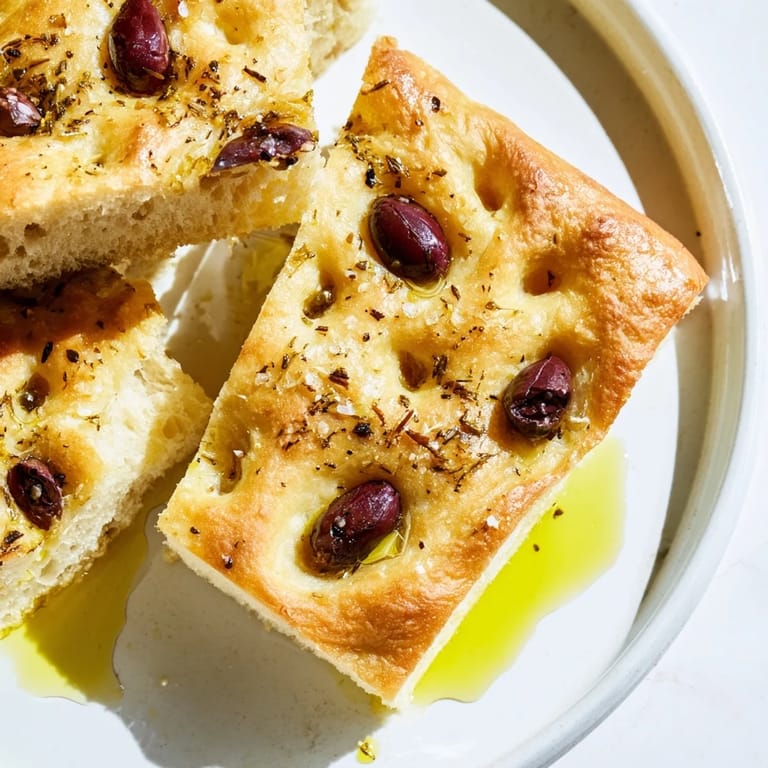
- Preheat your oven to 220°C (425°F). Use your fingertips to make deep, generous dimples all over the dough surface—these little wells catch the olive oil and toppings. Drizzle the 2 tablespoons of olive oil across the top, scatter the zaatar like you mean it, then dot the olives around and sprinkle the flaky sea salt.
- Bake until golden:
- Bake for 20 to 25 minutes until the edges are crisp and the top is a deep golden brown. The kitchen will smell incredible; this is the hard part—waiting.
- Cool and serve:
- Let it rest for a few minutes, slice while still warm, and serve as is or with hummus, labneh, or good olive oil for dipping.
 Save to Pinterest
 There's something humble and generous about breaking bread with people, and this focaccia became my go-to for that reason. It doesn't pretend to be fancy, but it shows up warm and substantial and a little bit special, which is sometimes all any of us need.
The Zaatar Difference
Zaatar isn't just a topping—it's a bridge between Mediterranean flavors that usually live in separate countries. The thyme brings earthiness, the sumac adds a subtle tartness without acid, and the sesame seeds add a light nuttiness that makes you want another slice before you're done with the first. I learned this by taste-testing zaatar straight from the jar before I used it, and it changed how I think about spice blends entirely.
Olive Oil as the Hero
The olive oil is doing two jobs here—it's making the dough rich and tender, and it's the vehicle that carries all the flavor from the zaatar and olives into every bite. I once tried to cut corners with a cheaper oil, and the bread was fine, but it was flat somehow, like the audio was turned down. Now I use the good stuff, and it's the difference between a bread and a memory.
Making It Your Own
This is a forgiving recipe, and once you've made it once, you'll want to tinker. Some days I add sun-dried tomatoes, other times roasted garlic cloves get pressed into the dough before the final rise. I've even torn up fresh rosemary and scattered it on top. The structure stays solid; only the flavor changes.
- Try mixing a handful of pitted green olives with the Kalamata ones for a milder, slightly cleaner olive flavor.
- Add a teaspoon of sumac directly to the dough if you want the tartness woven throughout, not just on top.
- Leftover focaccia reheats beautifully in a warm oven and tastes almost as good as it did fresh.
 Save to Pinterest
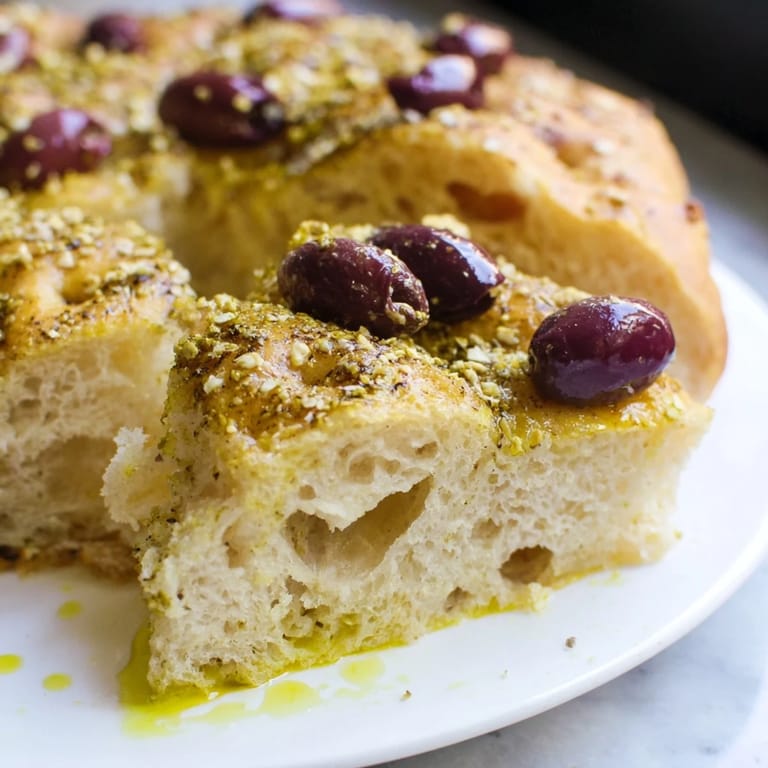
 This bread has become my answer to the question, what should I bring? It's humble enough to share and bold enough to remember. Make it, share it, and watch what happens.
Recipe FAQs
- → What is the key to making the focaccia fluffy?
Allowing the dough to rise twice and kneading it well helps create a light and airy texture.
- → Can I use different olives?
Yes, substituting Kalamata olives with green olives offers a milder taste while keeping the texture.
- → How should the zaatar be applied?
Sprinkle the zaatar evenly over the olive oil-drizzled dough surface before baking for balanced flavor.
- → What are some flavor variations to try?
Mixing in sun-dried tomatoes or roasted garlic adds extra aromatic notes to the focaccia.
- → How do I store leftovers?
Keep leftover focaccia in an airtight container and reheat gently in a warm oven for best results.