 Save to Pinterest
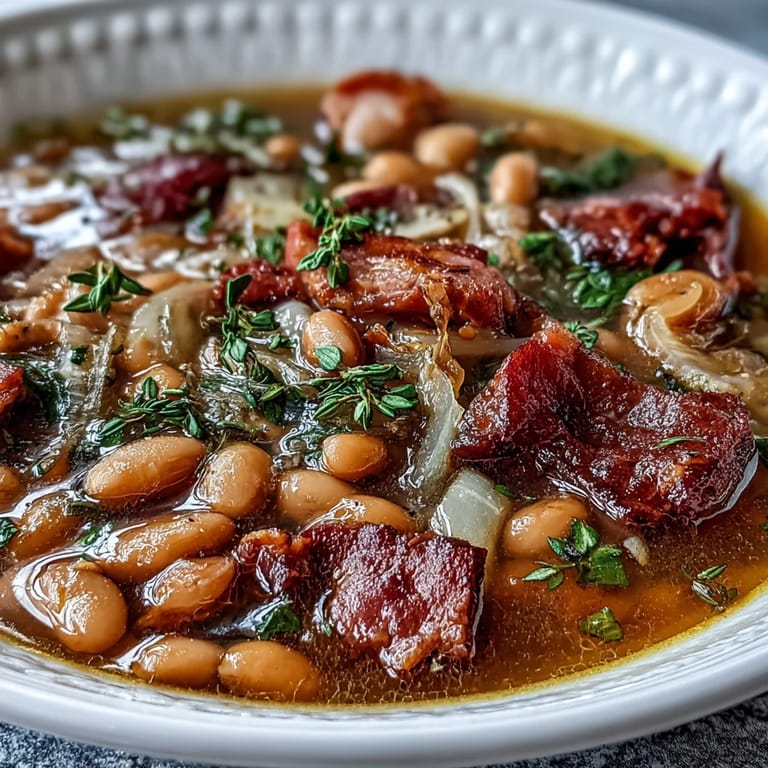
 There is something deeply comforting about a pot of Ham and Navy Bean Soup simmering on the stove—the kind of dish that fills the kitchen with a warm, savory aroma and beckons everyone to the table. This hearty, rustic soup is a celebration of humble ingredients: tender navy beans slow-cooked with a smoky ham hock, sweet carrots, onion, celery, and the bright herbal perfume of fresh thyme. It is the sort of farmhouse meal that has nourished generations, turning simple pantry staples into something truly satisfying. Whether you are cooking for a crowd on a cold winter evening or looking for a wholesome meal to stretch through the week, this recipe delivers comfort in every spoonful.
Save to Pinterest The magic of this soup lies in patience. Soaking the navy beans overnight—or using the quick-soak method—helps them cook evenly and absorb all the smoky, herb-laced broth. As the soup simmers low and slow for an hour and a half, the beans turn luxuriously tender, the ham falls effortlessly from the bone, and the vegetables meld into a broth that tastes like it has been cooking all day. A handful of fresh parsley stirred in at the end, and perhaps a thick slice of crusty bread on the side, is all it takes to turn this pot of soup into a meal worth remembering.
Ingredients
Tired of Takeout? 🥡
Get 10 meals you can make faster than delivery arrives. Seriously.
One email. No spam. Unsubscribe anytime.
- Beans & Meats
- 1 pound (450 g) dried navy beans, rinsed
- 1 pound (450 g) smoked ham hock or diced cooked ham
- Vegetables
- 1 large yellow onion, diced
- 2 medium carrots, diced
- 2 celery stalks, diced
- 3 garlic cloves, minced
- Liquids & Flavorings
- 8 cups (2 L) low-sodium chicken broth or water
- 2 sprigs fresh thyme (or 1 teaspoon dried thyme)
- 2 bay leaves
- 1 teaspoon freshly ground black pepper
- Salt, to taste
- Finishing
- 2 tablespoons fresh parsley, chopped (optional)
- Crusty bread, for serving (optional)
Instructions
- Step 1 – Soak the beans (optional)
- Place navy beans in a large bowl, cover with water, and soak overnight. Drain and rinse before using. For a quick soak, cover beans with water in a pot, bring to a boil for 5 minutes, then let sit off heat for 1 hour. Drain.
- Step 2 – Sauté the vegetables
- In a large Dutch oven or soup pot, heat a splash of oil over medium heat. Add the onion, carrots, and celery; sauté until softened, about 5 minutes.
- Step 3 – Add garlic
- Stir in garlic and cook until fragrant, about 1 minute.
- Step 4 – Combine ingredients
- Add soaked (or unsoaked, if using quick-cook beans) navy beans, ham hock (or diced ham), chicken broth, thyme, bay leaves, and black pepper. Stir to combine.
- Step 5 – Simmer
- Bring to a boil, then reduce heat to low. Cover and simmer gently for 1½ hours, or until beans are tender.
- Step 6 – Shred the ham
- Remove the ham hock, discard skin and bone, and shred any meat. Return shredded meat to the soup.
- Step 7 – Season
- Discard thyme sprigs and bay leaves. Taste and adjust seasoning with salt and more pepper as needed.
- Step 8 – Serve
- Ladle soup into bowls, garnish with parsley, and serve hot with crusty bread if desired.
Zusatztipps für die Zubereitung
Für eine cremigere Textur können nach dem Garen einige Bohnen im Topf mit einem Löffel oder Kartoffelstampfer zerdrückt werden. Dies verdickt die Brühe auf natürliche Weise, ohne dass Sahne oder Mehl benötigt werden. Wer keinen Schinkenknöchel zur Hand hat, kann auch gewürfelten, vorgekochten Schinken verwenden – dieser wird einfach in Schritt 4 direkt in den Topf gegeben. Das Einweichen der Bohnen über Nacht empfiehlt sich besonders, um die Garzeit zu verkürzen und die Bekömmlichkeit zu verbessern. Achte darauf, die Suppe auf kleiner Flamme zu köcheln, damit die Bohnen gleichmäßig weich werden, ohne zu zerfallen.
Varianten und Anpassungen
Diese Suppe lässt sich wunderbar abwandeln. Anstelle des Schinkenknoches kann ein geräuchertes Putenkeule oder eine geräucherte Wurst verwendet werden, um eine ebenso herzhafte Variante zu erzielen. Für zusätzliche Frische und Helligkeit sorgt ein Spritzer Zitronensaft oder ein paar Tropfen scharfe Sauce direkt vor dem Servieren. Die Suppe eignet sich auch hervorragend für das Einfrieren: Portionsweise in Behälter abgefüllt, hält sie sich bis zu 3 Monate im Tiefkühlschrank und ist damit ideal für die Vorratshaltung.
Serviervorschläge
Ham and Navy Bean Soup wird am besten heiß aus tiefen Schüsseln serviert, garniert mit frisch gehackter Petersilie für einen Farbtupfer und ein wenig Frische. Ein großzügiges Stück knuspriges Brot auf der Seite ist ideal, um die reichhaltige Brühe aufzunehmen. Wer das Brot glutenfrei halten möchte, greift zu einer entsprechenden Alternative. Die Suppe macht als Hauptgericht satt und benötigt keine weitere Beilage – für ein ausgedehnteres Mahl passt jedoch ein einfacher grüner Salat sehr gut dazu.
 Save to Pinterest
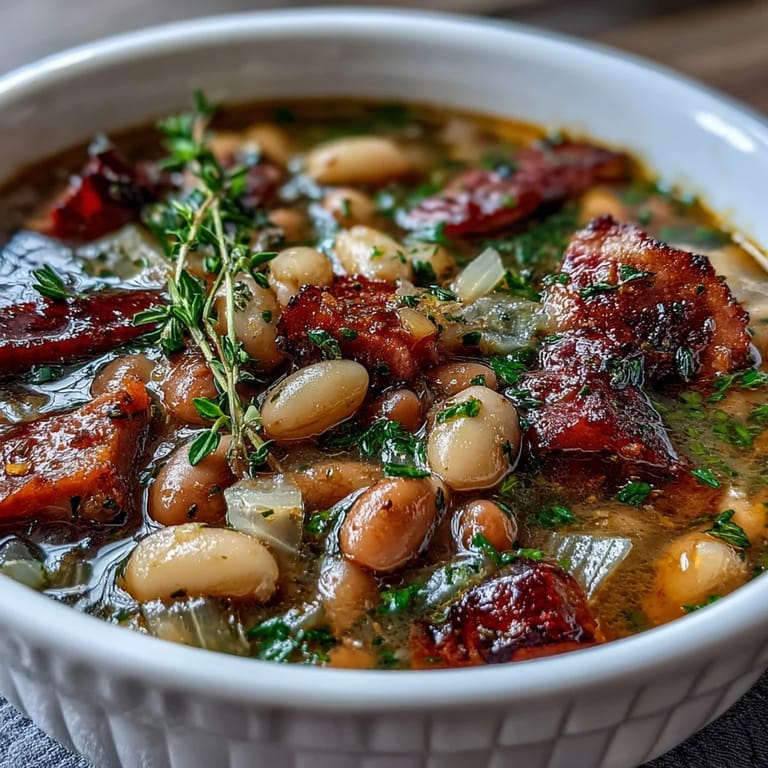
 Ham and Navy Bean Soup with Fresh Thyme is the kind of recipe that earns a permanent place in your rotation—simple enough for a weeknight, satisfying enough for a weekend gathering, and deeply comforting no matter the occasion. With its pillowy-soft beans, tender shreds of smoky ham, and an herbal, savory broth, every bowl is a reminder that the best meals often come from the humblest ingredients. Make a big pot, share it generously, and do not forget to save some for tomorrow—it only gets better with time.
Recipe FAQs
- → Can I use canned navy beans instead of dried?
Yes, canned navy beans can be used to reduce cooking time. Add them in during the last 15 minutes of simmering to heat through without overcooking.
- → How do I prepare the ham for the soup?
Add smoked ham hock or diced cooked ham directly to the simmering pot. Remove the hock to shred the meat before returning it to the soup for full flavor.
- → What is the best way to enhance the soup's texture?
Mash some of the cooked navy beans against the pot side to create a creamier consistency while keeping plenty of bean pieces intact.
- → Can I substitute other herbs for fresh thyme?
Dried thyme is a good alternative. Bay leaves add subtle depth, and you may experiment with rosemary or sage for different aromatic notes.
- → Is it necessary to soak the beans overnight?
Soaking overnight softens the beans and shortens cooking time, but a quick soak by boiling and resting for an hour also works well.
- → How should I store leftovers?
Cool the soup completely before refrigerating in an airtight container for up to 4 days or freeze for up to 3 months.